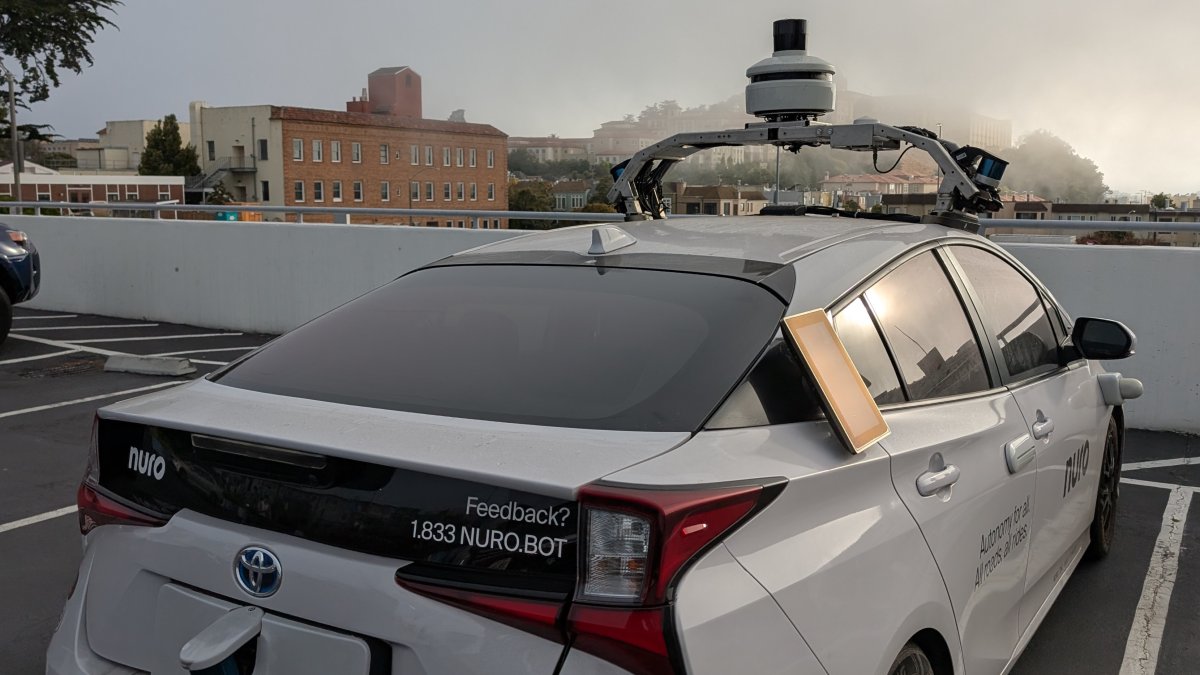
Uber's robotaxi alliance with Nuro and Lucid has reached the milestone the industry treats as the real inflection point: as of Tuesday, modified Lucid Gravity SUVs are driving themselves on public roads in the San Francisco Bay Area with nobody in the driver's seat. Driverless testing is starting in four South Bay cities — Palo Alto, Mountain View, Los Altos and Sunnyvale — before expanding across the wider Bay Area next year.
Lucid has delivered more than 100 upgraded Gravity SUVs to the program, up from the 75 engineering vehicles on the road earlier this year. Each runs Nuro's Level 4 "Nuro Driver" system, combining cameras, solid-state lidar and radar, with a roof-mounted LED "halo" that flashes a rider's initials and pickup status. The automaker began building pre-production units in October to clear regulatory safety approvals and plans to start manufacturing the commercial fleet in the coming weeks.
Removing the human backup follows nearly a year of round-the-clock supervised testing in the Bay Area and Houston, which began in December 2025, after Nuro ran the software through high-risk edge cases on a closed track in Las Vegas. California regulators cleared the operational path earlier this year: the state DMV granted Nuro a driverless testing permit, and the Public Utilities Commission issued a pilot permit for supervised passenger rides in May. Employee-only rides in the driverless vehicles are expected to begin shortly.
The commercial launch is now slated for the first quarter of 2027 through the standard Uber app, with Houston following later that year — a slight slip from the late-2026 target set when the partnership was first announced in July 2025. Uber has committed to purchasing at least 35,000 Lucid vehicles over the coming years, including the automaker's upcoming midsize model, and its financial exposure to Nuro was approaching $500 million as of June.
When the service goes live, Uber will face Waymo and Zoox on their home turf, with both rivals already running driverless rides in parts of the Bay Area. The regulatory climate is tightening as well: California's DMV barred Waymo robotaxis from state freeways after safety incidents, and federal investigators have opened probes into Zoox and Tesla systems.
For Uber, the bet is that the app — not the autonomy stack — is the scarce asset in robotaxi economics, which is why it now maintains partnerships with Waymo, Zoox, Avride, Wayve and May Mobility alongside Nuro. For Lucid, a luxury EV maker that has struggled to scale sales, the robotaxi program is becoming a new volume engine. The next few months of driverless testing in Silicon Valley's suburbs will show whether the Q1 2027 launch date holds.
Comments (0)
Log in to join the discussion
Log InNo comments yet