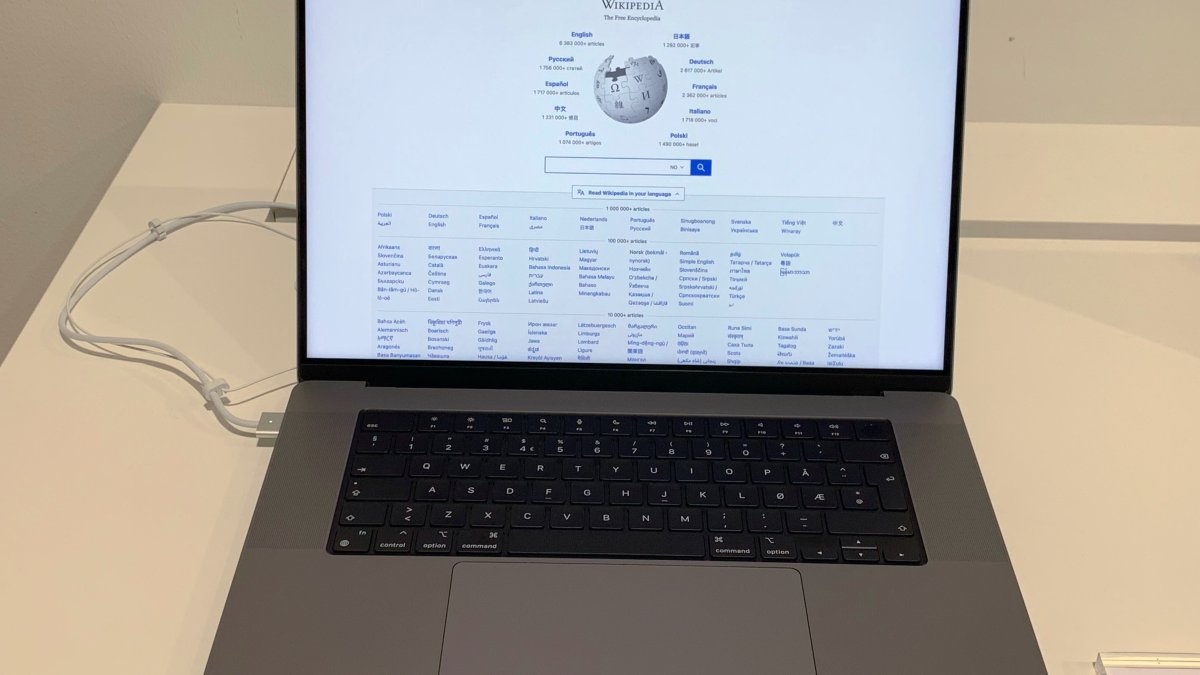
A startup operating under the name Edge0 released two models on November 12 — Edge0-145B and Edge0-120B — along with an inference framework and deployment tools, billing the larger one as "the world's first open-source on-device AI model with 145 billion parameters." The launch hit the Hacker News front page at 334 points overnight, mostly because of one number: 29GB peak memory, with decoding at more than 80 tokens per second, on what the spec table describes only as "a compatible laptop, such as a MacBook Pro."
The trick is memory tiering, not compression. The architecture is a latent mixture-of-experts design in which groups of 64 experts share two large matrices, so only about 10 billion parameters activate per token — and, critically, the model was trained in its on-device shape from the start rather than pruned down afterward. At runtime, frequently used "hot" experts sit in GPU memory, an approximately 40GB expert library lives in system RAM and pages experts in on demand, and roughly 48GB of vocabulary and n-gram data stays on the SSD to be read as needed. CPU and GPU split the work, with speculative decoding spreading the cost of weight reads across more output tokens.
The claimed performance envelope is aggressive: 1,100+ tokens per second of prompt processing, around 120 watts of typical power draw, and 128K to 256K context windows "at essentially the same speed on long inputs." The company says a 48GB laptop is sufficient. All of these figures come from Edge0's own testing, and no independent run has yet reproduced them.
The benchmark table is equally self-reported, and its comparisons deserve a squint. Edge0-145B posts 86.52 on Terminal-Bench 2.1, above DeepSeek-V4-Flash at 82.7; 90.4 on GPQA-Diamond; 80.6 on IFBench against 62.5 for Claude Opus 4.6; 64.6 on DeepSWE 1.1; and 79.3 on AA-LCR, for a six-benchmark average of 72.8. But the headline coding comparison is against Claude Opus 4.6 Max at 78.2 — a model two generations old — and the other rivals are flash-tier cloud models. Company-posted demos show the model generating an explainer video, building a Manhattan street scene in Blender, flying a drone on a find-the-bag task and designing a circuit board in KiCad, all locally.
The fine print is where the launch gets complicated. The weights are genuinely downloadable — but the Q3_K build is 105.4GB and the NVFP4 build 112.9GB across Hugging Face, meaning "29GB" describes peak runtime working set, not the model on disk. Hugging Face's parameter counter reads only the 5.99GB model skeleton at 4.95 billion parameters. The licence, edge0-community-model-1.0, permits personal and research use and commercial use of outputs, but selling the model, running paid inference services, or shipping "independent commercial coding or office assistants" requires separate written permission — with an upstream Qwen Community License on top. Open weights, yes; open source in the OSI sense, no. And the technical report backing the numbers is still being released.
Why it matters anyway: the pitch is aimed squarely at coding agents. A local model pays no per-token bill, sends no proprietary code to anyone, and keeps working offline — and for agent loops that make thousands of cheap model calls, the economics beat any cloud tier. The memory-tiering architecture, whatever happens to the benchmark claims, is the part competitors will study. Until independent runs appear, the honest read is that Edge0 roughly matches last year's cloud coding models on a laptop, by its own measurement — which is still, if it holds, a real milestone for on-device AI.
Comments (0)
Log in to join the discussion
Log InNo comments yet