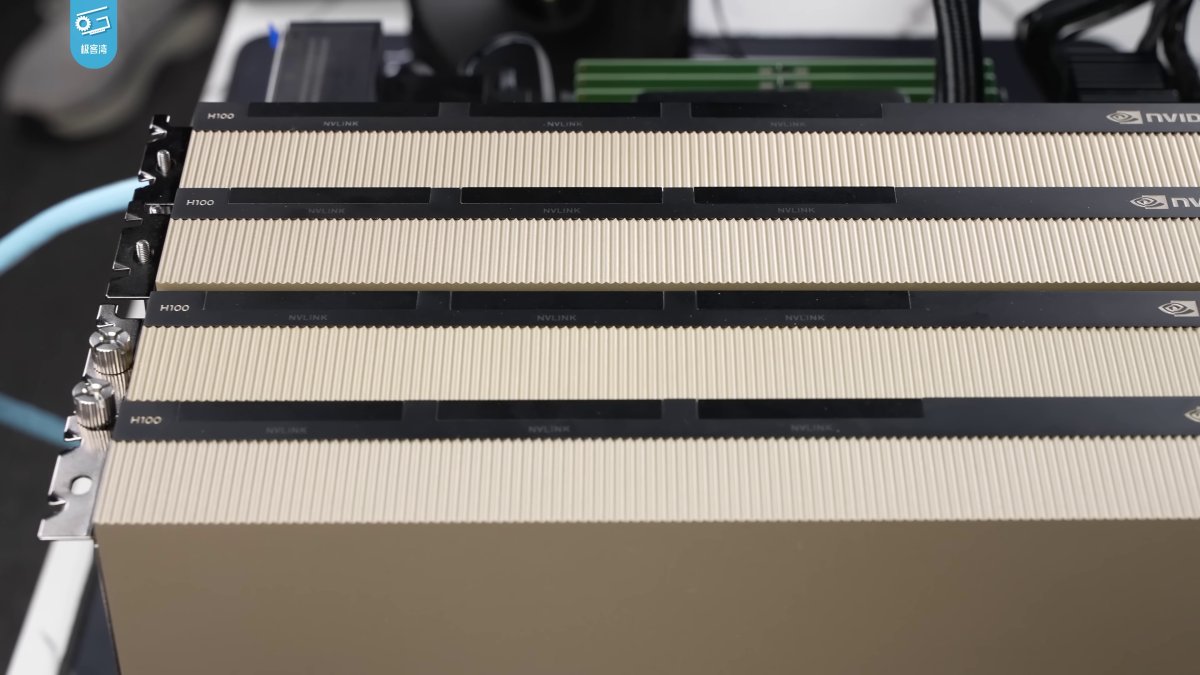
Nvidia has opened talks with insurance companies about shouldering some of the risk in the fast-growing business of lending against its own chips, according to a Financial Times report. The idea under discussion: if a cash-strapped AI cloud provider defaults on a loan and the Nvidia GPUs pledged as collateral can't be resold for enough to make lenders whole, an insurance policy would cover part of the loss. People familiar with the discussions cautioned that the talks are at an early stage and may not lead to any transaction.
The logic traces back to a phrase Jensen Huang has been pushing for months: GPUs should be treated as an "investable asset class," the way expensive, long-lived equipment like commercial aircraft supports complex financing structures that spread risk among airlines, lessors, banks and insurers. One person familiar with the effort put it bluntly — "Nvidia is trying to will the market to participate, to show other capital providers that these are investable assets."
The target borrowers are the so-called neoclouds: specialist GPU-rental firms that lack anything resembling the balance sheets of Microsoft, Google or Amazon but have become some of Nvidia's most eager customers. Lenders to these companies face a genuinely awkward underwriting problem. They must judge not only whether the borrower's business can service the debt, but what a rack of last year's accelerators will fetch in a secondary market that barely exists if demand turns.
According to the FT, Nvidia has shared data on chip depreciation and expected future compute prices with at least one insurer, and is working with reinsurance broker Howden Re on a possible structure; Howden declined to comment. The company has reportedly also floated joining a broader consortium alongside insurers, hedge funds and asset managers — a sign it wants pricing capacity, not just a bilateral indemnity.
The insurance push is the newest layer on top of an already aggressive balance-sheet strategy. Last month Nvidia offered to backstop a portion of financing deals intended to unlock around $500 billion from Wall Street firms including Goldman Sachs and Apollo, and separately guaranteed $105 billion of leases tied to a massive data center being built for OpenAI. Nvidia has told investors it expects roughly a quarter of its revenue next year to come from AI labs it supports with its own balance sheet — an extraordinary circularity for a supplier, and precisely the exposure insurance would be meant to trim.
Insurers are already edging toward this market. Products have launched covering credit risk on data center projects, declines in chip values, and contract breaches caused by power outages or cooling failures. Specialist valuation firms are filling the data gap: Barkr AI estimates an eight-chip H100 server system from 2022 still sells for roughly $320,000 — about what it cost new — but projects the same system retaining only two-thirds of its value within a year if supply catches up with demand, and falling to around $30,000 within six years. Forward Compute, a residual-value insurer, argues such coverage lets small neoclouds "compete with Amazon or Google" by equalizing counterparty risk.
Whether the talks produce a deal matters less than the direction of travel. The marginal buyer of Nvidia silicon is increasingly financed, not cash-rich — and the chipmaker is now actively engineering the financial plumbing, from guarantees to insurance, that keeps that buyer buying. It is a shrewd demand-side lever. It is also a reminder that the AI build-out's foundation is not just silicon and power, but an expanding stack of credit that someone, eventually, has to hold.
Comments (0)
Log in to join the discussion
Log InNo comments yet