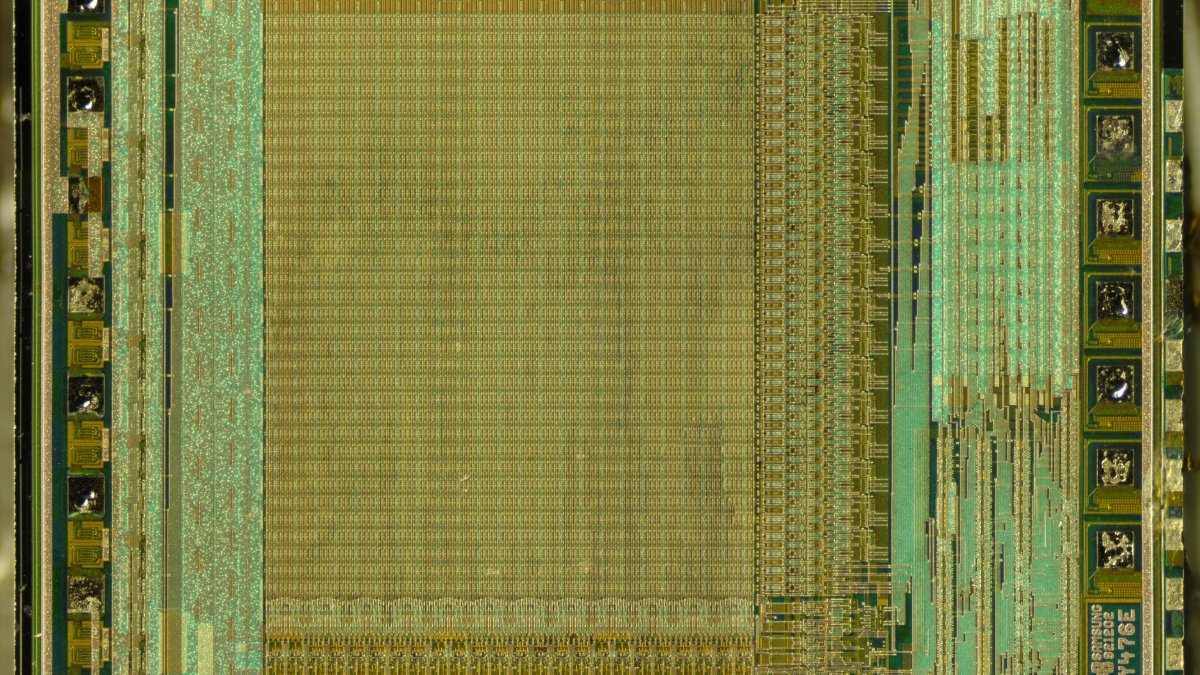
Samsung Electronics executive vice president Kim Taewoo said on Tuesday that high-bandwidth memory is on track to consume nearly 30% of the global DRAM industry's wafer capacity in 2027, up from roughly 20% today — and because HBM and conventional DRAM are cut from the same silicon, every point of that shift comes directly out of the supply of ordinary memory that PCs, phones and servers depend on.
The pricing signal arrived the same day. Market researcher TrendForce raised its 2027 HBM price outlook, forecasting that the blended average selling price across the category will jump 121% year over year, driven by persistent supply constraints, a rising mix of higher-priced HBM4 parts, and the HBM4E generation ramping in the second half of 2027. The firm estimates that by the end of 2027 the three HBM suppliers' wafer input will represent about 30% of total DRAM wafer investment — but only around 13% of DRAM supply measured by storage capacity.
That gap is the core of the problem. HBM is built by stacking a dozen or more thin DRAM dies with through-silicon vias and packaging them with 2.5D interposers, so a single HBM stack consumes roughly three times the wafer area of the DRAM bits inside it. When HBM's share of wafer capacity moves from 20% to 30%, the squeeze on conventional DRAM is therefore two to three times harsher than the headline percentage suggests. Industry sources say lead times for high-capacity server DDR5 RDIMMs have already stretched to 52 weeks.
Samsung, the world's largest memory maker, is leaning in hard. Industry estimates reported in Seoul put the company's monthly HBM wafer input at about 180,000 wafers this year, rising to roughly 250,000 in 2027 — an increase of nearly 40%. Samsung's HBM4 family is expected to make up around 80% of its HBM shipments next year, up from about 40% in 2026. The company began mass-producing HBM4 in February and supplied 12-layer HBM4E samples to customers including Nvidia in May.
The broader memory market has already repriced. TrendForce calculated in August that server DRAM contract prices rose 64% cumulatively in the second half of 2025 and could rise around 270% across 2026 as a whole; the overall DRAM market reached $154.73 billion in the second quarter, up 59.5% quarter over quarter. Now chip designers are adapting: TrendForce says GPU and ASIC vendors are weighing lower HBM capacity per chip, and that cheaper-to-build 8-high stacks — whose per-gigabyte price runs 10% to 20% above 12-high parts, because the base die cost does not shrink with fewer layers — will be the preferred option several vendors evaluate in 2027.
For buyers, memory has quietly become the binding constraint of the AI buildout — less glamorous than GPUs, and increasingly harder to get. For Samsung, SK hynix and Micron, the mix shift is a windfall that fattens average selling prices while it starves the commodity side of the market. Analysts at KB Securities argue the 2027 shortage of general-purpose DRAM will not be a passing phenomenon but a structural one, which would make next year the point at which the AI boom's appetite for bandwidth stops crowding conventional memory and starts replacing it.
Comments (0)
Log in to join the discussion
Log InNo comments yet