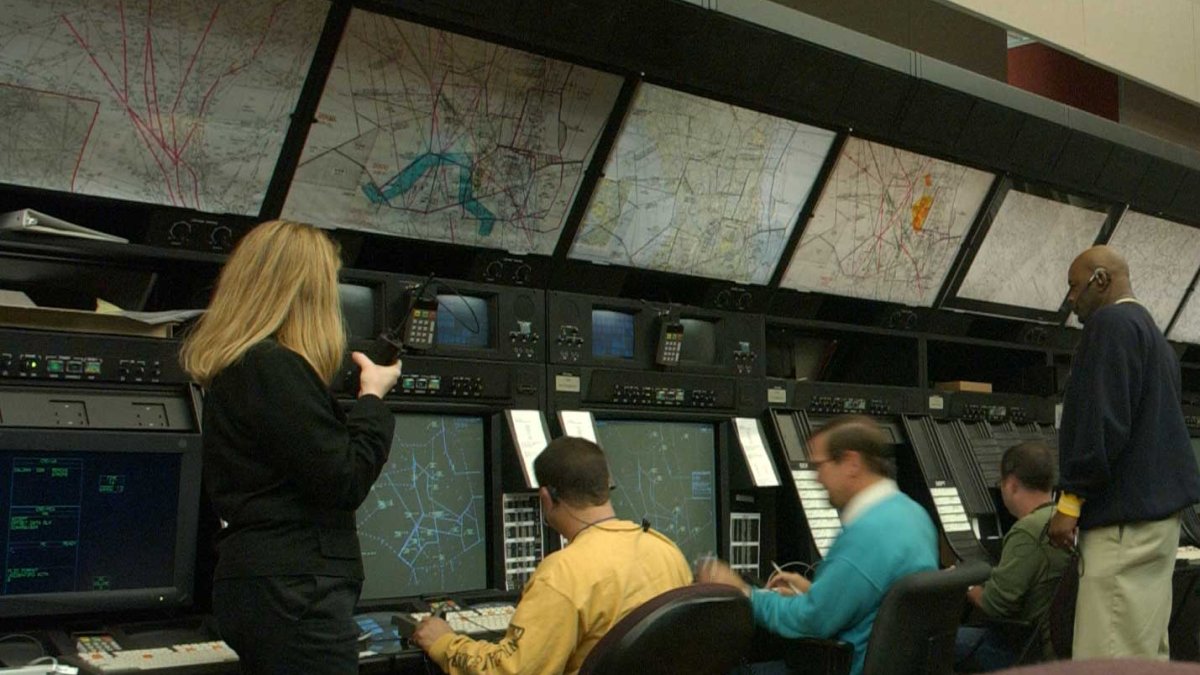
The Federal Aviation Administration halted departures nationwide at 3:53 p.m. Eastern on Friday after a communications failure spread across all 22 of its air route traffic control centers, and did not lift the order until 8:15 p.m. By late Friday, FlightAware data showed more than 7,500 canceled flights and over 8,100 delays, with ripple effects expected into the weekend. Controllers kept roughly 3,500 aircraft already airborne moving safely to their destinations while departures sat frozen at gates across the country.
Within hours, much of the speculation focused on SMART — the Strategic Management of Airspace, Routes and Trajectories system — an AI decision-support tool that the FAA expanded to all 22 centers on November 10, exactly three days before the outage. The tool is the product of a 12-year, $875 million contract with Air Space Intelligence, and merges roughly 200 data streams covering weather, traffic flow, staffing and airspace restrictions to recommend more efficient routes. It does not control aircraft: FAA specialists review its recommendations and controllers decide whether to act, and the agency credits the system with rerouting 180 flights for an average saving of 10 minutes and 80 gallons of fuel.
The timing was always going to invite scrutiny. On October 9, more than two dozen lawmakers wrote to the FAA asking it to pause the rollout until the agency answered questions about safety evaluations, controller training and oversight, including the terms of its planned 90-day evaluation period. The National Air Traffic Controllers Association has said it was never consulted on the design or testing of a system built to advise the very controllers who must decide whether to trust it. Airlines split the difference: Delta and American publicly endorsed SMART while warning that an abrupt transition could cause needless cancellations.
Officials were quick and categorical that SMART was not the culprit. Transportation Secretary Sean Duffy said the failure was in decades-old telecommunications equipment — analog switches, routers and copper lines that were overwhelmed with data and began producing inconsistent information, at which point the system was shut down. Homeland Security Secretary Markwayne Mullin said there was no indication of a malicious attack but would not rule one out while the investigation continued, and officials denied any connection to Microsoft's separate, simultaneous 365 outage. Air Space Intelligence posted on X that the ground stop "is not based on or a result of the SMART system, any product of ASI or our integration with FAA and ATC."
The episode lands in the middle of a funding fight over the underlying system. The administration is asking Congress for $50 billion to rebuild air traffic control, on top of $12.5 billion already allocated for modernization and $5 billion from the 2021 infrastructure law. Duffy's warning that the country "will have more of these" without new investment was an acknowledgment that the busiest airspace in the world still runs in part on equipment from another era.
What remains unresolved is the actual cause. The FBI is reportedly examining whether a software update to a private communications network played a role, and no agency has published a technical finding tying the failure to any specific component. Until one does, the documented record shows only a coincidence of timing: an AI system went nationwide, and 72 hours later the national airspace stopped.
The lesson for AI deployment in safety-critical infrastructure is uncomfortable either way. If SMART was uninvolved, it still absorbed blame by association — a reminder that in high-stakes systems, an AI tool's reputation is hostage to everything else that breaks nearby. If something in the modernization stack did contribute, the episode becomes an argument for exactly the slow, monitored, human-in-the-loop rollout the FAA says it ran. Either way, the credibility of AI as advisor in critical systems will now be litigated through this investigation, and every other agency weighing a similar rollout is watching.
Comments (0)
Log in to join the discussion
Log InNo comments yet