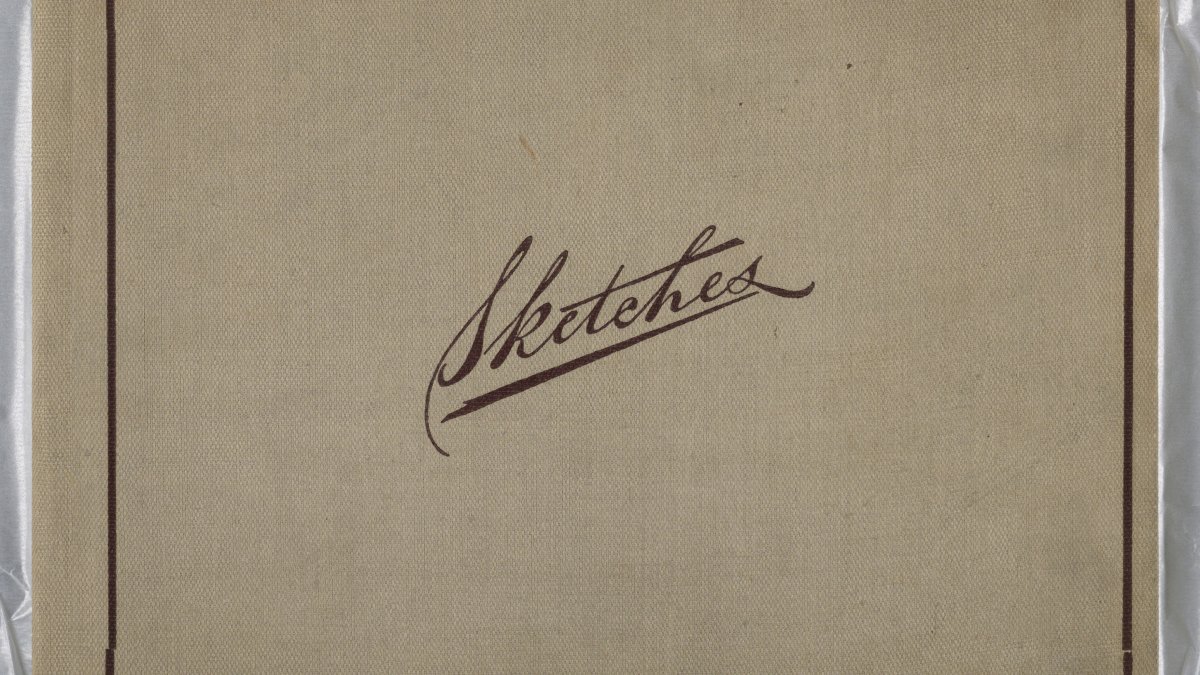
Mark Humphries, a history professor at Wilfrid Laurier University in Ontario who studies the fur trade, announced on X on November 24 that OpenAI's GPT-6.2 Astra model made what he calls a significant historical discovery: identifying the artist behind an anonymous 1808 sketchbook held at Yale University's Beinecke Rare Book and Manuscript Library. The model needed 22 minutes and 1 second, by his count, working only from publicly available primary and secondary sources on the web.
The puzzle had resisted human solvers for two centuries. The sketchbook records a canoe journey from Montreal to Fort William on Lake Superior and back, with only four dated and labelled images and several locations that have since been destroyed. Because the route was one thousands of travelers took, the artist could have been any of several thousand people, and Humphries had spent years on the problem without success. Without a name to start from, he notes, it was almost impossible to know where to begin looking.
Running in ChatGPT's Ultra tier with goal mode, Astra identified the artist as Louis-Guy-Charles-Guillaume de Rohan-Chabot (1780-1875), a minor French aristocrat and vicomte who spent most of 1808 in Canada as a British Army officer. The model also proposed a verification path Humphries had never heard of: a microfilmed diary of Chabot's trip held in the Special Collections of Cleveland State University, a document mentioned exactly once, in a footnote of a dissertation in an unrelated field of history.
The physical confirmation is what elevates the case from interesting to decisive. Humphries ordered scans of the diary from microfilm and found that the handwriting matched the sketchbook's captions and that the itinerary aligned perfectly with the few dated drawings. The clincher: on June 18, 1808, after Chabot's canoe reached Fort St. Joseph, he wrote "I took a sketch" and described the exact view depicted in a matching drawing. The diary itself runs some 162 pages and is attached to excerpts from long-destroyed North West Company papers — a significant new primary document for fur trade and Canadian history, independently of the attribution question.
Humphries also ran the same puzzle on Anthropic's Claude Fable 5.2, which took about 35 minutes and proposed the same candidate but did not locate the diary. OpenAI president Greg Brockman reposted the thread, calling it a significant historical mystery solved. Humphries is careful about the boundaries: the 22 minutes covers the hypothesis and the verification lead, not the archival ordering and human checking that followed, a human could in principle have done the same work over years, and he remains ambivalent about the technology — he does not use AI for his writing.
His framing of the bigger picture is the part historians are now debating. Humphries compares the moment to where mathematicians stood roughly eleven months ago, when language models started solving their first Erdős problems: models moved from reading handwriting, to thinking historically, to making small but real autonomous contributions to knowledge. The relevant skill on display was not recall but hypothesis generation across disjoint archives — working forward from the sketchbook's scant facts and backward from everything known about 1808 British North America at the same time. If verified discoveries like this keep landing in humanities fields the way they have in mathematics, the pressure will shift to libraries and archives to digitize and index their holdings, because the models can only join dots that someone has put online.
Comments (0)
Log in to join the discussion
Log InNo comments yet