Neuralink has received US Food and Drug Administration approval to launch the LINK Pivotal Study, which the company describes as the first pivotal trial of an implantable brain-computer interface in the United States. The study will evaluate the safety and effectiveness of the Neuralink system in people with severe paralysis caused by amyotrophic lateral sclerosis, or ALS, and marks the company's move from small early-feasibility studies toward the kind of evidence package regulators weigh when deciding whether a medical device can be sold.
According to the company's announcement, the trial will measure whether participants can control digital devices through thought, with a focus on functional outcomes that improve independence in daily life. It will also continue to track long-term safety and reliability across multiple clinical sites. Enrollment is open as of this week. Neuralink has not disclosed how many participants it plans to enroll, how long the study will run, or when it expects to seek marketing authorization, and it cautioned that an ALS diagnosis alone does not guarantee eligibility.
The approval rests on a body of early data that is unusually public for a first-in-kind implant. Neuralink says more than 30 participants have received its N1 implant across early feasibility studies in the United States, Canada and the United Kingdom, collectively logging thousands of hours of real-world use. Participants have used the system to pursue higher education, make art, play video games and communicate with family members, the company said.
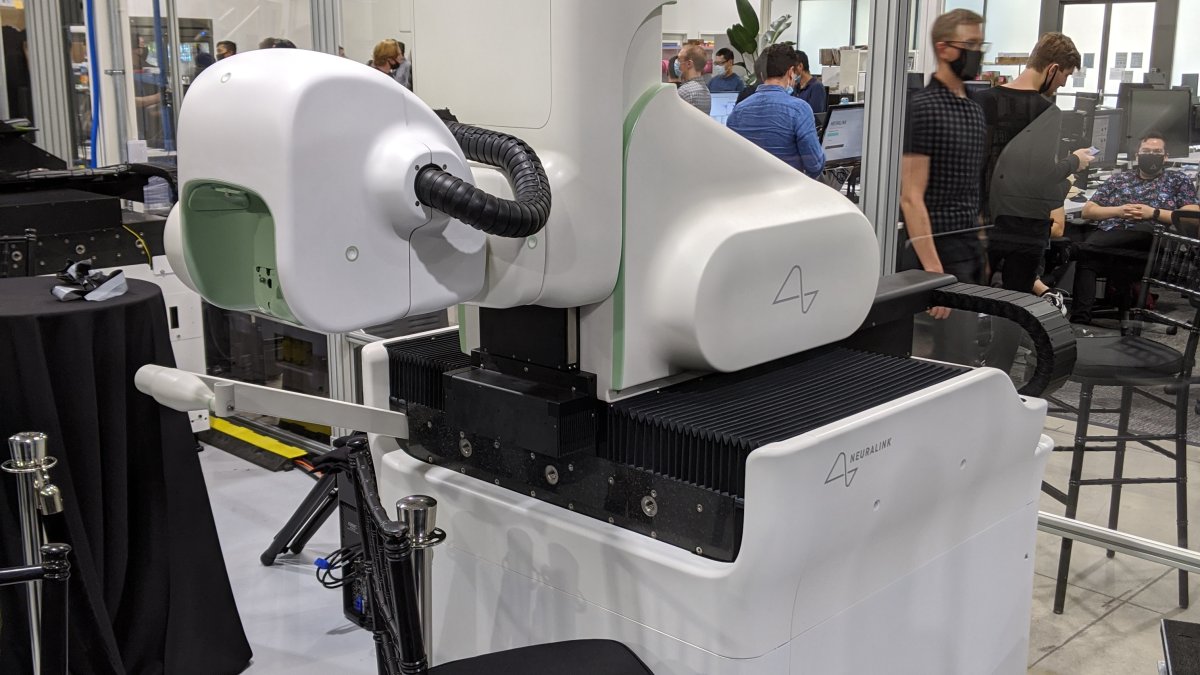
The hardware is the same pair of technologies Neuralink has demoed since 2024: the N1 implant, a coin-sized device placed in the skull, and the R1 surgical robot that threads flexible electrodes into the motor cortex. Software decodes the user's intended movements and converts them into cursor and click commands. The company is explicit about the limits: the system does not treat ALS, restore lost movement, sensation or natural speech, and it is meant to replace physical peripherals with direct neural control for digital tasks.
The regulatory path has been steady rather than fast. The FDA first cleared Neuralink for human testing in May 2023, the first implant followed in January 2024 under the PRIME study, and in 2025 the company showed its first ALS participant, Bradford Smith, writing and communicating using only brain signals. Moving to a pivotal trial means the study design, sample size and endpoints are now fixed well enough to support a future regulatory submission, assuming the data holds.
Neuralink remains the best-funded player in the field. According to the Bloomberg Billionaires Index, the company raised 650 million dollars last year at a valuation of about 9 billion dollars. It is not alone: Science Corporation, founded by Neuralink co-founder Max Hodak, raised 400 million dollars at a 3.5 billion dollar valuation this autumn, and Chinese BCI startup NeuroXess pulled in 700 million yuan as the domestic race accelerates. A pivotal trial puts a clear mile marker between Neuralink and rivals still running feasibility work.
The commercial logic of implantable BCIs has always been medical-first, consumer-later, and this approval tests that thesis directly. If LINK enrolls quickly and adverse events stay rare, Neuralink will have the first regulatory-grade dataset for a wireless implanted BCI, which would pressure health systems and insurers to define who pays for the device. If enrollment stalls or safety signals appear, the gap between demonstration videos and an approvable product will look wider than the funding suggests. Either way, the next twelve months of data, not the demos, will settle the argument.
Comments (0)
Log in to join the discussion
Log InNo comments yet