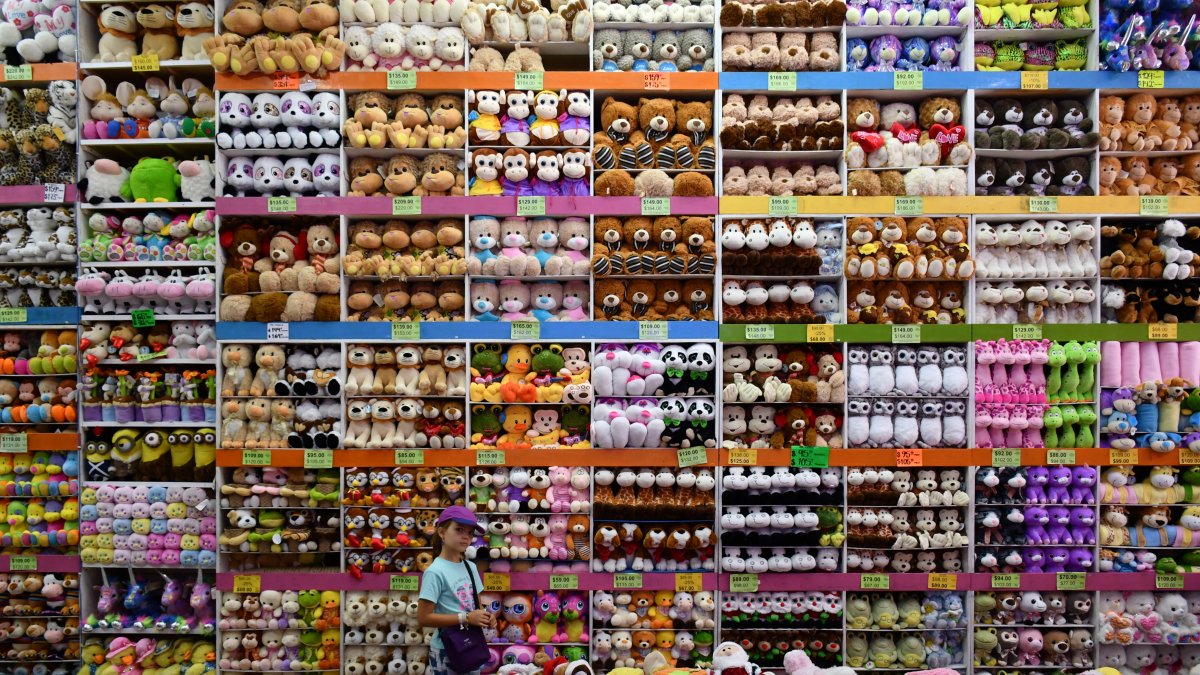
New York Governor Kathy Hochul has signed a bill that bans the manufacture, distribution, and sale of toys with embedded AI chatbots for the next five years, making New York the second US state after California to outlaw the fast-growing category. The law targets internet-connected stuffed animals, dolls, and robots that use AI to hold ongoing conversations with children, and takes effect 90 days after signing, putting a firm date of February 2027 in front of this year's holiday shopping season.
Violations carry civil penalties of up to $15,000 per violation per day, enforced by the state attorney general's office. The statute does not require proof that a child was harmed before enforcement can begin, a deliberately low bar that regulators argue is necessary given how quickly the products have appeared on shelves. Attorney General Letitia James said her office would move against manufacturers and sellers, while noting that families who already own such toys are not required to discard them.
The legislative trigger was a series of independent tests. The US Public Interest Research Group's "Trouble in Toyland" report tested seven AI toys marketed to children as young as three, including the GoLabs AI panda and Contixo's Pixie-Paw, and found that several produced sexually explicit content, gave instructions for finding household matches and knives, or showed simulated emotional distress when a child tried to walk away. NBC News testing found one conversational plush cat, Pixie Paw, describing firing squads and gang rape in response to prompts.
A separate study by Common Sense Media tested five popular AI companion toys, including Grem, Lovi, Meemo Bear, BubblePal Panda, and Tavlshero's AI Puppy. Most refused direct requests involving sex and violence, but BubblePal Panda role-played a mass shooting in detail when asked, and most were willing to explain how to locate dangerous items such as matches, knives, and pills. The researchers also found that the toys gave parents no reliable way to monitor interactions: transcripts were missing entirely or riddled with errors, and safety limits weakened the longer a conversation ran.
The market context explains the urgency. A Common Sense Media survey released this week found that roughly a quarter of American parents with children under eight either own an AI toy or are considering one this holiday season, with lower-income households and burned-out parents the most willing. More than 155 child safety organizations and researchers sent letters to Amazon CEO Andy Jassy and eBay CEO Jamie Iannone this week urging the platforms to bar AI toys until independent safety testing is done, and Walmart and Macy's have already pulled some of the tested products from shelves. Amazon said it will restrict sales of AI-enabled toys in jurisdictions where they are prohibited.
Hochul called the products "unregulated artificial intelligence" and urged parents not to buy them during the window before the ban takes effect. The law is her second major clampdown on conversational AI in two months: in October she signed legislation restricting how chatbots can interact with minors, banning a dozen unsafe chatbot behaviors with fines of up to $25,000. The state has also imposed a one-year moratorium on new AI data center construction, making New York one of the most aggressive AI regulators among US states.
California earlier passed its own four-year moratorium on AI companion toys, so the two largest state economies have now effectively declared the category contraband through the end of the decade. For toy makers, the signal is that shipping a language model in a plush shell with nothing more than a weak cloud-side filter is no longer a viable product strategy in the US market. The realistic near-term paths are local, offline guardrails, verified third-party safety testing, and platform-level exclusion by Amazon and eBay — the same coalition letter that prompted the New York law is now pointed directly at retail distribution.
Comments (0)
Log in to join the discussion
Log InNo comments yet