The US Federal Communications Commission on Wednesday granted SpaceX conditional approval to deploy as many as 1 million satellites for its Starmind constellation, a network of orbital data centers intended to process AI workloads in space. It is the first authorization of its kind in US history, and at full build-out it would multiply the roughly 17,000 satellites currently orbiting Earth many times over.
SpaceX filed the application in January, arguing that near-constant solar power in orbit can lower the cost of AI computing while easing the environmental burden of ground-based data centers. Each Starmind satellite is designed to deliver up to 250 kilowatts of peak compute, drawing on 210-kilowatt solar arrays built at the company's Bastrop, Texas facility, with 160-square-meter deployable liquid radiators shedding heat into space. Processed results would travel over high-bandwidth laser links to the existing Starlink network, with backup radio links in the 18.8-19.3 GHz downlink and 28.6-29.1 GHz uplink bands.
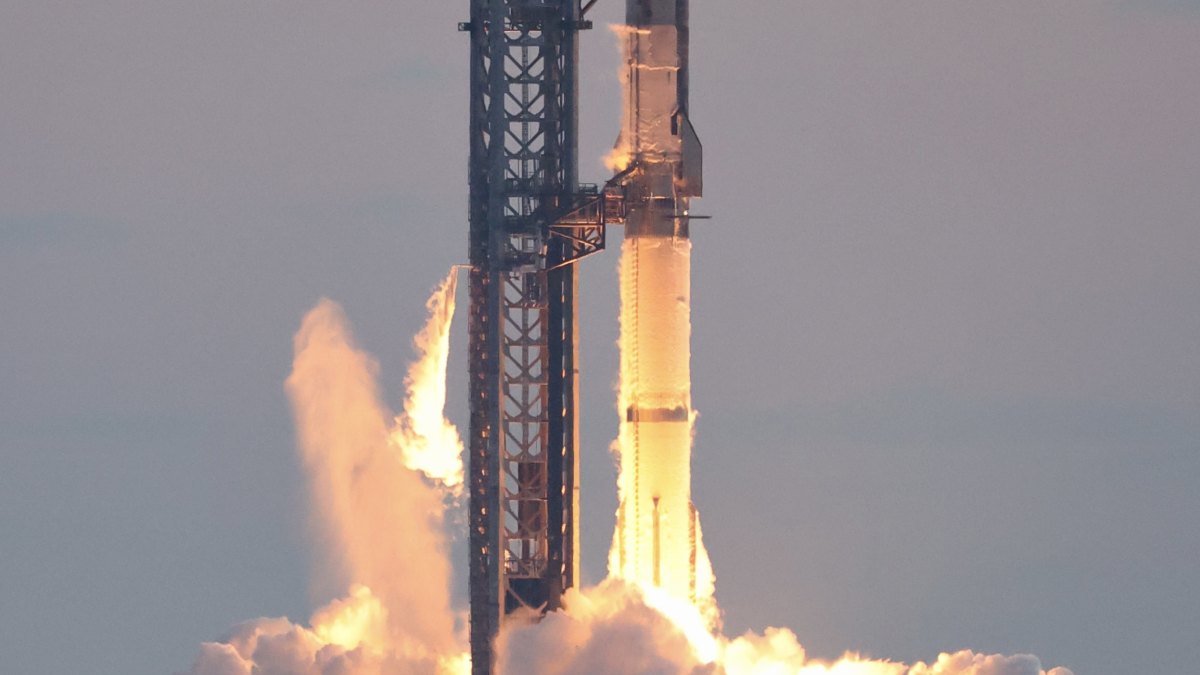
The license sets a 14-year regulatory runway. SpaceX must place a first operational Starmind satellite in orbit no later than November 2033, reach 100,000 satellites — 10 percent of the maximum — by November 2035, deploy 50 percent by November 2038, and complete the constellation by November 2040. The plan leans heavily on Starship, the company's next-generation reusable rocket, to drive down launch costs enough to make the arithmetic work.
One condition matters: the FCC declined SpaceX's request to park retired satellites in "graveyard" disposal orbits rather than letting them burn up in the atmosphere, writing that the company "has not provided sufficient information" that its alternative disposal methods are compliant. SpaceX will need that waiver before launching any satellite not slated for atmospheric reentry. The agency also dismissed environmental objections, saying collision-risk and reentry-pollution impacts were "outside the Commission's purview" or "speculative and not supported in the record," a stance enabled by its October policy finding that space activities fall outside its National Environmental Policy Act obligations.
The order drew roughly 1,500 public comments, with the American Astronomical Society and the Secure World Foundation among those urging rejection over collision risk, debris, and interference with astronomy. Amazon's satellite unit Leo had urged the FCC to reject the application as "incomplete, speculative and unrealistic." Competition is not waiting: Google launched its first Project Suncatcher TPU satellites this month with Blue Origin booked to fly a dedicated heavy-lift mission for the program in 2029, and Blue Origin's own Project Sunrise application, filed March 19 for up to 51,600 satellites in sun-synchronous orbit, remains pending.
FCC Chairman Brendan Carr framed the approval as national strategy: "This action opens a bold new frontier for the computing infrastructure needed to power America's leadership and growth." Musk replied on X: "Much appreciated. This will be a great asset to America and the world."
Skeptics note that operators routinely request far more orbital slots than they intend to fill — SpaceX sought approval for 42,000 Starlink satellites and has deployed a little over 11,000. Whether even a fraction of Starmind gets built will depend on Starship economics that remain unproven. But the regulatory door to orbital AI data centers is now officially open, and the first mover has a 14-year head start.
Comments (0)
Log in to join the discussion
Log InNo comments yet