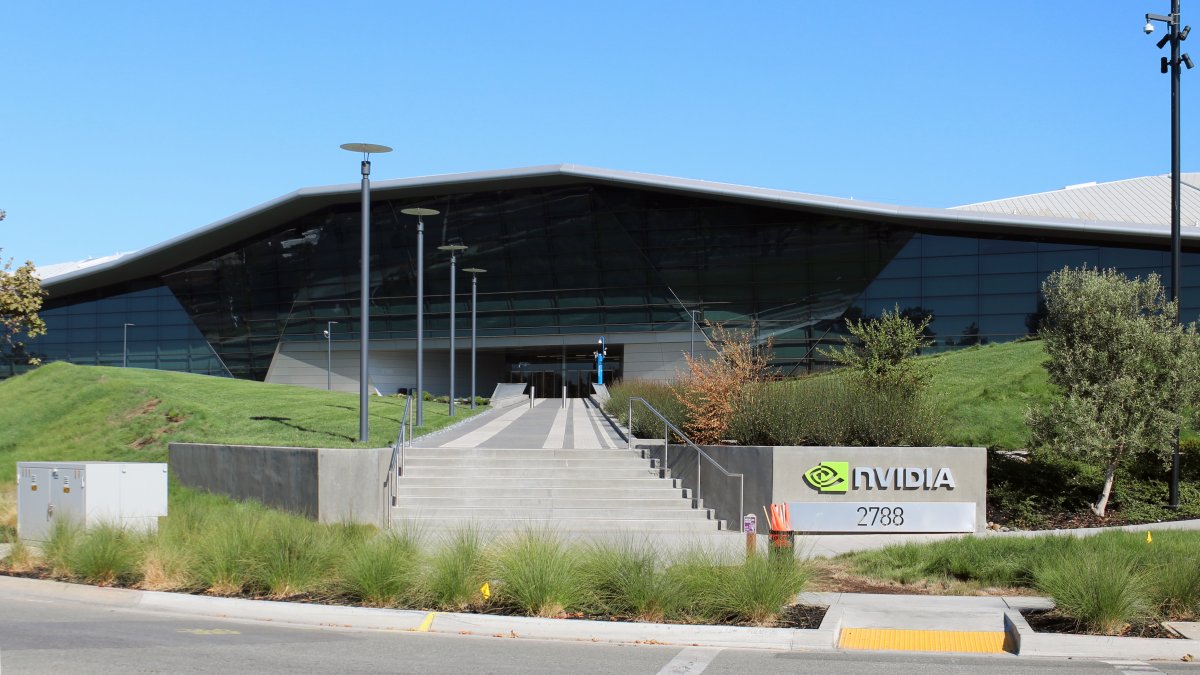
S&P Global Ratings has placed Nvidia's AA issuer credit rating and its senior unsecured debt ratings on CreditWatch with negative implications, a formal warning that the rating could be cut within 90 days. The agency said a downgrade to AA-minus is likely if it concludes the governance flaws that prompted the review persist, and that a larger cut is possible if the episode proves damaging to the company's reputation or business prospects. At the center of the review is the turbulence around CEO Jensen Huang, whose brief departure from the company and subsequent reinstatement, in S&P's words, highlighted Nvidia's dependence on its co-founder and raised questions about board independence, oversight and succession planning.
The rating action lands on top of an unusual week in the credit market. Moody's had already cut its outlook on Nvidia from positive to stable a week earlier. Data from ICE Data Services showed Nvidia's five-year credit default swap spread, the annual cost of insuring its debt against default, widening about 6 basis points to 147.27 basis points on Tuesday, an intraday record. That is a small number next to what followed, but the direction matters: insurers of Nvidia debt have never charged more.
The sharpest move belonged to CoreWeave, the Nvidia-backed AI cloud that borrows to buy GPUs and rents out the compute. Its five-year CDS jumped 209 basis points on Wednesday to 15.34 percent per year, the largest single-day increase on record, implying a market-priced five-year default probability above 70 percent. That figure is a derivative-pricing estimate that bundles in a risk premium and typically overstates actual default odds, but the direction of the underlying bonds is unambiguous: CoreWeave's 2030 notes fell to record lows and its 2031 bonds now yield close to 18 percent. By comparison, the company reported 46.9 billion dollars of debt at the end of the third quarter, up more than 10 billion in a single quarter, with fourth-quarter interest expense of about 1.1 billion dollars expected to exceed its adjusted operating income, and a first-half net loss above 1 billion dollars.
The repricing is not confined to one company. Oracle's five-year CDS rose 17 basis points to a record 356 on Tuesday and set fresh highs on Wednesday, with implied five-year default odds of roughly 23 percent against 6 percent a year ago; one Chinese financial report citing the same ICE data put the level at 316 basis points, still record territory. Alphabet and SpaceX also saw five-year CDS reach record highs on both days. SoftBank's five-year CDS climbed to 501 basis points, the highest since October 2022, and its Tokyo shares fell 14 percent on Wednesday, leaving the stock down nearly 40 percent in November, on track for its worst month since the dot-com bust of 2000.
What spooked the insurers is the shape of the financing itself. Neoclouds borrow heavily to buy Nvidia chips, rent the compute to AI labs, and service the debt with rental income, while Nvidia itself helps finance its customers, so money circulates inside the same chain. Reuters data cited in Chinese financial press shows the five largest hyperscalers spent 556.9 billion dollars of capital expenditure in the first nine months of 2026 against 542.9 billion dollars of operating cash flow, the first such gap since records began in 2011. A European Central Bank report found most large US cloud providers had negative free cash flow in 2026, and S&P expects six of them to stay negative through 2027. Nick Ferres, chief investment officer at Vantage Point Asset Management in Singapore, said credit markets are pricing the circular financing and off-balance-sheet commitments of the big clouds. Alberto Gallo of hedge fund Andromeda Capital was blunter: Huang's return does not change debt fundamentals, and the riskiest data-center bonds keep weakening even as AI credit overall stabilized after September and October.
Equity investors spent Wednesday doing the opposite of the bond market. Nvidia shares fell 3.91 percent, leaving them about 10 percent below the close on the day Huang was reinstated, and the Nasdaq 100 briefly traded 20 percent below its November peak, the technical threshold for a bear market, before recovering most of the loss. The investment-grade CDX index, a broad gauge of US corporate credit risk, rose to its highest level since March 31.
A one-notch cut of Nvidia would be more than symbolic. The company sits in indexes that track highly rated issuers, its commercial paper and bonds anchor financing costs for suppliers and partners, and a downgrade would raise the bar for every private credit deal in the AI data-center complex that prices off Nvidia's credit. The next two checkpoints are close: S&P's 90-day review window, and Huang's scheduled testimony before a US Senate committee next week, where the succession and governance questions behind the rating action will get their most public airing yet.
Comments (0)
Log in to join the discussion
Log InNo comments yet