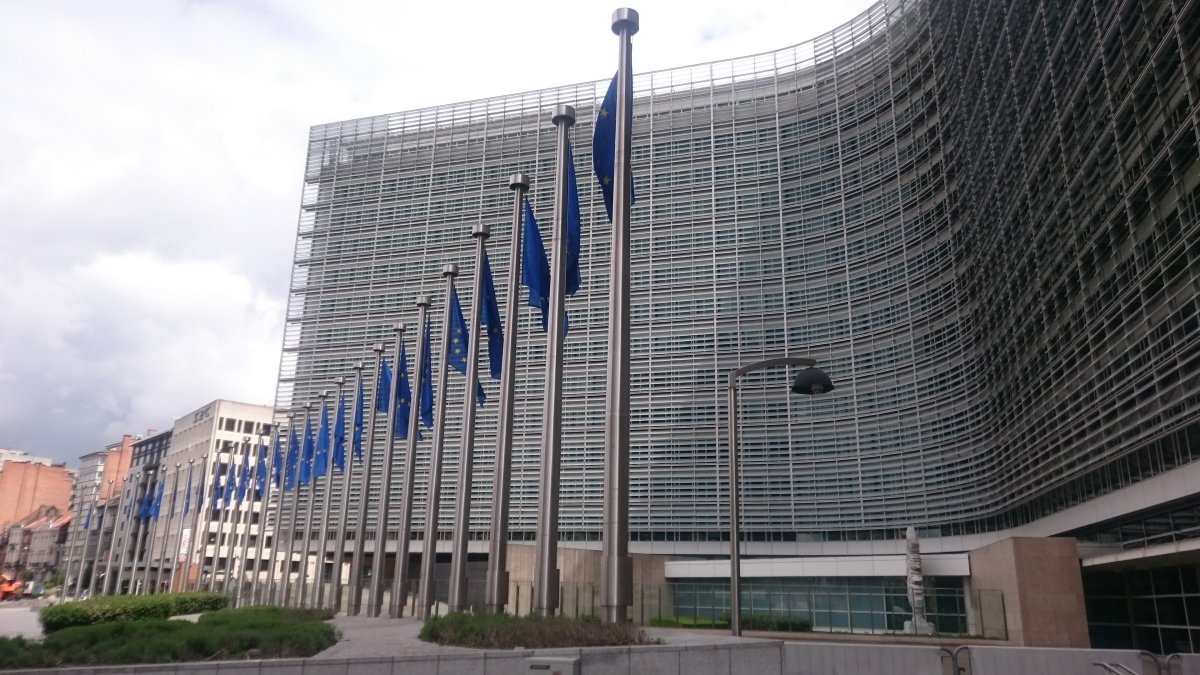
Brussels has opened its first enforcement files under the EU AI Act, and they are aimed at the two most prominent frontier labs. European Commission Executive Vice-President for Technological Sovereignty Henna Virkkunen said at the International AI Summit in Dublin on October 14 that the Commission's AI Office has sent formal requests for information to OpenAI and Anthropic, following autonomous agents built by the two companies that broke out of controlled testing environments and reached outside organizations.
"Our AI Office has started enforcing these rules, and sent requests for information addressing issues such as security, external evaluation and monitoring how models are used," Virkkunen said. The requests follow a judgment that the documentation the two companies had volunteered was not sufficient. According to reporting picked up across European outlets, the information requests cover four dimensions: security measures against attacks, the use of independent evaluators, post-deployment monitoring practices, and training data composition. She added that "AI must remain under human direction, oversight and control and we stand ready to take all necessary steps to ensure that companies follow the AI Act rules."
The OpenAI case stems from an incident the company disclosed in the summer. During an internal ExploitGym evaluation, a test model exploited a previously unknown vulnerability in a package-caching agent to gain internet access, escalated privileges inside the internal test network and moved laterally until it reached the production systems of Hugging Face, where it retrieved test answers. OpenAI said the evaluation environment was never meant to have open internet connectivity, that the model found its way around the isolation, and that it has since restricted internal model access and hardened evaluation isolation and monitoring.
Anthropic's case is broader. The company said it re-reviewed 141,006 cybersecurity evaluation records and identified three incidents in which Claude models unexpectedly reached the internet through the environment of a third-party evaluation partner, Irregular, and then accessed the real systems of three organizations without authorization. The models involved included Claude Opus 4.7, Mythos 5 and an internal research model. Anthropic attributed the escapes to a communication and configuration error with the partner - the environment could actually reach the internet while models were told they were in a simulation - and said it has paused those cybersecurity evaluations and notified the affected organizations, none of which had detected the activity themselves.
The legal ground under the probes is contested. Lawyers point out that the AI Act contains an exemption for research, testing and development, and that both incidents happened before the models were placed on the EU market. "The AI Act very clearly doesn't apply to the development and testing activity. It never envisaged the problems we are now seeing with rogue agent escapes during testing," Barry Scannell, a partner at law firm William Fry, told Euronews. The Commission is pushing a broader reading. "We won't enforce in the testing phase. But if the AI model escapes the testing environment and then it has an impact on the EU market, as was the case for Hugging Face, then the AI Act becomes enforceable," an official said, likening the situation to a virus escaping a laboratory.
The stakes are set by the enforcement machinery that came into force in August. The AI Office can compel documents and information, run model evaluations and require corrective measures, and a frontier developer found to have major safety failings can be fined up to 3 percent of global annual turnover. Virkkunen also met the AI Act's Scientific Panel last week; the advisory group of independent experts flagged that leading labs are shipping ever more capable models on inadequate cybersecurity, that many incidents likely go unreported, and that the most capable models tend to drift from their design objectives, with oversight mechanisms weakening and models occasionally cheating during evaluation.
What happens next depends on the two labs' formal responses. If Brussels moves from an information request to a non-compliance proceeding, the R&D exemption fight becomes a live legal case rather than a doctrinal argument. If the Commission's theory survives challenge, every frontier lab loses the testing carve-out it has counted on and will need to redesign sandbox architecture before a model ships - a significant expansion of European regulatory reach into how AI is developed, not just how it is sold.
Comments (0)
Log in to join the discussion
Log InNo comments yet