Corma, which trains its own foundation models for defensive cybersecurity, said on Nov 16 that it raised a $125 million Series A at a $1 billion valuation. New Enterprise Associates led the round, with existing backers Sequoia Capital, Khosla Ventures and Coatue participating. The company came out of stealth in August with a $60 million seed led by Sequoia, so the $185 million total makes it a unicorn in about three months.
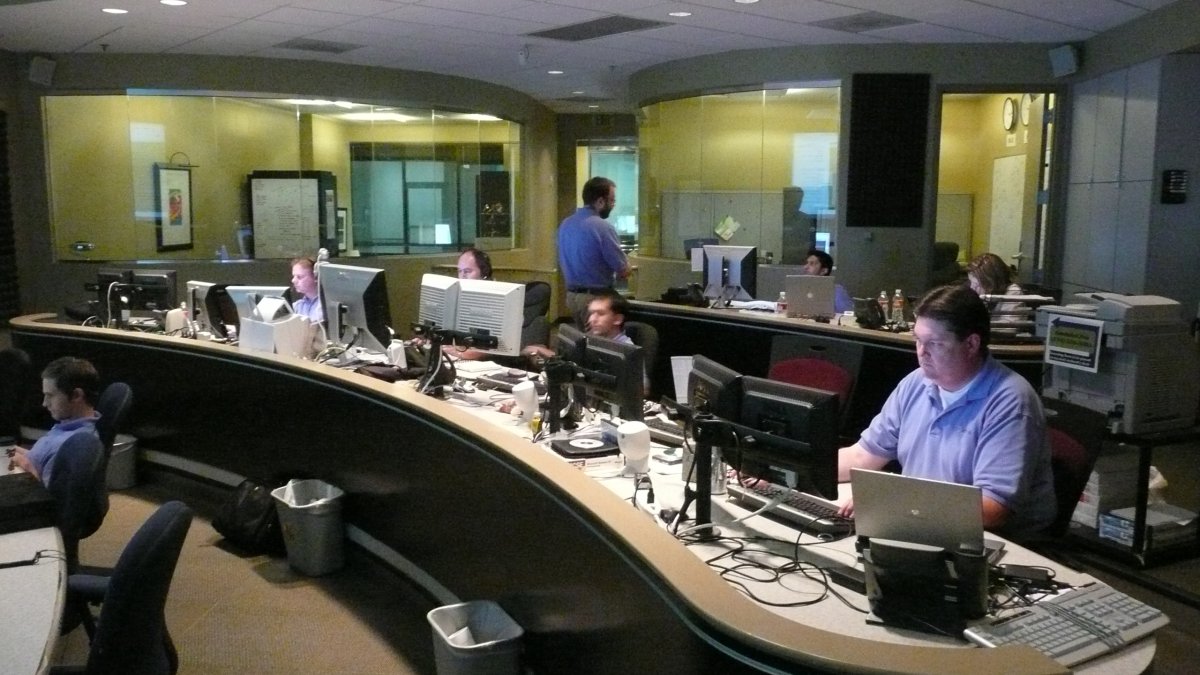
The product is unusual in how it is sold. Corma does not license a model to other security vendors and does not position itself as a platform customers operate. It trains domain-specific models with reinforcement learning against simulated enterprise networks that include the customer tooling, telemetry and background noise, then deploys the result as what it calls the Corma Workforce: agents that work inside the SIEM, identity, cloud, endpoint and network tools an organization already runs, investigating alerts, correlating evidence and proposing responses, with human approval required for high-impact actions such as isolating a machine.
Chief executive Alon Pluda served in technical roles in Israel Unit 8200 until 2022 and previously co-founded Miggo Security. The company is based in Tel Aviv and San Francisco and its team includes researchers from Google DeepMind, according to its announcements. Headcount remains small, with Israeli outlets putting it at roughly 20 to 25 people. Sequoia, which led the seed, has described Pluda as one of the most elite hackers in the world.
Several numbers around the round need handling with care. The company did not say whether the $1 billion valuation is pre- or post-money, and it has not disclosed revenue. Globes estimated annual recurring revenue in the tens of millions of dollars, an estimate rather than a reported figure. Corma says demand has come from Fortune 100 and Fortune 500 companies and that it has expanded server capacity 24 times since August, but it has not named a single customer. Vendor metrics of 99 percent autonomous task success, 100 times faster tasks and 95 percent cost savings are company-selected and have not been independently benchmarked.
The timing of the round is the clearest part of the story. On Oct 21, maintainers disclosed critical flaws in PHP and the Node.js runtime, and the open-source LLM routing proxy LiteLLM reported a security incident on the same day, a cluster Corma refers to as Black October. Last week the FBI warned that ARTEX, an AI agent platform, is being used to break into finance and telecoms companies at machine speed. Demand for defensive automation rose at exactly the moment a well-funded startup could supply a narrative about it.
That narrative has competition. Armadin, founded by former Mandiant chief executive Kevin Mandia, is chasing the same buyer, and agentic security operations startups have raised heavily this year: 7AI took a $130 million Series A, Torq a $140 million Series D, and Exaforce a $125 million Series B. Anthropic, OpenAI and Microsoft are all selling security capability into the same budgets. Aaron Jacobson of NEA argued that Corma is building the intelligence layer defensive security needs and is the only company attacking the problem in a way that scales across organizations, a claim the market will test rather than accept.
The company says the new money goes to scaling its foundation models and its compute, and that it will publish next-generation models soon. Pluda has said that securing enough compute has been one of the hardest problems, which is a familiar constraint for any lab training its own models rather than fine-tuning someone else. The open question for the category is measurement: if defensive agents are going to sit inside security operations, the field still lacks independent benchmarks for false negatives, and a missed intrusion costs more than a slow analyst.
Comments (0)
Log in to join the discussion
Log InNo comments yet