Plurai, a startup founded by two alumni of autonomous-driving data company Nexar, said Wednesday it raised a $13 million seed round led by Team8, with participation from U&I, Velocity and Mercer, to fix what its founders see as the industry's core agent problem: demos are easy, reliability in production is not.
The numbers behind that complaint are solid. LiveBench 2.0's long-agentic category shows Claude Fable 5.2 completing 82.9 of 100 tasks and ChatGPT-6 Astra 75.6, and an evaluation by infrastructure company EON that dropped agents into a simulated corporate environment found the best performer, Claude Opus 4.8, finishing tasks at just 76.8% accuracy. Agents tasked with travel booking ignore spending policies; agents asked to combine multiple data sources get tangled; long customer-service conversations overwhelm context and lead to wrong turns.
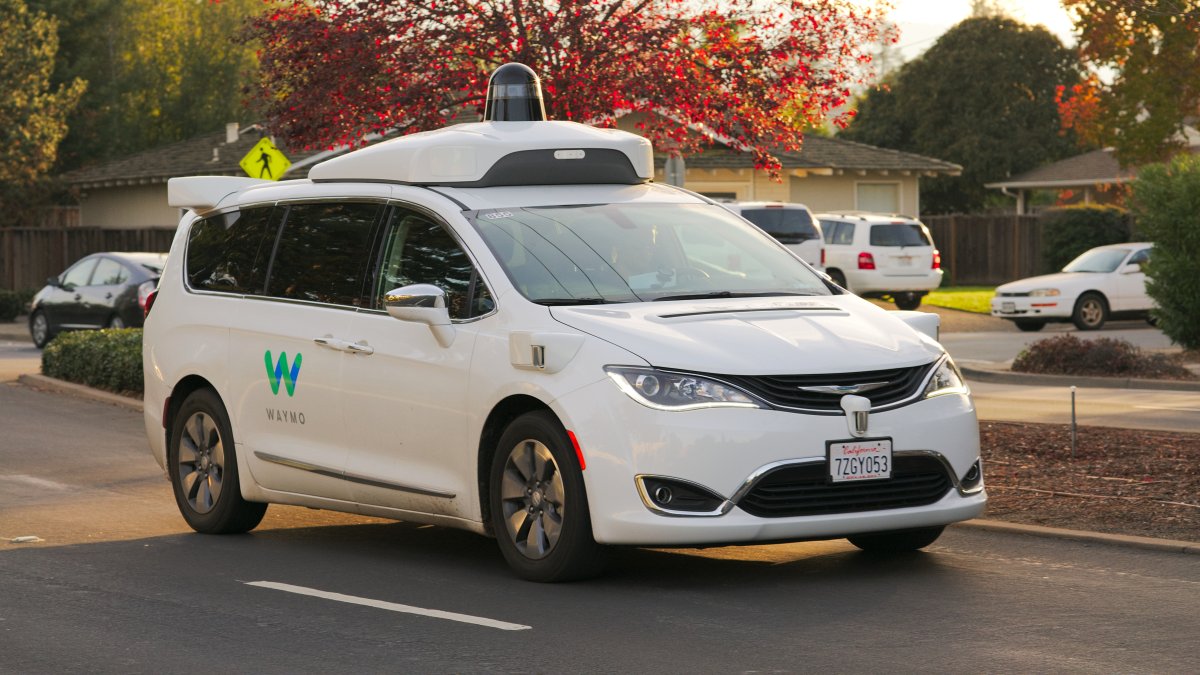
Co-founders Ilan Kadar and Elad Levi argue agents are exactly where self-driving cars were: probabilistic systems in unpredictable environments with long-tail risk. Kadar previously worked with Waymo to simulate and evaluate its end-to-end deep-learning driving software, and Plurai imports the same playbook. The platform builds a digital twin of a company's electronic systems — the knowledge base and tools an agent will touch in production — maps the agent's possible flows into a graph, and uses that map to generate evaluations and fixes for edge cases before deployment. It runs alongside existing agentic tooling including Claude Code, Codex, Copilot and Cursor.
The longer-term bet is on economics. Kadar says the data Plurai gathers should be used to post-train small, open-weight models tailored to each customer's tasks. Tests run in cooperation with Nvidia and Nebius, published on the company's blog and not independently verified, claim the approach turns open models into performers that beat mid-tier frontier models at 44x lower cost. "No matter how smart OpenAI and Anthropic models will be — and they will be much smarter — they will not know your business and your policy," Kadar told TechCrunch.
Reah Miyara, a Google DeepMind researcher who invested as an angel, said Plurai's edge is understanding failure modes in production and generating synthetic data to tune against them, noting that IT leaders increasingly see frontier models as out-of-distribution with their specific data and unsustainable in cost.
The analogy Plurai is leaning on has a real precedent: robots powered by narrow, domain-specific models are working in the field today, while general models remain too unreliable to deploy unsupervised. If the same holds for software agents, the market splits into frontier generalists and cheap, task-tuned specialists validated in simulation — and the tooling layer that produces that validation, not the models themselves, becomes the durable business.
Comments (0)
Log in to join the discussion
Log InNo comments yet