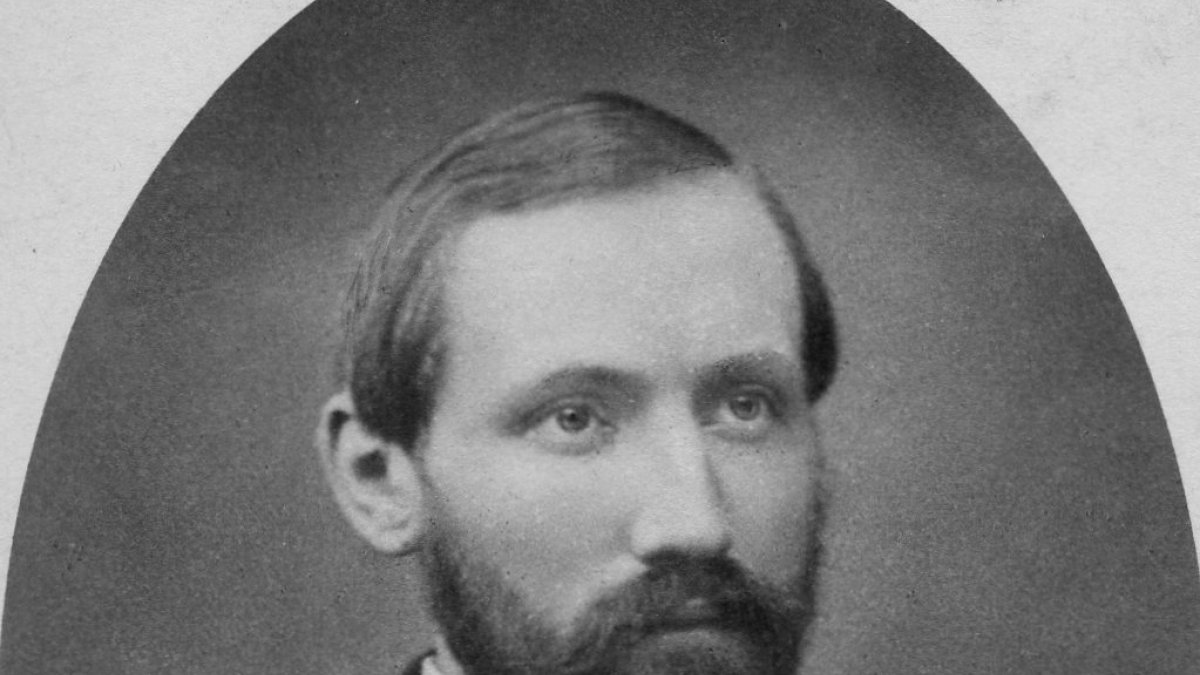
A mathematician at Anthropic says he has done what eluded the field for 167 years. Levent Alpoge, a number theorist who joined the company after stints as a Harvard Society of Junior Fellow and a Princeton PhD student under Fields medalist Manjul Bhargava, released a four-page note on November 20 stating: "I believe I have, working with Claude, discovered a proof of the Riemann Hypothesis." The claim — which he says extends to the broader Generalized Riemann Hypothesis — has not been independently verified, and Anthropic has not publicly endorsed it.
The Bernhard Riemann 1859 conjecture about the distribution of prime numbers is widely regarded as the most important open problem in pure mathematics and one of the seven Millennium Prize Problems, each carrying a $1 million award from the Clay Mathematics Institute. Under the institute's rules, a claimed solution must be published in a peer-reviewed venue and survive two years of scrutiny before the prize is even considered. Only one Millennium problem, the Poincare Conjecture, has ever been resolved.
The form of the release is as striking as the claim. Rather than a traditional paper, Alpoge published Lean formalization files — roughly 17 million lines of computer-checkable proof code split across 14 archives. Lean is an interactive theorem prover that verifies each logical step mechanically, so researchers can in principle check whether the files compile and whether the formalized theorem actually corresponds to the Riemann Hypothesis. Alpoge estimates a human-readable write-up would run to at least 250,000 pages, says he has not yet fully mastered all of the mathematics involved, and acknowledges that parts of the technical descriptions came from Claude-generated summaries that may need revision.
The collaboration, which began in early October, followed a pattern he has used before: Alpoge proposed directions and combined mathematical ideas while Claude worked through derivations. He says the model's contributions accelerated sharply near the end — describing the experience as the model "flying, dancing, shimmering" — including suggesting a construction using a sequence of theta lifts to bridge the function-field method to the integers. He consulted CEO Dario Amodei before announcing, and conceded the timing, in the same week as Anthropic's record IPO, could be viewed cynically.
Mathematicians reacted with fascination and caution in equal measure. Number theorist Brian Conrey called it potentially a milestone in human history while emphasizing he had only read the announcement, not the proof; Cornell's Steven Strogatz likened the collaboration to a skilled AI rider on a very fast AI horse. Neither assessment speaks to correctness, and independent researchers still need to confirm the files verify cleanly, that the formal statement matches the conjecture, and that no unproven assumptions are buried in the dependencies.
Context matters for calibrating the claim. In August, Anthropic reported that an unreleased Claude had improved a long-standing related result, raising the lower bound on the proportion of zeta zeros known to lie on the critical line from about 41.6 percent to 67.2 percent — after 650 failed research ideas, roughly 60 subagents, 2,400 executed commands and 54 downloaded papers — while explicitly saying Claude had not proved the conjecture. In July, Alpoge and Claude produced a three-dimensional counterexample to the Jacobian Conjecture that was independently formal-verified. Rival OpenAI claimed in October that its models had solved another Millennium problem, in fluid dynamics, a proof mathematicians consider likely correct but not yet fully vetted.
If the formalization verifies and survives expert review, this would be the strongest evidence yet that large language models can contribute original mathematics at the frontier, not just clean up algebra. Until then, the appropriate summary is the one Alpoge himself effectively provided: a claim, released in machine-checkable form, waiting for the world to run the checker. The Lean files mean verification is now mostly a matter of computation and scrutiny — but for a problem this famous, computation and scrutiny are exactly what has always been missing.
Comments (0)
Log in to join the discussion
Log InNo comments yet