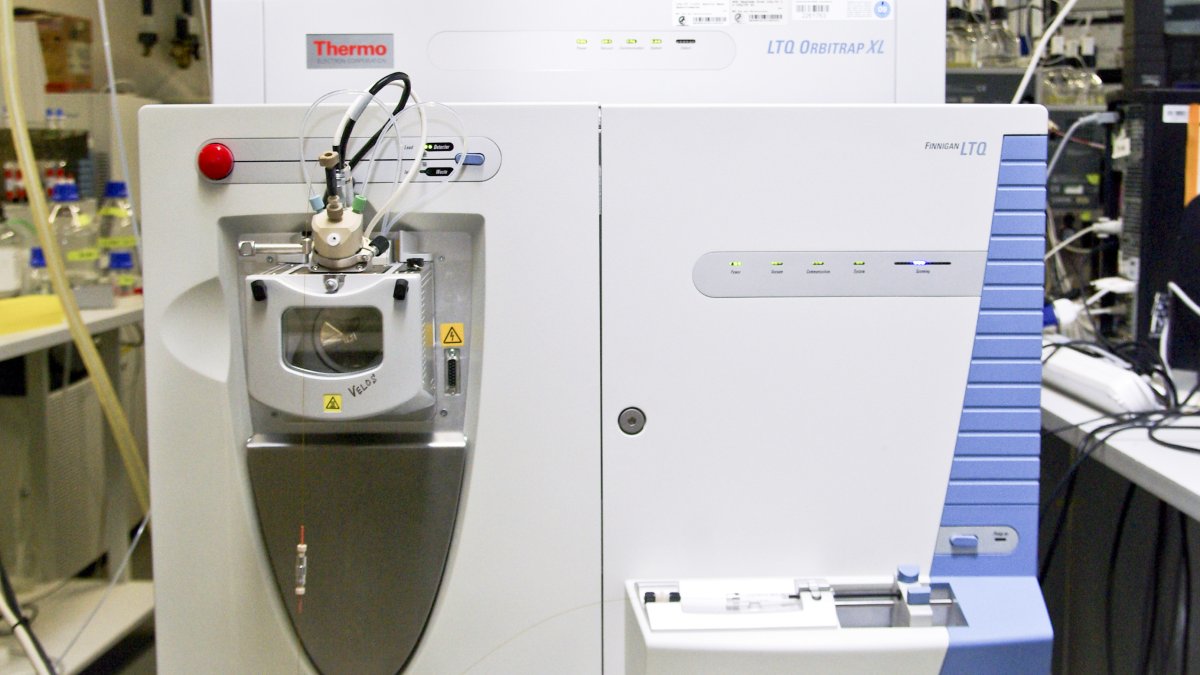
Tandem mass spectrometry has a coverage problem that is easy to state and hard to fix. A single drop of blood, soil extract or plant tissue can carry tens of thousands of molecular signals, and the reference libraries that analysts match those signals against can annotate only about 5 percent of measured spectra on average, roughly 10 percent for human samples. The rest is what chemists call the dark matter of metabolomics.
Google DeepMind's answer, published on November 25, is not a bigger model. It is a skill. Mass Spec Skills for Google Antigravity takes a plain-language request, then has an agent drive the tools a specialist would otherwise run by hand: matchms for preprocessing, GNPS and MoNA spectral libraries for cosine-similarity matching against known compounds, SIRIUS for molecular-formula inference from the precursor mass and fragmentation tree, MAGMa and MetFrag for fragment and neutral-loss analysis, and PubChem for candidate structures sharing that formula. Each stage also works on its own for routine jobs such as denoising or peak annotation, and the output ends in an evidence report a chemist can audit.
The headline number comes with a specific test behind it. The benchmark drew 100 compounds from MoNA's Enamine REAL MS/MS collection whose structures are also in PubChem, filtered records with too few fragments, allowed three attempts per spectrum and a one-hour budget, and reported means with 95 percent confidence intervals. With the skill attached, Gemini 3.8 Flash, Gemini 4 Argon and Gemini 4 Carbon all identified and verified the correct molecule in about 97 percent of attempts. Without network access and without the skill, all three sat below 4 percent, which is roughly the level at which a model is guessing from a peak list.
Three details make the result more interesting than a single accuracy figure. The light model matched the two frontier models, which supports the argument that the gain came from tool orchestration rather than raw scale. Restricted network access alone helped only partly: frontier models then missed a quarter to a third of spectra, and lighter models missed more than three quarters, so the retrieval step and the tool layer are both doing real work. And token consumption fell, with generation tokens down nearly four times for Flash, by half for Argon and by about a fifth for Carbon.
The boundaries are stated in the same post. The pipeline cannot separate enantiomers, or some structurally near-identical isomers, from an LC-MS/MS spectrum alone; those need retention time, ion mobility or NMR. A molecule absent from every public database cannot be independently confirmed, though the system will still return a predicted formula, annotated peaks and an annotation table as a starting point. Because the benchmark uses compounds whose structures are already known and permits database lookup, 97 percent is a verification score, not a general identification rate for genuinely unknown samples. Sample prep and the instrument remain on the bench.
Access is immediate: install the Antigravity app and the Mass Spec plugin, or sign in to an enterprise account with Google Cloud credentials. DeepMind is also granting 10,000 researchers the top subscription tier free for six months, rolled out in stages with a qualification review, a giveaway that functions as a distribution strategy for a product whose value depends on being embedded in real lab workflows.
The lesson for the rest of applied AI is the one this result makes measurable: for a domain task, the difference between an unusable model and a useful one was not a larger model but a curated set of the domain's own tools, plus an audit trail. That suggests where the next wave of scientific agents will be won, in the unglamorous integration work and the verification layer, not in parameter counts.
Comments (0)
Log in to join the discussion
Log InNo comments yet