The model that shipped on November 16 needed a data center. On November 25, Tencent's Hunyuan team published a version that runs on a desktop. Through its model-compression toolkit AngelSlim, the company released GGUF quantized weights and inference code for Hy4 flash on Hugging Face, ModelScope and GitHub, the second step in the model's open release after the BF16 weights went out on November 18 in 148 shards, about 410.27 GiB in total.
What makes the squeeze work is the architecture. Hy4 flash carries 224 billion parameters in total but activates only about 12 billion per token, spread across 512 experts with 16 active at a time. Roughly 64 billion of the total sit in an Engram n-gram table that is looked up rather than multiplied, which is why the compute profile resembles a much smaller model even though the file size does not.
Tencent shipped four tiers. Q4_K_M at 156.79 GiB is the default, chosen for fidelity. Q3_K comes in at 144.70 GiB. IQ2-AH is the small one at 125.73 GiB, a 69 percent cut against the original that keeps about 30 percent of the footprint, and two 4-bit builds target Nvidia's DGX Spark. The package also bundles a vision encoder for image input, a draft model for speculative decoding and deployment guides for llama.cpp and Tencent's Strata inference framework.
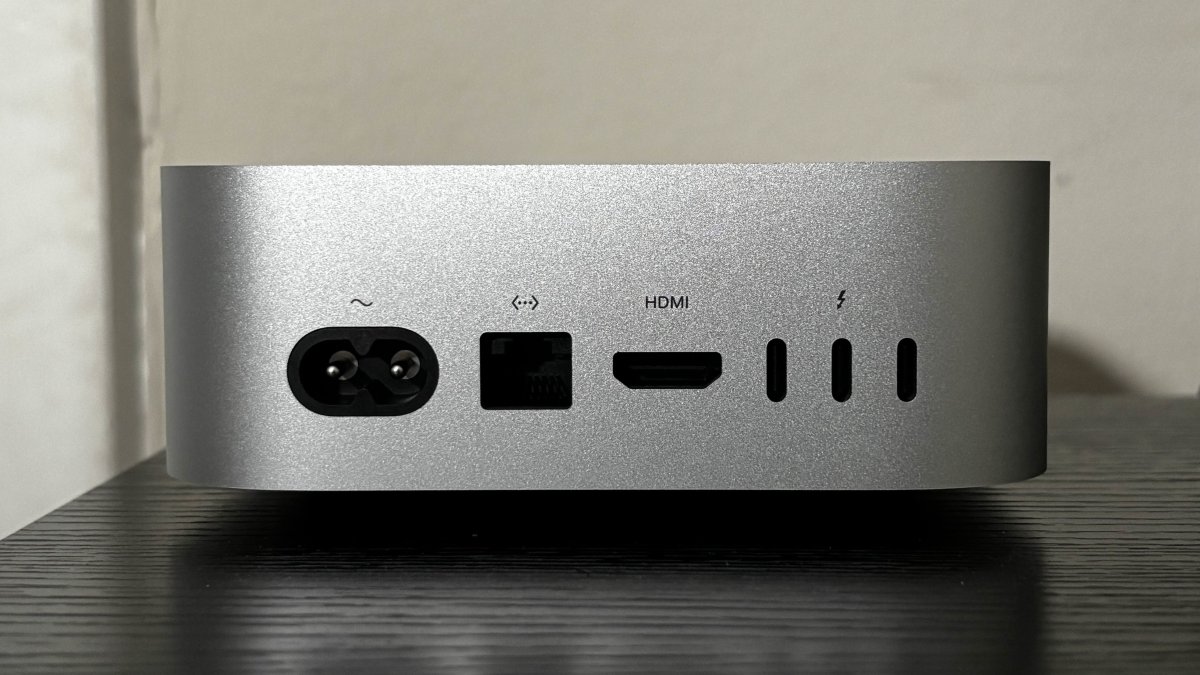
Strata is the part that makes the smallest tier usable. Rather than requiring enough RAM to hold every expert, it streams expert weights from an SSD on demand, so a machine with less memory than the model can still serve it. The cost shows up in throughput, and the numbers here are Tencent's own tests rather than independent benchmarks: about 17.3 tokens per second on a 64GB M4 Pro Mac mini running the IQ2 build at 8K context, roughly 47 to 50 tokens per second on a 128GB M5 Max with Q3_K through llama.cpp, including 47 tokens per second at 32K context. A 48GB VRAM device reached 89 tokens per second at 10K context, while the RTX Spark 128GB build read prompts at 717 tokens per second and generated 33 at 16K context.
The model itself remains the same one Tencent priced aggressively on its own cloud: 224 billion parameters, native multimodal input, a one-million-token context, and a per-task cost the company puts at one-twentieth of the full Hy4 on its internal WorkIndex benchmark, with published list prices of 0.5 yuan per million input tokens and 2 yuan per million output tokens against 6 and 18 for Hy4. Those are vendor figures for a model that has been available for ten days, and no third-party evaluation of the quantized builds has been published.
The practical read is about where the boundary now sits. A 200-billion-class mixture-of-experts model, which two years ago implied a rack of accelerators, can be served from a consumer desktop if you accept SSD-resident experts, a couple of dozen tokens per second and the wear that comes with streaming weights from flash. For local coding assistants, document processing and privacy-sensitive work that cannot leave a laptop, that trade is often the right one. For anything interactive at scale, it is not, and Tencent is not pretending otherwise.
It also reframes the memory shortage story. Flash is roughly 500 times slower than DRAM but costs a fraction as much and sips power, which is why the same logic is showing up on servers: AMD's MEXT software, for instance, offloads cold pages to NVMe to cut DRAM requirements. On the desktop, the constraint has moved from how much memory you can buy to how fast your storage can feed the model, which is a cheaper problem to have.
Comments (0)
Log in to join the discussion
Log InNo comments yet