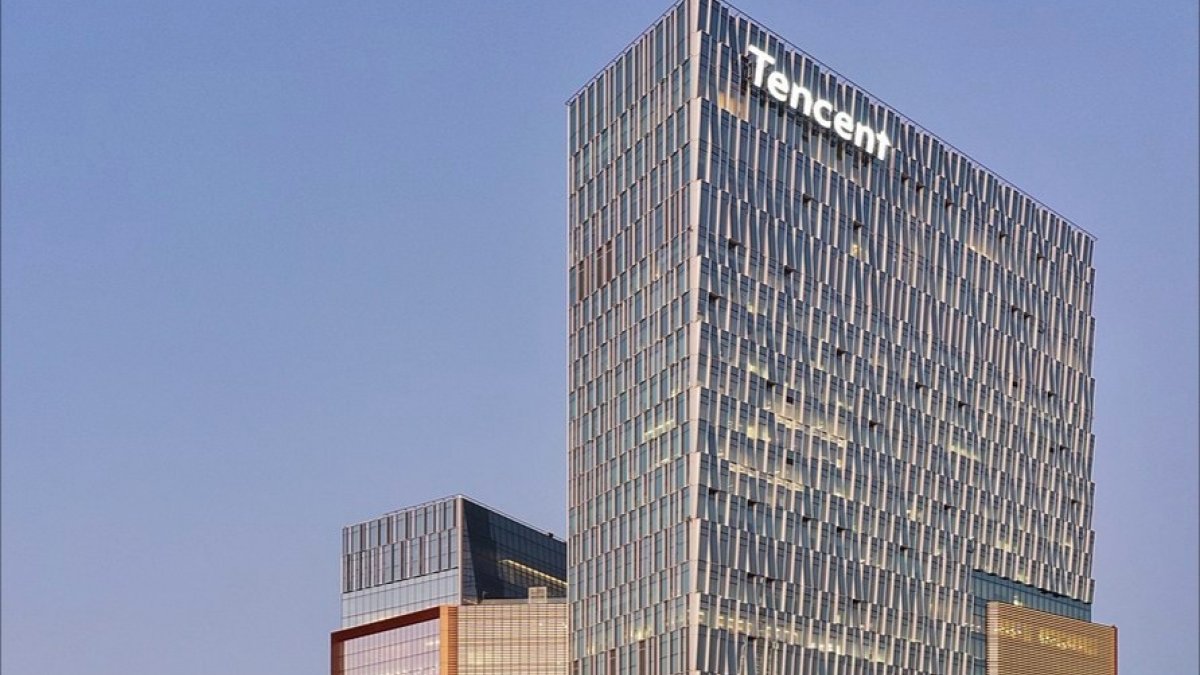
Tencent quietly finished something on November 20 that most Western AI labs would not dare: it published the weights of its flagship model. Hy4, the 770-billion-parameter mixture-of-experts system that the company released as an API product on November 4, is now downloadable from GitHub, Hugging Face, ModelScope and GitCode. With that drop, every large language model in Tencent's Hunyuan line — Hy3 preview, Hy3, Hy4 preview, Hy4 and the smaller Hy4 flash — has open weights.
The numbers make it one of the largest open-weight releases of the year. Hy4 activates 49 billion of its 770 billion parameters per token, handles a context window of roughly one million tokens, and adds image and video understanding plus computer operation — the ability to drive a browser or desktop application — capabilities that until recently were the calling card of closed frontier models. The smaller Hy4 flash, a 220B MoE with about 12 billion active parameters launched on November 16, had its weights published on November 18, so the flagship release was the last missing piece.
The economics are aggressive. Tencent prices the Hy4 API at $0.90 per million input tokens and $2.70 per million output tokens, with cached input at $0.045, and is running a 50 percent discount on its TokenHub platform through December 31. On the third-party Artificial Analysis Intelligence Index v5, Hy4 scores 35 points — respectable for an open model, though Tencent's own model card concedes a "notable gap" to top proprietary systems in research-level math and long-horizon coding. The company also cites a top open-weight score on a 579-task financial blind test, a vendor-reported benchmark that has not been independently verified.
There is a catch that the headlines miss. Despite early reports describing the release as Apache 2.0, the license file tells a different story: the weights ship under the "Tencent Hy License," derived from Apache 2.0 with modifications. Model-as-a-service operators with more than $50 million in annual revenue, or products with more than 100 million monthly active users, need a separate agreement with Tencent before commercial hosting. For universities, startups and governments, the weights remain a genuinely free resource — but the license draws a line precisely where large cloud resellers would profit. By one estimate, the full BF16 weights run to roughly 1.5 terabytes and the sample setups assume eight GPUs.
The timing matters too. Moonshot AI open-sourced a 2.8-trillion-parameter flagship last week, Meituan's LongCat-2.5 runs its full training and inference pipeline on domestic Chinese chips, and the People's Daily — the Communist Party's official newspaper — published a lengthy feature this week titled that Chinese open-source models now "lead" the global ecosystem. Overseas inference provider Together AI is already hosting Hy4, so the model is reachable well outside China's firewall.
The strategic read is blunt: Tencent has removed the "closed-model premium" from its own product line. When a frontier-scale flagship can be downloaded, fine-tuned and self-hosted for free, the money shifts from selling model access to selling applications, delivery and scale. For the industry, the open-source race has now reached the very top of the model ladder — and the license file, not the headline, is where the real terms live.
Comments (0)
Log in to join the discussion
Log InNo comments yet