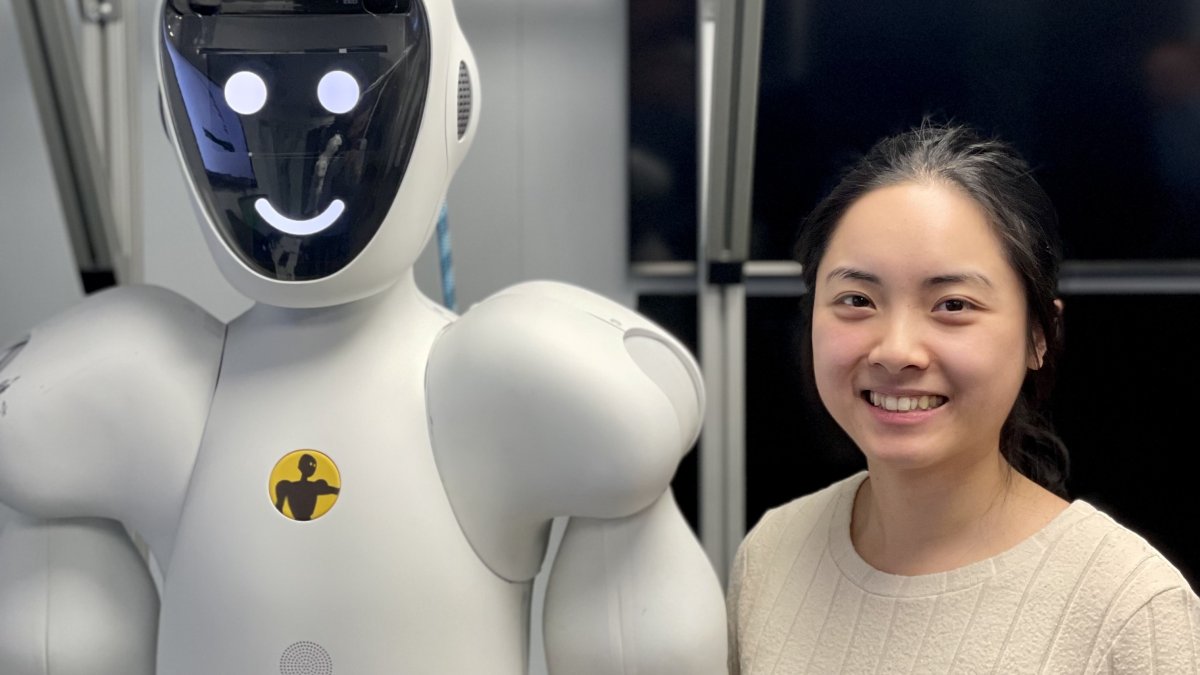
OpenAI is adding another physical product to a roadmap that already runs from models to consumer hardware: a humanoid robot the company plans to build itself. On the Sources podcast, CEO Sam Altman was asked directly whether OpenAI would make one. His answer, per multiple transcripts: "We will."
Altman's rationale for choosing the human form is disarmingly practical. The world, he argued, is already designed around people — doors, keyboards and tools all assume a particular body plan — so a robot that has to operate in those spaces may as well match the blueprint. "Matching that form factor is a good idea," he said, while dismissing questions about appearance as far less important than what actually makes the machine work.
That, in his telling, is the robot's brain. A capable humanoid has to understand what its cameras and sensors see, interpret instructions, plan movements, coordinate its body and correct itself when reality refuses to cooperate. Picking up a mug sounds trivial until you enumerate the steps: find the mug, locate the handle, compute a grip, apply exactly enough force — and clean up the coffee when any of it goes wrong. Arms and legs without that intelligence are, in Altman's framing, mostly dead weight.
The timeline he offered to Fortune is specific but long: "I expect we will have an impressive demo in 2027 ... but it will be several more years before robots are out on the streets." OpenAI has not said what the demonstration will show, what the robot will look like, or when anyone outside the company will get near it.
What OpenAI has published is its hiring plan. The company's careers page lists 27 open robotics positions, covering motion control, state estimation, actuator control, whole-robot behavior and the machine-learning infrastructure needed to train physical AI systems. Job postings also describe in-house electromechanical actuators integrating motors, transmissions, sensors and thermal management, plus manufacturing and supply-chain roles for scaling production — a signal that OpenAI intends to own the hard part of the hardware, not just outsource it.
There is lineage here. OpenAI's Dactyl project taught a robotic hand to manipulate real objects with training done entirely in simulation, then turned the same approach on a Rubik's Cube — an early demonstration of the gap every robot company still fights: a model can learn what should happen, but physics gets the final vote.
OpenAI is not entering an empty field. Tesla has spent years on Optimus, and XPENG recently showed its IRON robot walking off an assembly line under its own balance. What distinguishes the entrant is scope: one posting describes the near-term goal as general-purpose robots that help skilled workers build infrastructure, with a personal robot for a far wider range of tasks as the long-term ambition.
Whether the 2027 demo lands or slips, the strategic point is already visible. The company that commoditized text and code wants to do the same to embodied labor, and it is betting — as it did with language — that whoever controls the general-purpose brain will own the category, whatever body it happens to ship in.
Comments (0)
Log in to join the discussion
Log InNo comments yet