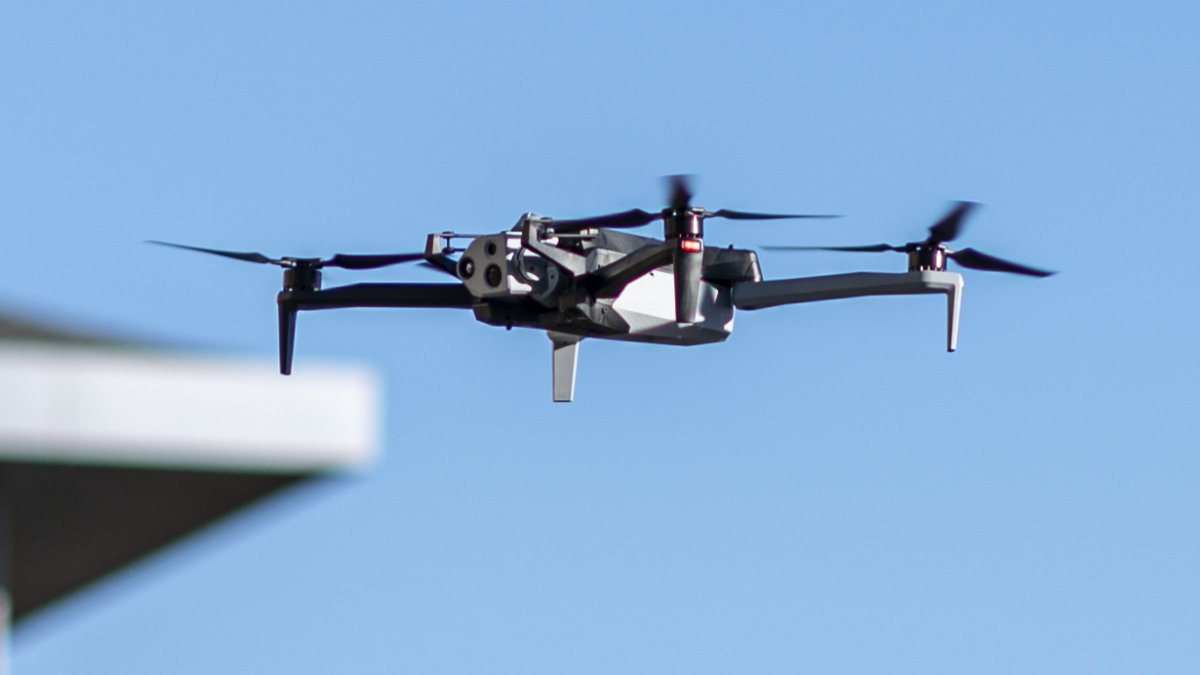
Axon is putting another $1.2 billion into Skydio, the largest single investment in the company's history, lifting its fully diluted stake in the drone maker to 37 percent. Announced alongside Axon's third-quarter results on Nov. 5, the deal also makes Axon the exclusive distributor of Skydio drones to public safety agencies in the United States and Canada.
The investment values Skydio at $5.2 billion before the new money, according to DroneLife's reading of the filing. Axon is paying roughly 60 percent in cash and 40 percent in stock, chief financial officer Brittany Bagley said, and the company raised $1.15 billion in convertible notes to help fund it. Part of the money buys shares from existing holders rather than going to Skydio itself. The transactions are expected to close in stages across the fourth quarter of 2026 and the first quarter of 2027.
Skydio stays independent. Co-founder and chief executive Adam Bry wrote on LinkedIn that the two companies seriously considered an acquisition before concluding they would be more useful apart, and that Skydio did not need to raise capital. Most of the proceeds provide liquidity for shareholders and employees. Axon holds a minority, non-voting position.
The commercial logic is Drone as First Responder, the model in which a docked aircraft launches on a 911 call and streams video to officers still driving to the scene. Axon says Skydio docks deployed through Axon Air have more than doubled year over year, that Skydio serves more than 1,500 public safety customers and expects about $1 billion in bookings this fiscal year, and that more than 28 million Americans live within two miles of one of its docks. Axon puts the US and Canadian DFR market at roughly $13 billion.
The performance claims are the vendor's own. Axon says agencies running DFR cut priority response times by as much as 65 percent and that drones arrived first on about 80 percent of calls. None of that has been independently audited. Skydio hardware is used by every branch of the US military and by the armed forces of 32 allied nations, business that sits outside the Axon distribution arrangement and keeps Skydio free to sell defense and industrial customers directly.
The drone bet landed on a mixed quarter. Revenue hit a record $909 million, up 28 percent, and Software & Services grew 43 percent to $437 million. Platform Solutions, which includes drones and counter-drone equipment, more than doubled to $125 million. AI annual recurring revenue passed $100 million, new five-year bookings rose 25 percent year to date and future signed bookings reached $15.8 billion. Net income was $57 million, or $0.68 a share, against a loss a year earlier, and adjusted EBITDA rose 33 percent to $236 million.
What spoiled the print was guidance. Adjusted earnings of $1.72 a share missed the $1.88 consensus, and Axon cut its full-year revenue outlook to $3.61 billion to $3.63 billion, about 30 percent growth, from an earlier 32 to 34 percent. The gap is $130 million of federal Dedrone counter-drone deployments: $30 million that slipped out of the third quarter and two more worth $100 million that will not land this year. Free cash flow guidance came down to $350 million to $400 million from $450 million.
Read together, the two announcements describe a company buying distribution instead of building it. Axon already owns the procurement relationship with most American police departments through Tasers, body cameras and evidence software, and revenue from acting as a channel partner is booked net in Software & Services, which flatters margins. For Skydio, the cash is mostly liquidity for early backers. For the market, the question is whether police drone procurement in North America has effectively become a single-vendor conversation, and what that does to price discovery when agencies try to compare alternatives.
Comments (0)
Log in to join the discussion
Log InNo comments yet