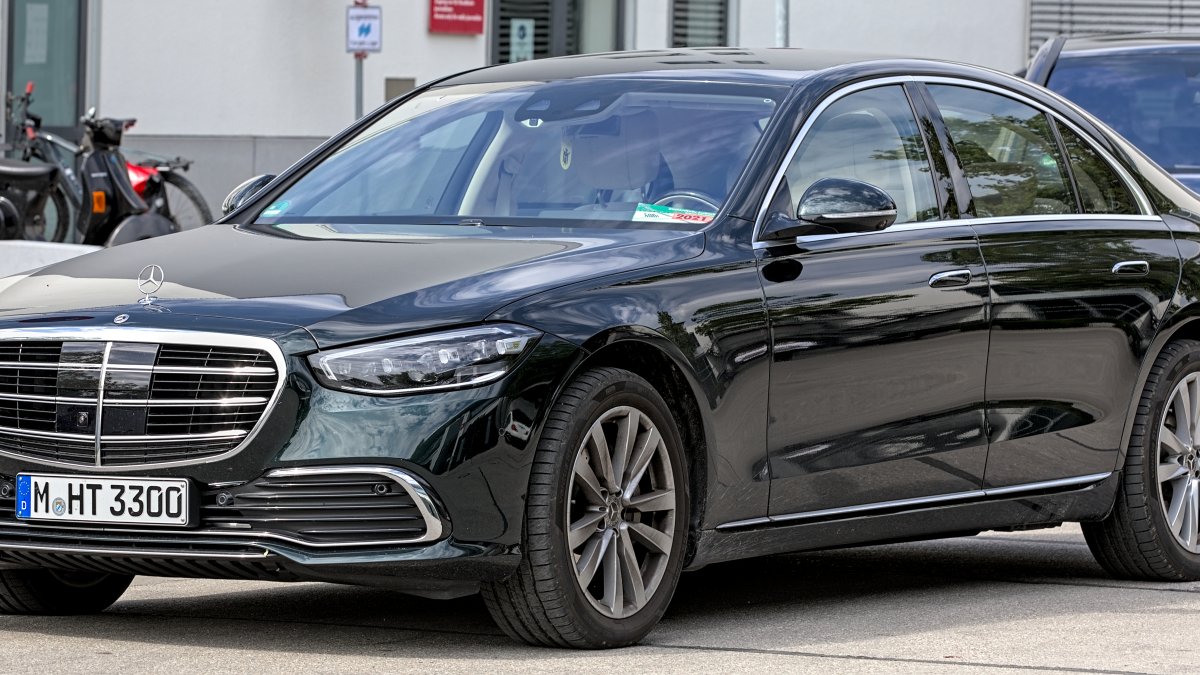
Nvidia doubled down on automotive on October 16, announcing expanded strategic partnerships with two of the most safety-obsessed names in the business: Mercedes-Benz and Volvo Cars. The two deals are separate but built on the same three building blocks — the Hyperion compute and sensor architecture, the Alpamayo full-stack driving software, and the Halos safety system — and both are aimed at the next decade of driver assistance and automated driving rather than any single vehicle launch.
"Accelerated computing has transformed the car into an intelligent machine that can understand the world around it," Nvidia founder and CEO Jensen Huang said in the announcement. For Mercedes-Benz, the expanded partnership means its MB.OS operating system will work with Hyperion in-vehicle computing to power urban point-to-point driving assistance, active safety and automated parking, with over-the-air updates riding on the Mercedes software foundation.
Mercedes-Benz chief technology officer for development and procurement, Joerg Burzer, called Nvidia the automaker's most important strategic partner in automated driving, noting that the two companies already built the first Mercedes assistance system for urban point-to-point driving in the western world. The cooperation reaches further than the road: Mercedes also uses Nvidia technology for vehicle engineering simulation and inside MO360, its digital production ecosystem, and the companies say they will deepen that manufacturing side to improve efficiency and quality across the global plant network.
The longer-term prize is SAE Level 4. Nvidia's Alpamayo Stack supplies the driving software with AI reasoning capabilities, and Halos adds a parallel safety stack with redundancy and guardrails on top of the Mercedes safety foundation. Together, the companies say, these support advanced driver assistance today and future Level 4 applications — including what the two firms describe as robolimousines, automated passenger vehicles that handle the full driving task within defined operating conditions. Nvidia vice president of automotive Ali Kani said the goal is to make autonomous driving an everyday reality.
Volvo Cars, which has partnered with Nvidia since 2017, will fold Hyperion, the Halos OS and Alpamayo into future vehicles designed to handle highways, crowded city streets and parking. The Swedish automaker plans a gradual rollout of functions that let drivers take their eyes — and eventually their attention — off the road under supported conditions, with the technology debuting in a next-generation model as part of what Volvo calls its largest product expansion to date. Neither company named the vehicle or a launch date.
"Volvo has been synonymous with car safety for almost 100 years," president and CEO Hakan Samuelsson said. "By working with NVIDIA, we bring together two distinct strengths: industry-leading safety knowledge and world-class AI technology." The framing matters: as driving assistance creeps from hands-on to eyes-off to mind-off, the selling point shifts from horsepower to how a system fails safely, which is precisely the territory where both brands have something to prove and something to sell.
Strategically, the deals tie two premium automakers more tightly to Nvidia's automotive stack just as the company prepares its GTC Berlin event on October 21-22, where AI, simulation and robotics take center stage. They also land in a market where the software-defined vehicle has become the battleground: Tesla, Waymo and a wave of Chinese suppliers are competing for the same windshield real estate, and chipmakers have learned that the winner is whoever gets designed into the platform early and stays there through a decade of over-the-air updates.
The hard part remains unchanged. Level 4 — full automated driving within defined conditions — has been promised for a decade and delivered almost nowhere, and neither announcement commits to a date or a city. What October 16 actually locks in is the compute, the software layer and the safety case for the next generation of premium cars, plus a clear sequencing: eyes-off first, mind-off later, robolimousines last. If that order holds, the winners will be the suppliers whose silicon is already under the hood when the regulatory doors finally open.
Comments (0)
Log in to join the discussion
Log InNo comments yet