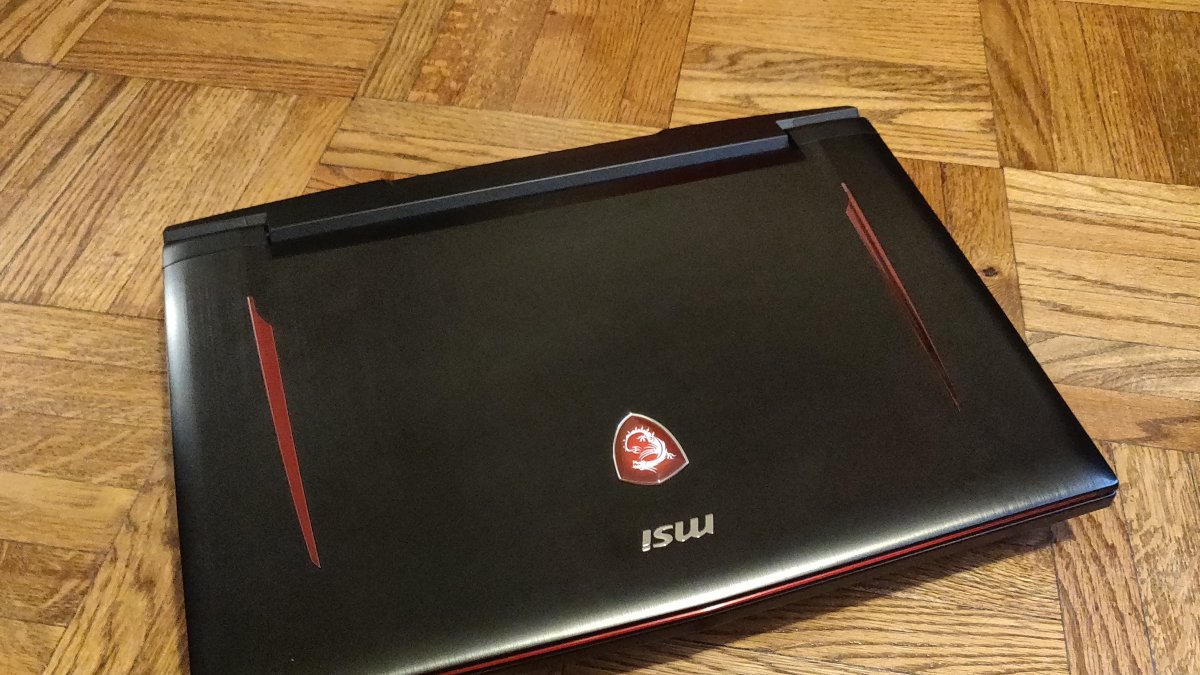
Nvidia's RTX Spark platform officially goes on sale on October 16, putting the company's first integrated system-on-chip for Windows into consumer hands. The laptops, built on Arm-based Grace CPU cores paired with a Blackwell architecture GPU, start at $2,600 for 18-core configurations and climb to roughly $5,900 for models with 128GB of unified memory. Launch hardware from Asus, Dell, Lenovo and MSI is arriving in stores today, with Microsoft's Surface Laptop Ultra also opening preorders.
The pitch is ambitious: a single machine that functions as a gaming laptop, a creative workstation and a local AI PC. The 24GB to 128GB unified memory pool is the differentiator. According to Nvidia's own guidance, a 128GB configuration can load a 78GB model like the 125-billion-parameter Qwen3.8-Flash-Next entirely in memory, while 24GB machines run the Nemotron 3.5 Bolt 74B model that Nvidia released for local agents earlier this week. Nvidia claims a 4.6x improvement in local AI inference and a 2.7x improvement in fine-tuning performance over the previous generation, figures that are company-reported and have not been independently verified.
On the software side, Nvidia and Microsoft leaned heavily on the Prism emulator, refined since its 2024 debut on Qualcomm Snapdragon devices, to run x86 Windows applications on the Arm chip. The most notable breakthrough is games with kernel-level anti-cheat, historically the hardest category for Arm Windows. Fortnite, Call of Duty, ARK: Survival Evolved and Marvel Rivals are supported at launch, with PUBG, Valorant and EA's Javelin anti-cheat on the roadmap.
Early testing, however, shows the gaming story is mixed. Tom's Hardware found that GPU-bound titles perform well but CPU-bound games like Horizon Zero Dawn Remastered struggle under emulation overhead, with some titles effectively capped around 30fps. Chinese hands-on testing of the Yoga Pro 15 recorded an average of 52.87fps in Cyberpunk 2077 at 2K ultra settings with ray tracing and DLSS off, dropping to 23.57fps with ray tracing enabled. A Gears of War: E-Day test averaged 77.7fps with frame generation but sank to 39.9fps in 1% lows with 83.5ms of input latency. The Verge concluded the platform can genuinely run "everything" but questioned the value at these prices.
Buyers of the top configuration will also need patience. The $5,899 Surface Laptop Ultra with 128GB of RAM that Tom's Hardware tested has had its delivery estimate pushed to late December, and some of the Windows 11 security AI agent features Microsoft demonstrated alongside the platform are not yet active.
Creative software support is shaping up as the other pillar. Adobe is re-architecting Photoshop and Premiere for RTX Spark, and Nvidia says the platform can generate 4K 60fps video in minutes, preview AI masking in real time and render 3D scenes larger than 90GB. A compact desktop version of RTX Spark with 64GB or 128GB of memory, aimed at developers running agents around the clock, arrives in November.
The launch is widely read as a direct challenge to Apple Silicon, with Engadget framing it as the most credible Arm Windows alternative to date for high-end users. Whether it moves beyond the niche of AI developers and researchers depends on whether emulation overhead and the $2,600 entry price improve. Lower-cost models are expected later, and Nvidia and Microsoft will be watching early adopter feedback closely as the platform's first weekend unfolds.
Comments (0)
Log in to join the discussion
Log InNo comments yet