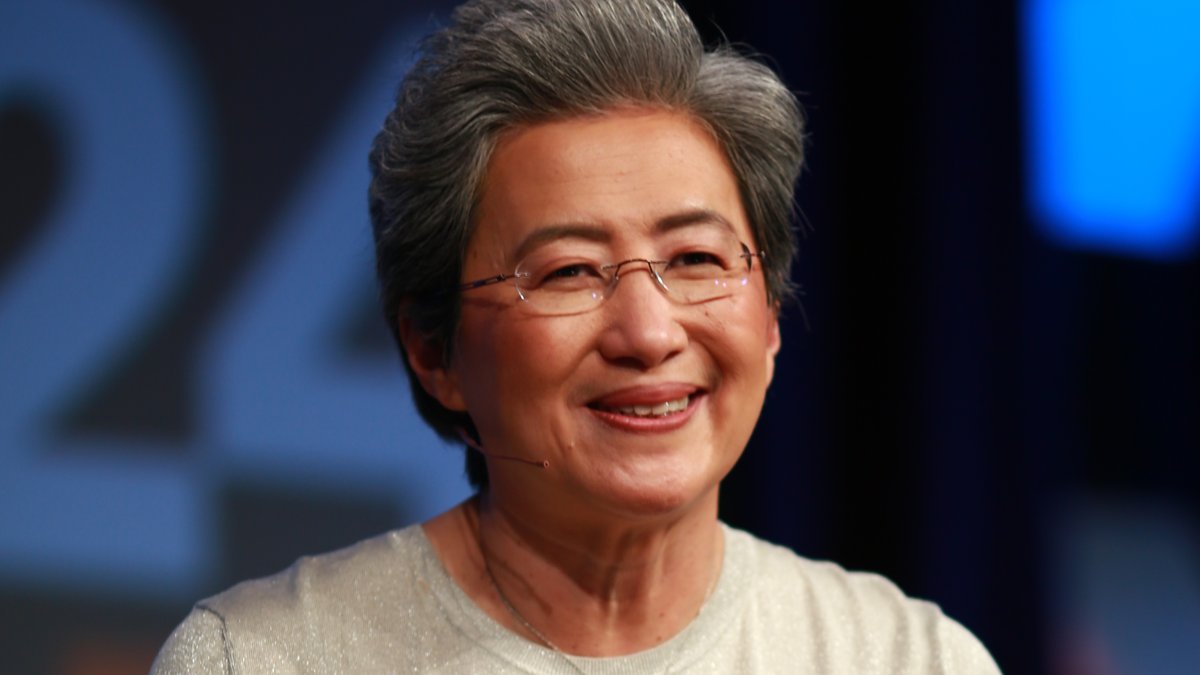
AMD chair and CEO Lisa Su sat down with South Korea's Ministry of Science and ICT at the Four Seasons Hotel in Seoul on Wednesday and, alongside second vice minister Ryu Je-myung, hosted a roundtable with 14 Korean AI semiconductor and AI ecosystem companies. The outcome: a commitment to build heterogeneous computing infrastructure that combines AMD's CPUs and GPUs with Korean-developed AI chips, prove it out in domestic pilot projects, and turn the result into a reference model that can be deployed in overseas markets.
Heterogeneous is the operative word. The idea is to put AMD's general-purpose CPUs and Instinct GPUs alongside Korean neural processing units in the same systems, letting each class of silicon handle the AI computations it is best suited for. The ministry framed the pilots as the first step toward a template other countries could adopt — a notable framing, because it positions Korean NPUs not as domestic import-substitution but as components in a globally exportable architecture built on AMD's platform.
The roundtable drew companies spanning the full AI infrastructure stack: NPU designers Rebellions, FuriosaAI, HyperAccel, DeepX and Mobilint, alongside MangoBoost, Panmnesia, Dnotitia, Moreh, Nota AI, Lablup, FADU, Elice Group and Upstage — covering software, memory and storage, networking, cloud services and AI models. A core agenda item was ROCm, AMD's open-source software platform for AI and high-performance computing, which is the company's answer to NVIDIA's CUDA. The Korean firms discussed connecting their technologies to AMD's global AI ecosystem and expanding into overseas markets through it.
The meeting was a follow-up to a memorandum of understanding between the ministry and AMD signed in July on the margins of President Lee Jae-myung's AI summit in San Francisco. The two sides agreed to proceed with establishing an AMD AI Center of Excellence in Korea by the end of the year — which Su said during her visit would hire hundreds of researchers — and to train graduate-level talent in AI and AI transformation. AMD has also signed an MOU with Seoul National University's AI Research Institute, and pointed to cloud infrastructure built with Korean partner MangoBoost as an early example of the cooperation producing running systems.
Su's stop in Seoul came mid-way through a supply-chain tour that began in Taipei, where she told reporters AMD would "substantially increase" chip supply in 2027 after meeting Foxconn and scheduling talks with TSMC. Korean media reported that her Seoul schedule included a meeting with Samsung Electronics semiconductor chief Jun Young-hyun on Wednesday — Samsung has already been named the preferred supplier of HBM4 memory for AMD's next-generation Instinct MI455X accelerator, and the two companies have reportedly discussed foundry production of AMD chips, though AMD has not confirmed those details.
The broader read: as the AI inference market expands, competition is broadening from individual chips to systems and platforms — vice minister Ryu made exactly that argument at the meeting. For Korea, the deal plugs a competitive domestic NPU industry into a global ecosystem it could not assemble alone; for AMD, every Korean NPU that ships inside a ROCm-based reference architecture is another wedge against CUDA's gravity. The reference model, not the press release, is what will tell.
Comments (0)
Log in to join the discussion
Log InNo comments yet