Ride-hailing company inDrive has signed a memorandum of understanding with autonomous driving developer Pony.ai and NVIDIA to bring robotaxis to Kazakhstan, with testing planned in the capital Astana in the first half of 2027. The initial trials will include a safety operator inside the vehicle, with fully driverless rides as a longer-term goal depending on test results and regulatory approval, inDrive CTO Yuri Misnik told TechCrunch.
The division of labor follows a now-familiar template. Pony.ai will provide its seventh-generation robotaxis, which the company says combine multi-sensor fusion, system-level redundancy and fail-operational capabilities for driverless operation. inDrive will offer the vehicles through its ride-hailing app and run local operations. NVIDIA supplies the underlying technology: the Hyperion reference sensor and compute platform for Level 4 autonomous vehicles, paired with the Halos full-stack safety system and the Alpamayo model stack for training and simulation.
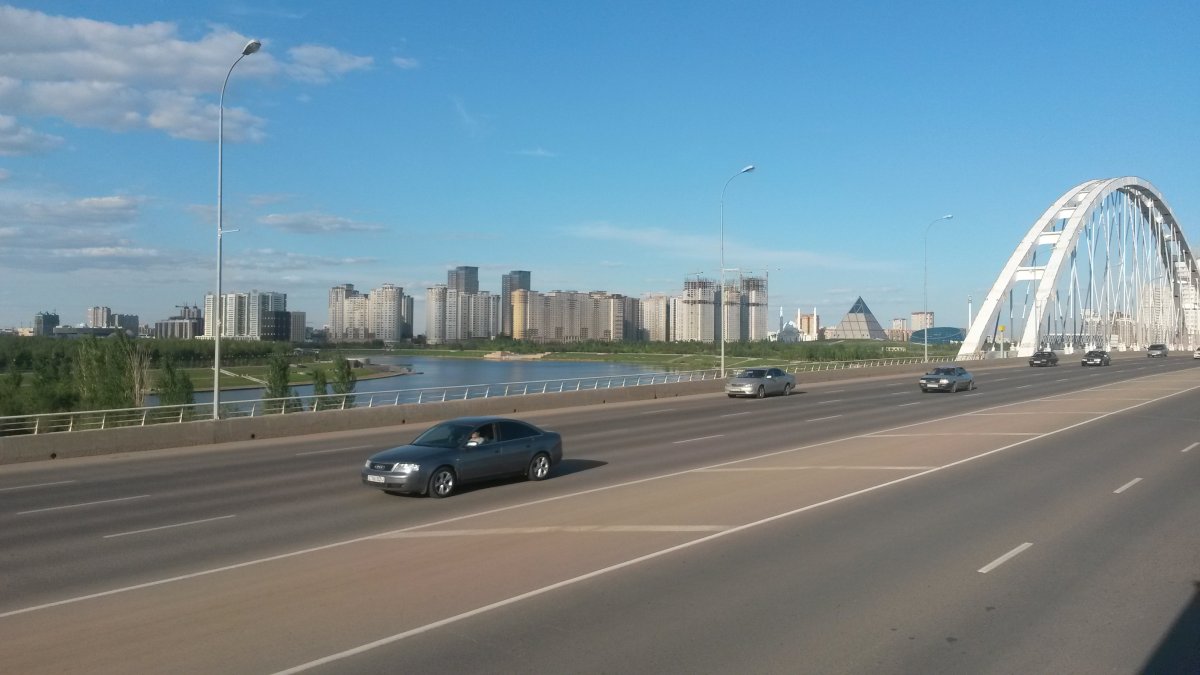
Kazakhstan was chosen as the first test market largely for regulatory reasons. The country created what the companies describe as the first structured legal framework for driverless transport in the region as part of its "Year of Digitalization and Artificial Intelligence," and has already outlined plans for autonomous taxi trials in Astana and two other cities on designated public roads.
The environment itself is part of the experiment. Astana has a population of around 1.7 million and is one of the coldest capitals on earth, with long winters, heavy snow and icy roads. inDrive founder and CEO Arsen Tomsky framed that as a feature rather than an obstacle: "Success in Astana could offer valuable insights for expanding autonomous mobility to other locations facing similar challenges."
For Pony.ai, the deal extends an international push beyond its fully driverless commercial operations in major Chinese cities and deployments in Europe, the Middle East and Asia. The company targets more than 3,500 robotaxis operating in over 20 cities worldwide by the end of 2026, up from a fleet of 1,975 vehicles at the end of June. It is also working with Uber on planned robotaxi tests in London, where Uber has begun supervised autonomous rides with British startup Wayve. The announcement coincided with NVIDIA CEO Jensen Huang's first visit to Kazakhstan.
inDrive, whose app has been downloaded more than 400 million times and operates in over 1,200 cities across 47 countries, is pursuing a deliberately asset-light strategy. "Our approach is capital-light by design," Misnik said. The company signed a separate agreement with Saudi Arabia's AI Driver in December to explore deploying WeRide-powered vehicles starting with Riyadh, though it remains unclear whether that testing has begun.
A memorandum of understanding is not a commercial launch, and the economics of robotaxis in markets where human-driven rides are already cheap remain unproven. But the partnership signals where the autonomous mobility race is heading: beyond the United States and China, into markets where friendly regulation and difficult driving conditions can both be turned into validation data.
Comments (0)
Log in to join the discussion
Log InNo comments yet