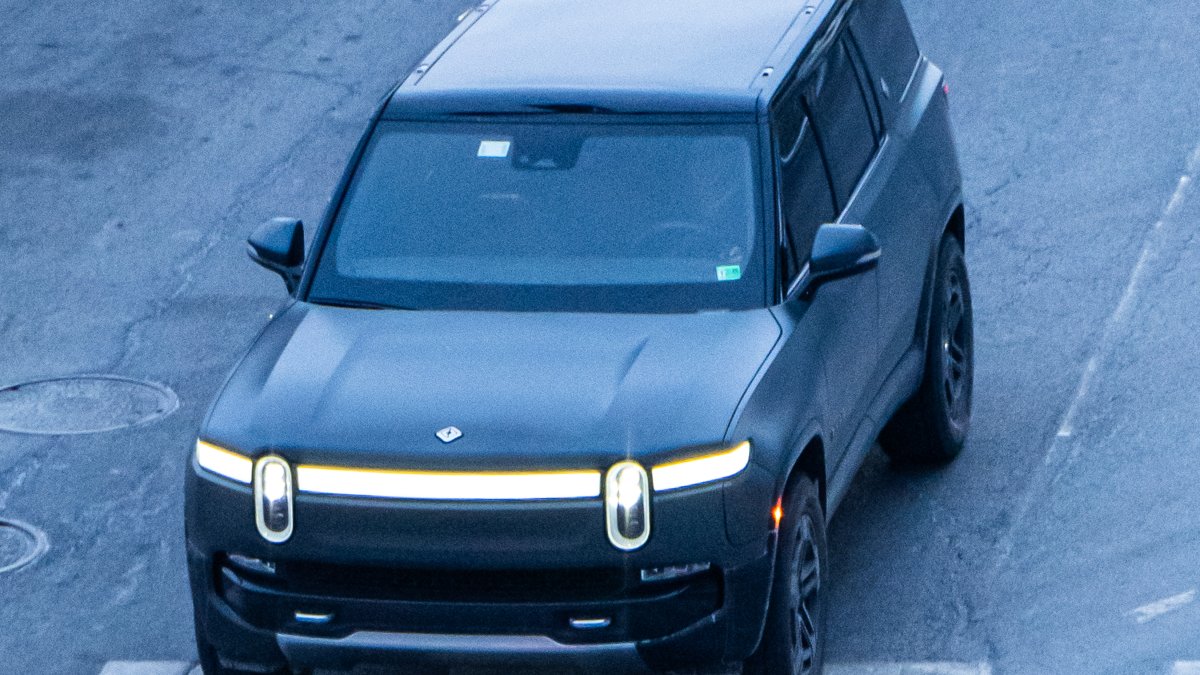
Rivian said on Thursday it has acquired Third Dimension AI, a UK startup that uses artificial intelligence to turn real-world images and videos into lifelike, controllable 3D environments. Financial terms of the deal were not disclosed. The 15-person team, most of them based in the United Kingdom, is joining Rivian's autonomy research and engineering group under James Philbin, the senior vice president for autonomy and AI, and the acquisition gives Rivian room to expand its AI hub in London.
Third Dimension was founded in 2024 by CEO Tolga Kart and Piotr Sokolski, and raised $7 million in seed funding from Abstract Ventures, MVP, Soma Capital and Solari Capital. Its platform was originally built to speed up video game development, but the founders always saw other uses in defense and autonomous transport. Under Rivian, the focus narrows to one thing: rebuilding the physical world accurately enough to train and validate driving software.
Simulation is central to how autonomous vehicle developers test systems that cannot safely be tested on public roads first. Historically those simulators were built on rendering or game engines and leaned on synthetic data, and Kart says the gap between the virtual world and the real one never quite closes, forcing teams to feed in ever-larger amounts of data. Third Dimension's approach uses AI to reconstruct the world from real footage rather than render an approximation of it.
That is where Rivian's fleet comes in. The company collects aggregated, anonymized driving data from tens of thousands of R1S pickups and SUVs, delivery vans and R2 SUVs, from any owner who has enabled external camera sharing. Philbin said Rivian receives more than 400,000 sequences uploaded from customer vehicles every day, and the new platform will let it recreate complex driving conditions on demand instead of waiting for rare edge cases to happen in the wild.
The deal lands as Rivian pushes its autonomy roadmap on two fronts: consumer driver assistance and the robotaxi system it plans to supply to Uber. In December, the company will start an invitation-only Autonomy Early Access Program, putting a supervised point-to-point driving system in front of selected second-generation R1 and R2 owners in California and Florida.
"The team is excited to be able to focus on one problem," Kart said. "As a small company, having to serve many, many different masters is very hard, and so we're very excited to come work on a problem that has such an amount of scale, where our technology makes a true difference."
For the industry, the move is another sign that world-model and simulation startups are being absorbed by the OEMs that own the data. Rivian would not say what it paid, so the price of this particular bet stays private, but the logic is visible in the numbers it did share: a fleet uploading 400,000 sequences a day is only useful if it can be replayed in software, and whoever owns the simulator owns the loop.
Comments (0)
Log in to join the discussion
Log InNo comments yet