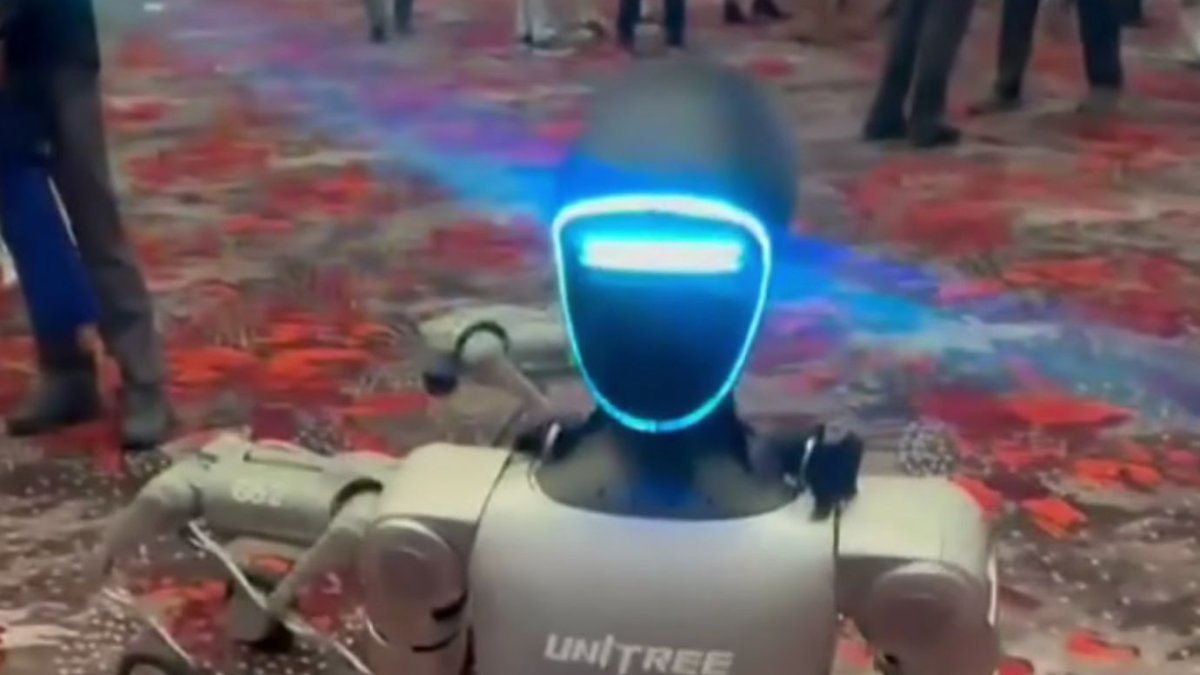
Unitree, the Hangzhou robotics company whose machines have become fixtures at Chinese galas and research labs alike, has pulled the covers off its fourth full-size humanoid robot. The H2 stands 180 centimeters tall, weighs about 70 kilograms and packs 31 degrees of freedom into a body that wears a bionic face and a pair of binocular cameras where the eyes would be. The launch, announced October 20, arrives as the humanoid race in China shifts from laboratory demos to factory floors.
The pitch, as usual for Unitree, leans heavily on motion. Company footage shows the H2 performing ballet sequences and martial arts routines, the kind of high-dynamic whole-body control that has become the studios signature since its quadruped days. Unitree positions the robot for industrial inspection, warehouse handling and entertainment or companionship roles, a deliberately broad brief that mirrors how it has marketed the G1 and earlier H-series machines.
One specification dispute has already been settled by the company itself. Early posts circulating online claimed up to eight hours of endurance, but Unitrees official page pins the standard H2 at roughly three hours on a 0.972kWh quick-swap battery. The longer figure, the company clarified, belongs to the H2-A-XY general-purpose variant, not the standard robot and not the kung fu performance edition that drew the headlines.
Vendor-reported figures deserve the usual caution: Unitree has not submitted the H2 to independent benchmarking, and its dynamic demos are choreographed showcases rather than task-completion evidence. That has not stopped the market from reacting. Chinese robotics stocks rallied this week on a double dose of good news from the NVIDIA and Tesla supply chains, with NVIDIA announcing an expanded Isaac platform and humanoid reference designs just as Tesla laid out an Optimus production timeline on its earnings call.
The H2 also lands amid a broader argument about what humanoids are actually for. NVIDIA has spent the week pitching its own stack, from the Agile ONE SN reference humanoid built with partners to simulation workflows for training, while Chinese peers like UBTech and Agibot push warehouse and factory deployments. Unitrees edge remains cost and supply chain: it sells real, shipping hardware at prices Western rivals have struggled to approach, and every H2 that leaves the factory feeds back data that is becoming the scarce commodity in physical AI.
What to watch next is whether the H2 moves from stage demos to paying deployments. Unitree has hinted at industrial pilots for inspection and logistics, and its earlier machines found buyers in universities and entertainment productions worldwide. If the 31-degree-of-freedom body can hold up outside the gym, the H2 will be a serious test of whether full-size humanoids can earn their keep beyond the performance circuit.
Comments (0)
Log in to join the discussion
Log InNo comments yet