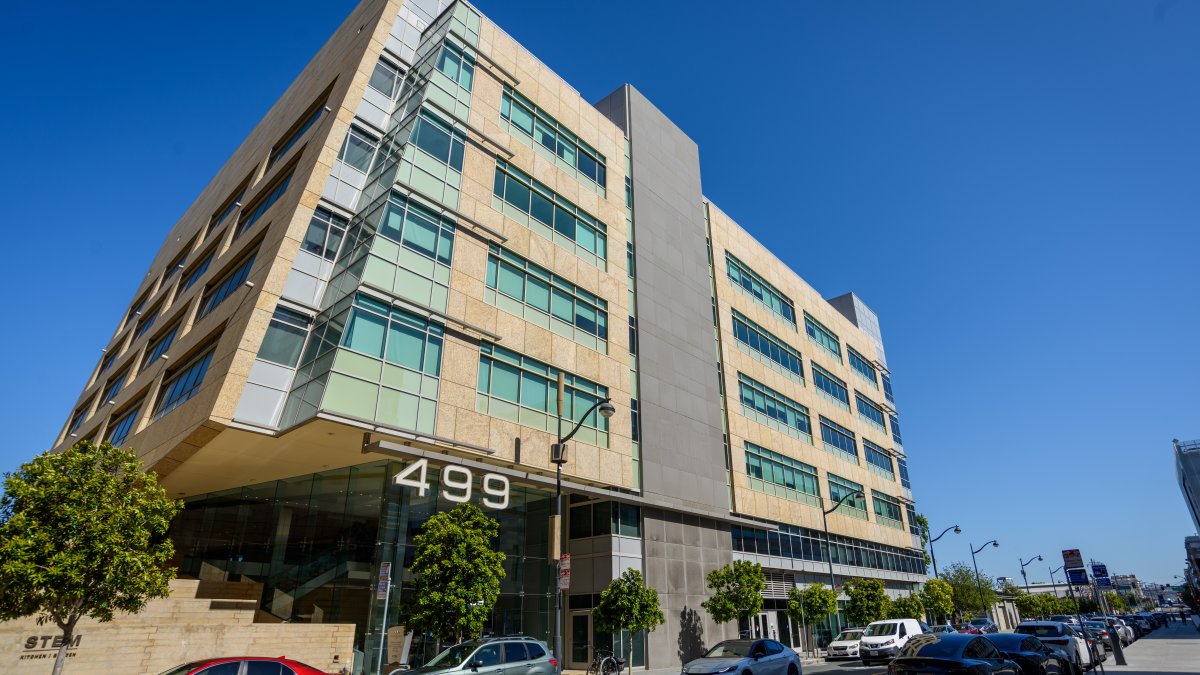
Biohub, the research organization founded by Meta CEO Mark Zuckerberg and Dr. Priscilla Chan, said on Wednesday that total commitments to its Virtual Biology Initiative have reached $1.8 billion, as the US Department of Energy, the National Institutes of Health, Google DeepMind, Isomorphic Labs and Meta formally joined the effort. Biohub is billing it as the largest coordinated commitment to generating AI-ready biological data to date.
The money and resources break down into several layers. The Department of Energy will invest more than $500 million over five years in lab measurement, modeling and computation through its cross-agency Genesis Mission, drawing on exascale supercomputing, X-ray and neutron scattering, cryo-electron microscopy and tomography, and autonomous laboratories across the national laboratory system. The NIH will coordinate datasets and repositories built with more than $500 million in prior federal investment, which Biohub will standardize for AI model training. And Google DeepMind, Alphabet's drug-discovery sibling Isomorphic Labs and Meta are collectively investing $300 million in the technologies and multi-modal datasets needed to build predictive models of life.
Those commitments build on the $500 million Biohub itself put into the initiative when it was announced in April — $400 million for new measurement technologies such as cryo-electron tomography and microscopes that can image millions to billions of cells in living tissue, and $100 million for research outside the organization. The shared ambition is what researchers call a virtual cell: a computational model accurate enough that scientists can run experiments digitally before touching a pipette.
"An accurate predictive model of biology could dramatically accelerate scientific discovery by enabling scientists to perform experiments digitally," said Alex Rives, Biohub's head of science. "The insights that come from this could unlock a far greater understanding of disease and open up completely new paths for cures." He added that building a virtual cell "is one of the most important challenges for the next era of science" and will require coordinated data generation at a national and international scale.
The scale gap is the point of the money. Current cell datasets run to hundreds of millions of cells, Rives told Reuters, while a genuinely predictive model will need billions and eventually trillions. The data will come from techniques including spatial transcriptomics, which maps molecular activity inside intact tissue, and screens that record how cells respond to changes in their environment — much of it never generated in a coordinated way before. Biohub is targeting a five-year window for work that would otherwise stretch across decades, with an initial dataset slated to arrive in roughly a year.
There is a commercial catch in the "open science" framing. Datasets will eventually be released publicly, but corporate funders get embargo periods during which they can work with the data exclusively — the mechanism Biohub is using to draw private money into the project. Government-funded work running in parallel carries no such restrictions. Chan said in an interview that the data has "always [been held] as a community asset, not just for one group, so that it can build upon itself over time," and Biohub says it plans to approach pharmaceutical companies and philanthropies next.
A broad set of research institutions has committed to work within the effort, including the Allen Institute, the Broad Institute, Gladstone Institutes, the Human Cell Atlas, the Human Protein Atlas and the Wellcome Sanger Institute. NVIDIA will contribute computing infrastructure and technical expertise, and Renaissance Philanthropy is helping expand funding for data generation.
If the initiative works, the payoff is compressed drug-development timelines and a shift of biology from a discovery-driven science toward a predictive one. What bears watching is how the public-private data split ages: a resource billed as a community asset, with paying funders stepping ahead of the queue first, is a governance model the rest of AI-driven science will be watching closely.
Comments (0)
Log in to join the discussion
Log InNo comments yet