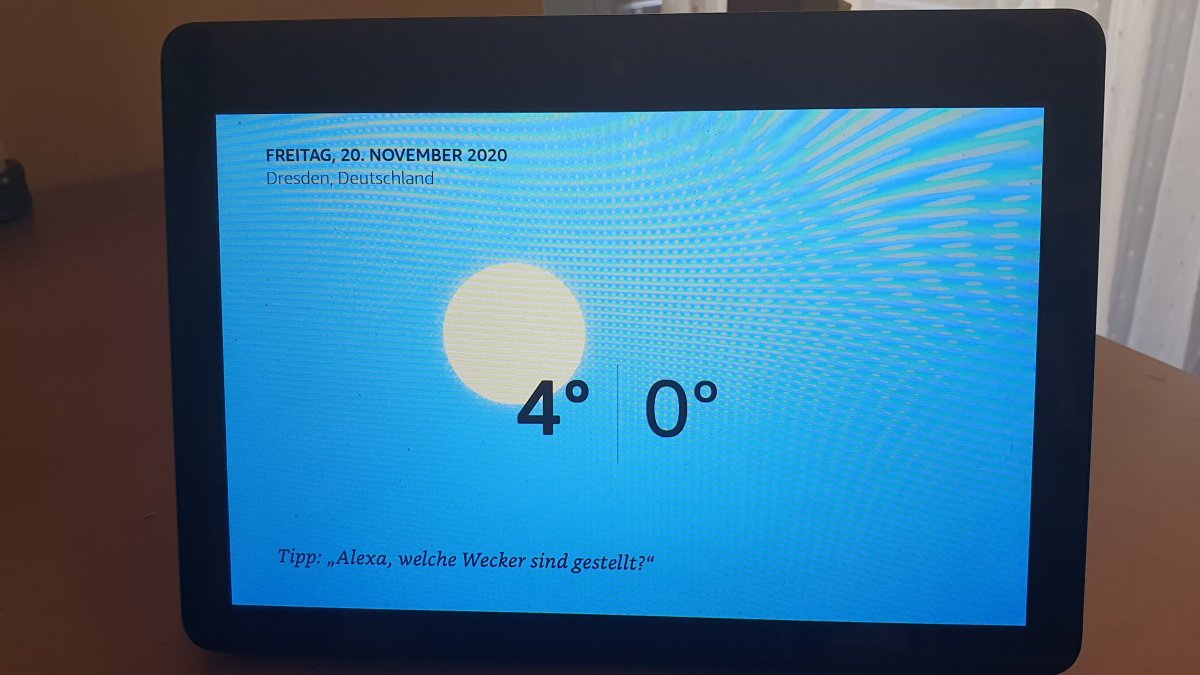
Amazon announced five new Echo devices on Wednesday and most of them are on sale now. The lineup runs from a $99.99 Echo Dot to a $569.99 Echo Show 16 with an anti-glare screen, and it includes two categories the company has never sold under its own name: a bedside clock called Echo Time and the first Alexa Photo Frame. Every device runs Alexa+, the rebuilt assistant that is free for Prime members in the United States and $19.99 a month for everyone else.
The most telling change is the Dot. Amazon has sold more than 100 million of them, and the Echo Dot has been the cheap way into the ecosystem since it launched at $49.99. The new model starts at $99.99. In exchange it gains a built-in smart home hub, an Eero Wi-Fi extender covering up to 1,000 square feet, four microphones instead of three, Amazon's AZ3 chip and a driver the company says delivers 50 percent more bass. A Kids version is $109.99.
The rest of the range pushes the same direction. The Echo Studio now comes in a $249.99 version with a camera, the first Amazon smart speaker to carry one; it lets Alexa recognise who is speaking before reading out email or calendar entries, and lets owners check on a room remotely. The Echo Show 16 has a 16-inch screen, a 13-megapixel night-vision camera and, by Amazon's count, 20 percent more computing power. The camera-free Echo Time uses presence and temperature sensing to wake people within 10 to 60 minutes of their alarm, during lighter sleep, and carries the National Sleep Foundation's SleepMark. The Photo Frame, from $199.99, picks pictures from Amazon Photos by who is in them and when they were taken.
Amazon is not pretending the pricing is incidental. Panos Panay, the senior vice president who runs Devices and Alexa, told WIRED that a couple of hundred million people now use Alexa+, that they talk to it two to three times more than before its AI rebuild, cook with it five times more and create routines twice as often, all figures the company has not published externally. The company also blamed a memory shortage for markups on existing devices this summer, and has spent October shipping premium Kindles and Alexa tablets.
Privacy is the unresolved part. The Echo Studio's camera has no physical shutter; Amazon points to a button that disables the microphones and camera together and an LED that lights when the camera is live. The Photo Frame exists to display family photographs and runs an assistant that reads them. The Echo Time, at least, ships without a camera, which is now a feature worth advertising.
The competitive frame is the home itself. Apple announced its first smart display, the $299 HomeView, two weeks ago and ships it on 13 November; Google released a Gemini speaker in June but still sells a smart display designed in 2021. Amazon's advantage is the installed base and the fact that its devices now double as hubs, routers and sleep trackers. Its problem is that each new sensor raises the price of the hardware while the subscription it is meant to sell costs $19.99 a month.
What it means: Amazon is converting a hardware business into an assistant business, and using price to do it. Doubling the Dot and putting a camera in the Studio only makes sense if the money is meant to come from Alexa+ subscriptions and from the context those sensors collect. The bet is that people will pay for an assistant that recognises them, watches the room and knows when they are asleep. Whether they want that in the bedroom is the question the Echo Time answers by leaving the camera out.
Comments (0)
Log in to join the discussion
Log InNo comments yet