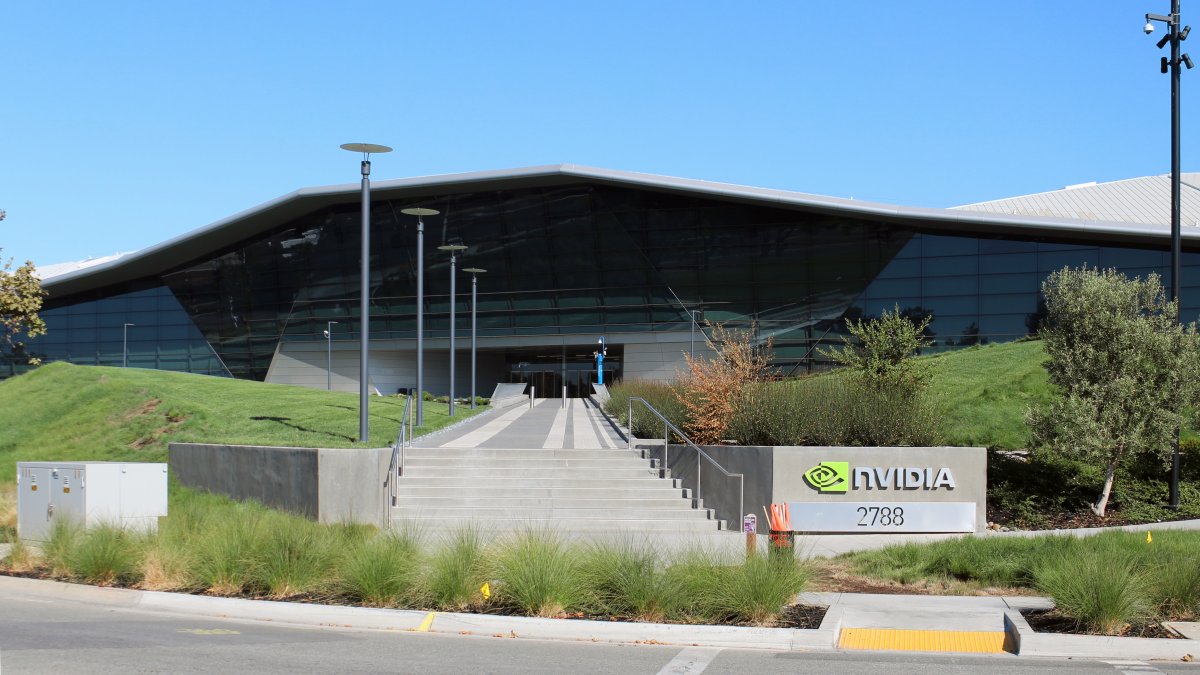
Nvidia is exploring an unusual answer to one of its biggest problems: where to put the servers it keeps selling. According to a report from The Information citing two people directly familiar with the matter, the chipmaker has approached Apollo Global Management with a plan to convert more than 130 existing telecom buildings owned by broadband operator Brightspeed into a distributed network of small AI data centers spanning up to 20 US states.
The pitch went through Apollo first. Nvidia raised the idea with Apollo executives, who asked the chipmaker to submit the proposal in writing to Brightspeed. Nvidia did so on November 4, the day after the US midterm vote, and has since requested additional site data and physical visits to several of the buildings, according to the report.
The target assets are unglamorous but strategically valuable. Brightspeed was formed in 2022, when Apollo paid $7.5 billion for Lumen Technologies' local phone business and broadband assets. The company now operates more than 130 buildings that house voice and data equipment, many of them in smaller cities such as Dothan, Alabama, Killeen, Texas and Mansfield, Ohio — and many already wired with enough power to run Nvidia's latest servers.
Nvidia's internal estimate puts the combined usable power across those sites at roughly 1 gigawatt. As Tom's Hardware calculates, that could accommodate more than 2,200 Supermicro Vera Rubin NVL72 racks, each carrying 72 Rubin GPUs and 36 Vera CPUs. The buildings are not plug-and-play: cooling systems and other supporting infrastructure still need to be installed, and local permits are still required. But retrofitting an existing structure faces far less red tape and community resistance than building a hyperscale campus from scratch.
People inside Nvidia describe the concept as an "inference network" — sites optimized for running already-trained models rather than training new ones. That distinction matters because inference tolerates geographic distribution: requests can be routed to whichever small site has capacity. It also matters commercially, since agentic workloads consume five to ten times more tokens than a human user, and inference demand is the segment growing fastest.
The timing is not accidental. After this week's state elections, several governors who campaigned on pausing or restricting new data center construction took office, and analysts expect new-build projects in some states to face moratoriums. Repurposing buildings that already exist offers Nvidia and its customers a way to add capacity while sidestepping much of that political friction.
There is also a distressed-asset angle. Brightspeed has struggled under the debt load of its fiber expansion, and recent reports say it is negotiating with creditors and could file for bankruptcy as soon as December. Nvidia's interest in the buildings intensified in recent weeks as that prospect grew, according to The Information. Apollo, for its part, has already committed heavily to AI hardware, including a $40 billion arrangement with SpaceX covering roughly 360,000 Vera Rubin GPUs.
None of this is confirmed: Nvidia declined to comment, the chip ownership and eventual customers remain unclear, and possible clients mentioned in reporting include cloud providers and AI developers such as SpaceX, Anthropic and OpenAI. If the plan advances, deployment of Vera Rubin systems could begin as early as the first quarter of 2027. Either way, the episode shows where the industry's bottleneck has moved: the scarcest resource in AI infrastructure is no longer chips — it is anywhere legal to plug them in.
Comments (0)
Log in to join the discussion
Log InNo comments yet