Genesis AI, a two-year-old robotics startup based in Paris, has raised a $500 million Series A at a $3.5 billion post-money valuation, one of the largest single rounds in the physical-AI sector this quarter. The round was co-led by Premji Invest, Khosla Ventures and Eclipse, according to Crunchbase News, and the company said the money will accelerate deployment of its general-purpose robots.
The investor list reads like a cross-section of the AI hardware ecosystem: Durable Capital Partners, France's state investment bank Bpifrance, HSG, and the venture arms of NVIDIA, AMD, Zoom, Samsung and Ericsson all participated. Individual backers include former Google CEO Eric Schmidt, Zoom CEO Eric Yuan, former Yahoo chief Jerry Yang, French telecom entrepreneur Xavier Niel and former Tesla CFO Zach Kirkhorn.
Genesis was founded in 2024 by CEO Zhou Xian and president Theophile Gervet, a former research scientist at Mistral AI. The company has offices in Paris, London and San Carlos, California, and has now raised $605 million in total, following a $105 million seed round announced in July 2025.
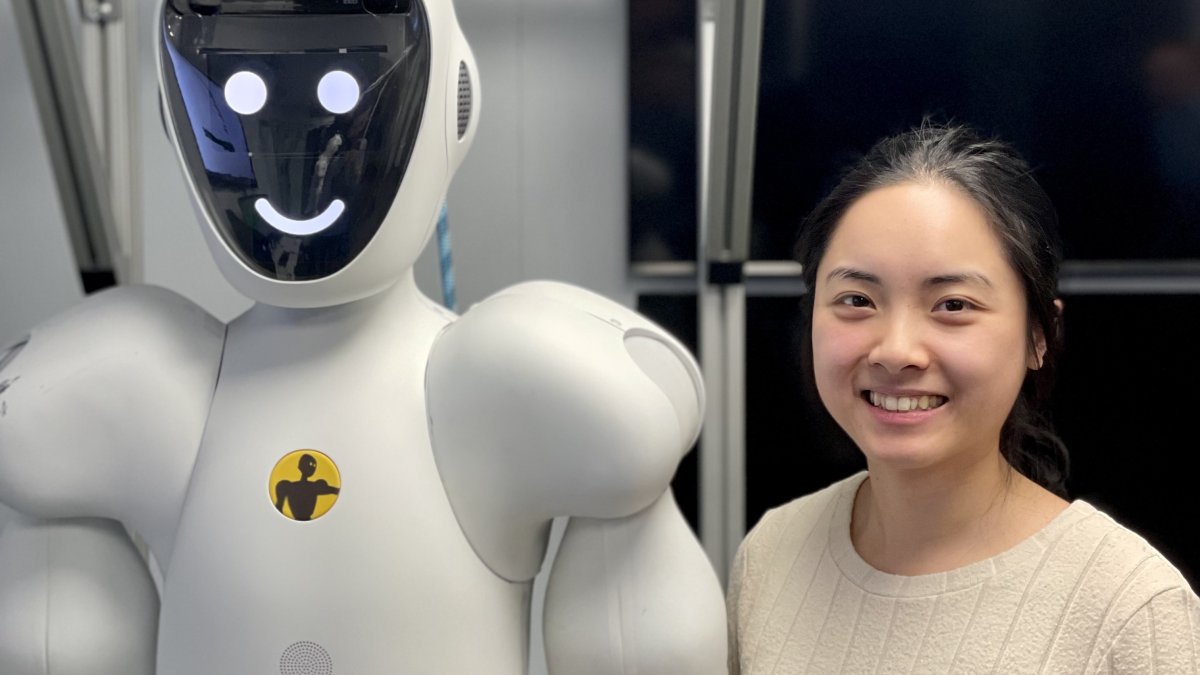
The flagship product is Eno, a general-purpose robot that TechCrunch described as resembling an iMac on wheels rather than a metal humanoid skeleton. The company has built 30 to 40 units so far, piloting them with a handful of undisclosed customers, and has picked a US contract manufacturer to begin mass production next year. Crunchbase News reported a partnership with LG CNS and other Fortune 500 companies in the pipeline; Genesis has not disclosed revenue or a paying-customer count.
The most striking detail in the coverage came from the founder himself: Zhou told TechCrunch that the robot's dexterous hands last only a few weeks of regular work before they must be swapped out. He named hardware capability and the supply chain as the key bottlenecks - a candid admission in a sector where marketing videos routinely show flawless demonstrations.
Genesis' data strategy explains the hand design. More than 100 workers around the world wear sensor-equipped gloves and headset cameras while performing everyday tasks, and the robot hand copies human hand proportions and wears the same glove, so human motion data transfers directly. Simulation then generates millions of synthetic training experiences on top of that. Zhou argued that model architecture contributes only about 10 percent of the outcome, with training infrastructure and data quality doing the rest - a company assessment, not independently verified.
The round lands as capital floods into robotics. Crunchbase data shows global venture funding for robotics startups reached $9.9 billion in the third quarter, more than double the $4.3 billion recorded a year earlier. Premji Invest partner Vedant Agrawal said the firm was drawn to demonstrations of robots completing extended tasks independently.
The honest disclosure about hand lifespan is arguably more informative than the valuation. A rental model, which Crunchbase News says Genesis is exploring, shifts hardware wear costs onto the vendor - so a hand that fails every few weeks is a direct line item on the company's own balance sheet. Whether the first mass-produced run next year can stretch that replacement interval toward months will say more about the business than the $3.5 billion valuation itself.
Comments (0)
Log in to join the discussion
Log InNo comments yet