The number that puts Anthropic's infrastructure bet in perspective is not the valuation. It is $900.9 billion — the total of purchase and lease commitments Anthropic has signed, running all the way to 2045, according to its November 10 amended IPO filing. Half of it, about $451.6 billion, falls due before the end of 2030. And $70.7 billion is due in the 12 months after September 30, 2026 — a figure that exceeds the $64.35 billion the company would raise at the top of its $70-to-$78 price range.
The filing gives this strategy a name: Anthropic Direct. Instead of only renting servers from cloud providers, Anthropic now leases chips directly — mostly on five-year equipment leases from Broadcom — and places them in dedicated data centers built to its own specification, with the buildings themselves on 15-to-20-year leases from developers. Chip rent alone totals about $161.2 billion. Roughly a dozen sites in North America are involved.
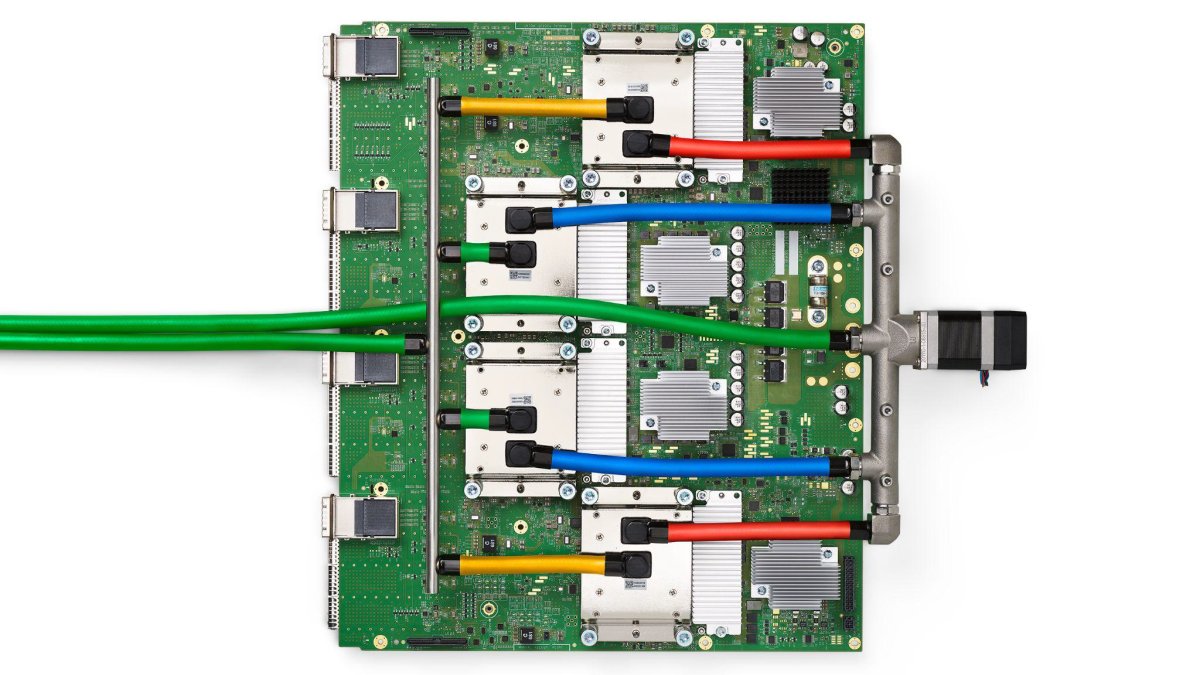
The first batch shows how the machine works. Under an agreement signed in June through a private-credit vehicle called BigSky, led by Apollo with Broadcom providing credit support, Anthropic agreed to take roughly 875,000 Google TPUs — about a gigawatt of compute across four sites — for about $7.2 billion a year over five years, with an option to buy the hardware for $95 per unit when the lease ends. Google guarantees the data-center leases, which is what let developer Hut8 issue $3.25 billion of 6.2 percent bonds for the 245-megawatt Riverview site in Louisiana. Anthropic has also agreed with Broadcom on a further 3.5 gigawatts of TPU capacity, according to documents reviewed by the Financial Times.
The motive is cost control. Anthropic's third-quarter compute bill reached $9.86 billion — 58 percent of revenue, up from 48 percent in the second quarter — and about $5 billion of that was short-term capacity bought at a significant premium, including from SpaceX, precisely to cover demand spikes. Operating results swung from a $974 million profit in Q2 to a $567 million loss in Q3 as a result, with adjusted operating margin easing from 19 percent to 15 percent. Direct leases are meant to replace that expensive spot capacity with contracted supply.
The company is candid that the structure carries risk. The filing warns that coordinating developers, chip lessors and power suppliers exposes Anthropic to "structural timing mismatches and liquidity risk" — it pays before the compute is productive. Founders Dario Amodei, who told JPMorgan's Jamie Dimon on Friday that compute planning is the company's "deepest business challenge," and his co-founders wrote in the investor letter that the up-front commitment "may at first glance seem recklessly large," arguing the plan is "bold and rational." Against the commitments stands $146.6 billion of liquidity and an $81 billion annualized revenue run rate as of October 31.
What investors are underwriting on Wednesday, when the order book closes, is a bet that Anthropic can carry 20-year payment obligations against technology cycles that run 12 to 18 months. The $70.7 billion due in the next year is 87 percent of the current revenue run rate. If model demand keeps compounding, Anthropic Direct will look like the deal of the decade. If it does not, the filing's own risk language — obligations that are largely non-cancelable — describes exactly what happens next.
Comments (0)
Log in to join the discussion
Log InNo comments yet