SAN JOSE — Buying AI compute usually involves an act of faith: trusting that the processor running your workloads is the processor you are paying for. At the OCP Global Summit here this week, AMD and Microsoft demonstrated a prototype meant to replace that trust with evidence, chaining hardware provenance, cryptographic signing, a transparency ledger and independent validation into a single assurance flow for data center silicon.
The pipeline, described in an AMD engineering blog post ahead of the show, runs in four stages. First, AMD compiles a Hardware Bill of Materials (HBOM) from records gathered across key manufacturing stages and cryptographically binds it to the finished system-on-chip, creating device-specific provenance evidence. Second, that provenance statement is signed with Microsoft's Artifact Signing service, which protects its integrity and ties it to AMD's signing identity along with the chip's original factory signing evidence.
Third, the signed statement is registered, per IETF RFC 9995, with a dedicated instance of Microsoft's Signing Transparency, which applies the IETF Supply Chain Integrity, Transparency and Trust (SCITT) architecture defined in RFC 9943 to produce a durable, tamper-evident record. Fourth, a relying-party validator checks the signature, the artifact binding, the ledger receipt specified by RFC 9942 and the issuer against defined trust policies. The end state: a cloud customer can independently evaluate whether the silicon beneath its workloads is what the vendor claims it is.
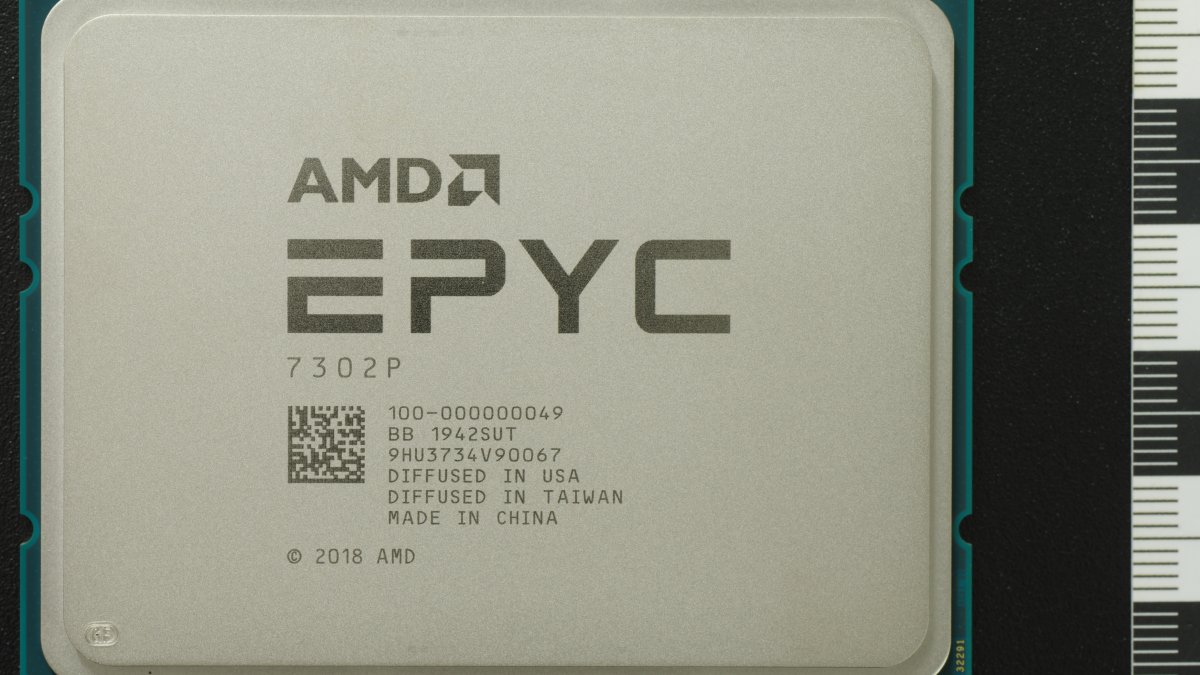
The demonstration runs on AMD's flagship 6th Generation EPYC server processor at the OCP Global Summit, which runs October 12-15 in San Jose under the theme "Scaling Innovation for the AI Era." AMD showed an early device provenance proof of concept, focused on manufacturing and lifecycle evidence, at last year's OCP summit; this year's prototype extends it into a full signing-and-validation flow. The company is careful about scope, stating that the demonstration "illustrates a proof-of-concept integration" of these technologies and "should not be interpreted as a product commitment."
Most of the pieces are not new on their own. Microsoft has been developing Artifact Signing and Signing Transparency as standards-based services and is inviting organizations to join a preview community for the combined flow. What is new is the wiring: applying the software supply chain playbook — signed artifacts, transparency logs, third-party verification — to physical processors, where a counterfeit or mis-shipped part has historically been almost impossible for a cloud tenant to detect.
The timing is not accidental. AI accelerators and server CPUs are sold out years in advance, lead times have stretched, and a single facility now concentrates many millions of dollars of silicon in a few racks. That combination is a magnet for counterfeit, gray-market and mis-provisioned hardware. Provenance evidence does not prevent theft, but it converts "trust us" into something a customer's auditor can check — whether the counterparty is a hyperscaler, a colocation operator or a reseller of leased GPU capacity. If the SCITT model migrates from software artifacts to silicon the way transparency logs did for code, procurement teams may eventually demand a verifiable HBOM the way they now demand a software bill of materials.
Comments (0)
Log in to join the discussion
Log InNo comments yet