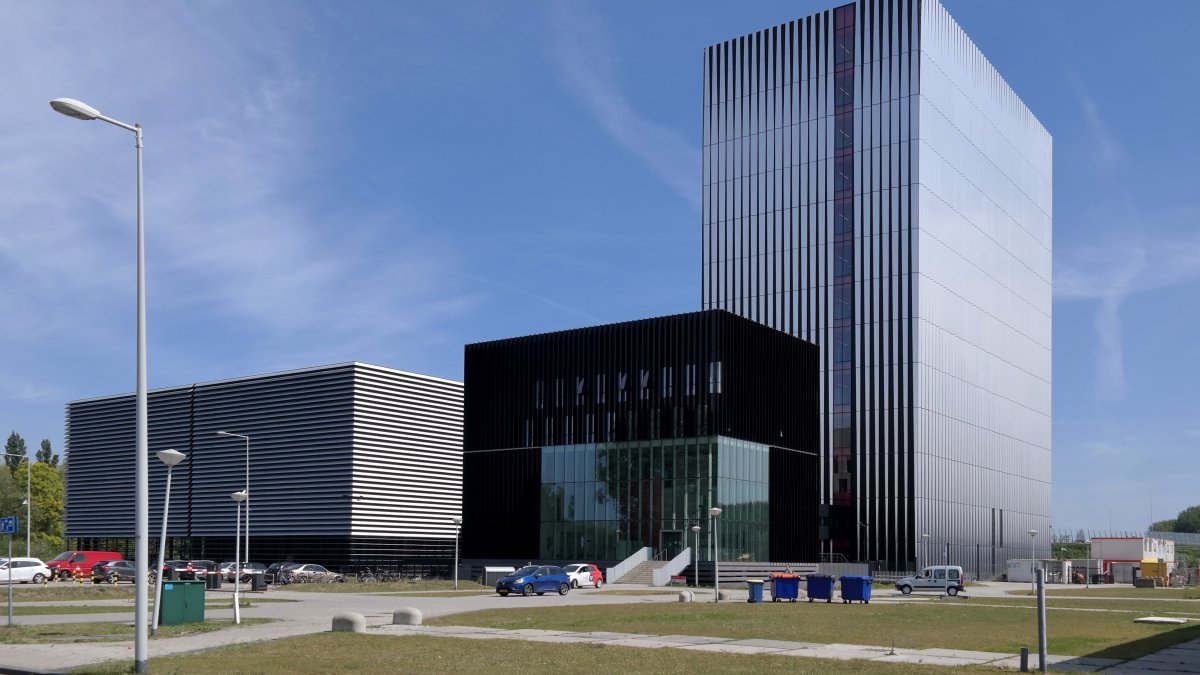
Protesters broke through the perimeter fence of a large Microsoft data center construction site on the edge of Amsterdam on Friday, escalating a years-long local fight over the project into a direct physical confrontation. A Reuters witness counted around 100 people inside the compound, near Sloterdijk in the city's western port area. A spokesperson for the activist group Geef Tegengas told local broadcaster AT5 that roughly 500 had entered, with hundreds more outside — a figure five times the wire service's estimate.
The breach followed a banned march. Police stopped the demonstration on its way to the site in the morning, after which the mayor prohibited the gathering altogether, according to Dutch news agency ANP. Protesters then tried to push through police lines and headed for the construction grounds. Some cut or broke through fencing, some climbed a construction crane, and NOS reported others on the roof of the building under construction. Riot police moved in and made several arrests; no final count has been released. Microsoft had not commented publicly at the time of writing.
The project itself is the flashpoint. Microsoft will lease the entire facility, which consists of three buildings, each 85 metres tall. Plans were first filed in 2016 — before Amsterdam banned new data centers within the city limits — and the provincial government approved the project in January, according to DutchNews. Critics argue the arrangement circumvents Dutch rules governing very large data centers, and city officials have warned that grid constraints already threaten plans for new housing and schools.
Geef Tegengas, which campaigns against fossil fuels, wants construction stopped outright. The group says the completed facility will draw as much electricity as every household in Amsterdam combined and will slow the building of 30,000 planned homes. The site has been targeted before: in July, Extinction Rebellion activists threw balloons filled with paint and an acidic mixture over the perimeter fence.
Friday's action was not improvised. It was part of a coordinated, two-day wave of demonstrations against data center expansion planned across several European countries on November 6 and 7. Organizers accused police of misconduct, saying the right to demonstrate had been disregarded because even the march toward the site was not facilitated. Fossielvrij NL, a separate organization, held its own midday demonstration outside the fence.
The incident lands as data center opposition hardens from petition drives into physical action on both sides of the Atlantic, and as grid constraints have become the binding constraint on AI expansion in dense urban regions. Amsterdam's dispute captures the core trade-off in its sharpest form: the same electricity that trains and serves AI models is electricity that city planners had earmarked for tens of thousands of homes. With prosecutors set to review Friday's events and organizers preparing to challenge the mayoral ban in court, the legal fight over this site is only beginning.
Comments (0)
Log in to join the discussion
Log InNo comments yet