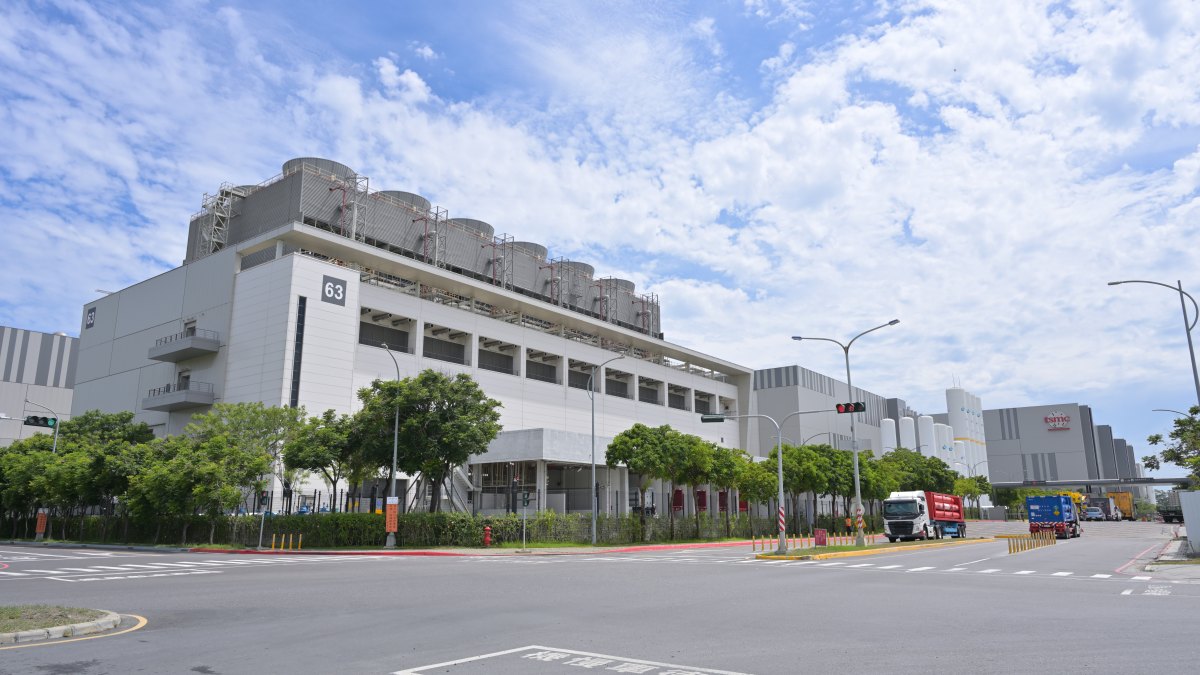
TSMC is considering expanding into advanced memory chip manufacturing, a move that would extend the world's largest contract chipmaker deeper into the AI hardware supply chain. According to The Information, citing two people familiar with the matter, TSMC recently began drawing up plans to produce a specific type of advanced memory called 3D DRAM — at the request of Nvidia, its biggest customer.
Unlike conventional DRAM, which arranges memory cells in a single layer, 3D DRAM stacks cells vertically to pack more capacity into the same footprint. The market today is dominated by Samsung, SK Hynix and Micron, and all three are racing to develop 3D DRAM as the next generation of memory manufacturing. TSMC itself has been researching memory technology for years and holds multiple patents on vertically stacked DRAM schemes.
The request reflects how acute the memory shortage has become. The AI hardware boom has created severe shortages of DRAM and HBM, sending prices sharply higher and pushing chip designers to hunt for additional supply. Apple raised prices on some products earlier this year, citing rising memory costs. For Nvidia, memory is a critical companion to its accelerators, and adding TSMC as a potential manufacturing source would open a foundry-side alternative to the three-firm memory oligopoly.
TSMC declined to comment on what it called market rumors and speculation. "TSMC remains focused on its core business of dedicated integrated circuit manufacturing," the company said in a statement, adding that its goal is to be a trusted technology and capacity provider to the global logic IC industry. Nvidia did not respond to a request for comment.
According to the report, the memory project is led by a senior vice president who oversees TSMC's advanced packaging business and previously ran Micron's Taiwan operations — a profile that combines memory manufacturing and chip integration experience. The company is weighing two paths: building a new factory, or acquiring an existing fab and converting it for memory production, an approach Micron took earlier this year when it bought a Taiwanese fab from Powerchip with plans to repurpose it for advanced memory. No timetable, capacity target or investment figure has been disclosed.
The move would be a homecoming of sorts. TSMC produced conventional memory chips through the 1990s and 2000s and only stopped disclosing memory revenue separately after 2008. It also has an existing, and potentially awkward, memory relationship: since 2024 it has worked with SK Hynix to fabricate the logic base dies for that company's next-generation HBM, the stacked memory that feeds AI processors. Entering memory directly would put TSMC in competition with a partner.
The risks are as familiar as the opportunity. Memory is the most cyclical corner of the semiconductor industry, and shortages have historically triggered waves of capacity expansion that arrive just as demand cools, crushing prices and margins. Whether that cycle logic deters TSMC — a company whose statement this week emphasized its focus on logic — may determine whether the 3D DRAM plans ever reach a fab floor.
Comments (0)
Log in to join the discussion
Log InNo comments yet