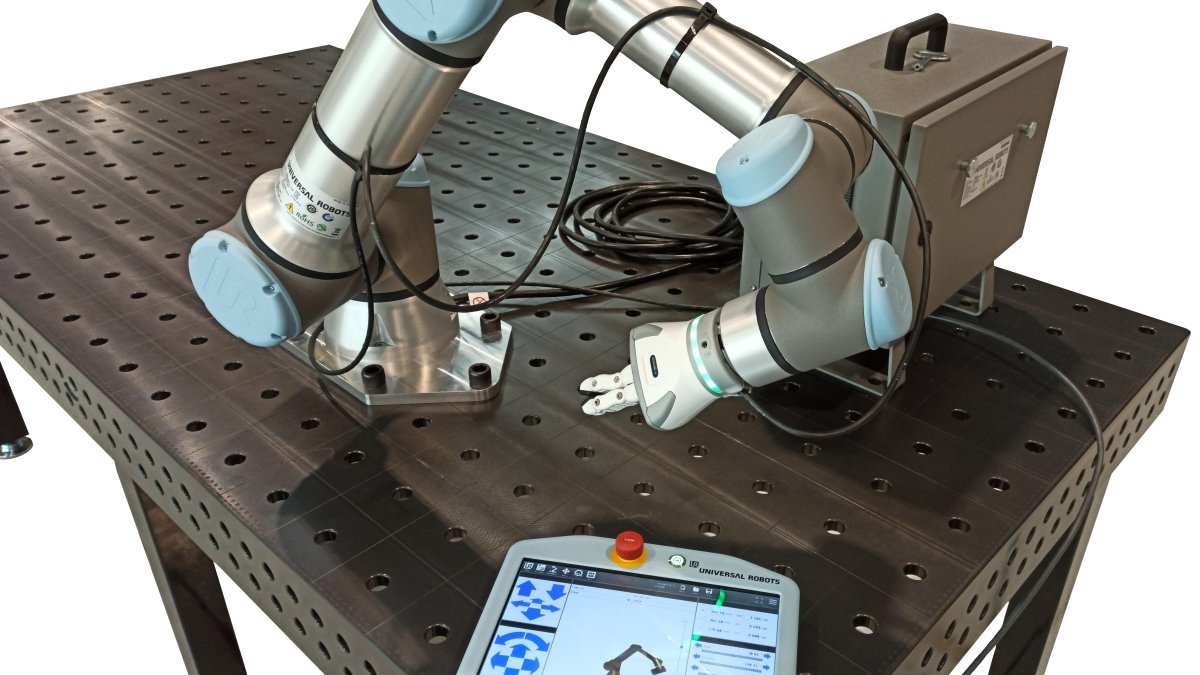
Starting Thursday, November 12, anyone wiring Claude into physical machinery operates under written obligations, not just engineering judgment. Anthropic's updated Usage Policy — announced October 8 and taking effect this week — adds a High-risk Physical Actions section that applies to hardware acting on Claude's output without a human approving each move, whether the model is reached through the apps, the API, cloud providers or resellers.
The section imposes three duties. A qualified individual must be able to observe the equipment and stop it at any time. The equipment must stop or hold a safe state when that person intervenes — or when the connection to Anthropic's services is lost, a clause that turns network reliability into a formal safety dependency. And operating limits such as speed, force, reach, temperature, voltage or dose must be enforced by the equipment itself or by a controller independent of the model's output, so a jailbroken prompt cannot talk the machine past its guardrails.
Six categories trigger the rules: vehicles, vessels, aircraft, drones or mobile robots moving through shared space; machinery that can strike, crush, pin or drop a load on a person; control of hazardous energy or materials; actions on the human body; safety systems such as shutoffs and locks; and industrial processes where a fault could injure workers or the public. Four uses are excluded: consumer devices operating within built-in limits where the worst outcome is discomfort, plans or code a qualified person reviews before execution, pure monitoring, and enclosed laboratory automation handling non-hazardous materials. The policy supplements, and does not replace, vehicle, aviation, medical-device and machinery safety law.
Cloud customers are bound too. Amazon Bedrock tenants received an AWS Health notice dated October 14, and a write-up of the notice by reseller Classmethod says continued use of Anthropic models on Bedrock on or after November 12 counts as acceptance of the updated terms; model availability, pricing and API behavior are unchanged.
The hardware section arrived alongside a broader rewrite. A consolidated deceptive-campaigns section bans sockpuppets, astroturfing, fake reviews and bots that claim to be human, plus planting content designed to mislead the answer sources that search engines and AI systems draw on. Weapons provisions now explicitly cover guidance and control software and mounting weapons on drones or other unmanned platforms; using Claude to decide or suggest targets of investigations, arrests or sentencing is banned; and the elections clause was narrowed to voter deception and interference rather than a blanket ban on campaign work. Media reports on the update also flagged a new prohibition on sustained, purposeless mistreatment of models, with enforcement described as Claude ending the conversation — a detail reported by journalists rather than spelled out in the policy text itself.
Anthropic says most of the text codifies rules it already enforced, informed by abuse patterns in its 2026 threat intelligence reporting. But the practical effect of the hardware section is a shifting of burden: integrators must now prove their machines have a human stop button, a fail-safe on connection loss, and physical limits that do not depend on the model behaving itself. The prompt-injection research of the past two years made clear why. With agents increasingly running lab and factory equipment — a capability Anthropic itself previewed with its Model Hardware Standard in August — the policy turns "what if the model is wrong" from an engineering afterthought into a contractual requirement.
Comments (0)
Log in to join the discussion
Log InNo comments yet