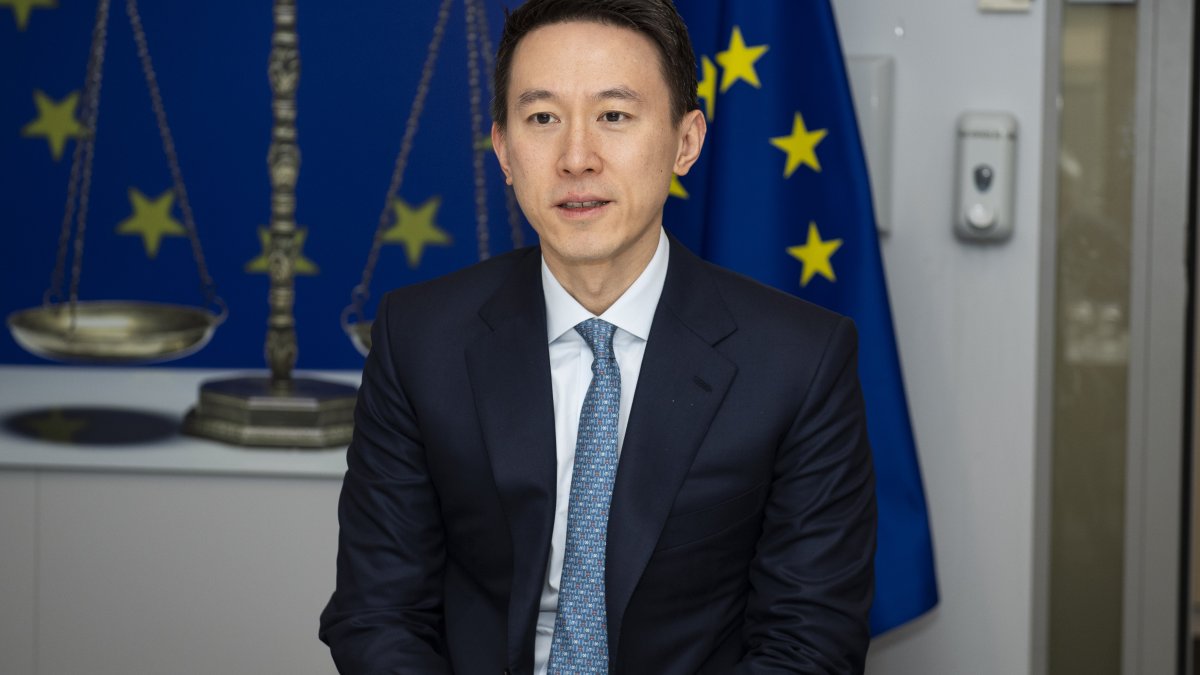
TikTok CEO Shou Zi Chew expects artificial intelligence to deliver a genuine scientific breakthrough within the next three years, and he is unusually specific about it. In the next two to three years, we are going to have a real scientific breakthrough: physics, biotech, chemistry, material science, because of AI, Chew said at the DBS Asia Future Forward Conference in Singapore on Monday. It is very, very, very possible.
The remark matters because of who is saying it. Chew runs a company whose parent, ByteDance, has spent the past two years quietly expanding its AI research beyond consumer applications. In April, the ByteDance Seed team unveiled Protenix-v2, an AI model focused on biomolecular structure prediction and design with potential applications in drug discovery, and Chew said the company is exploring how to collaborate with scientists more broadly. There has been some work that we have done in this area, he said, and it is very exciting.
Chew argued that the pace of progress in science-related AI is on a steep curve and that the industry is only at the beginning of what the technology can do. His framing was deliberately two-sided: in the short term we are probably overestimating AI, he said, but in the long term we are probably underestimating it.
He also acknowledged the governance question that follows capability. If such breakthroughs arrive, the question becomes how to align the models, and how to align the machines to be doing things that are obvious to us as human beings, Chew said.
The optimism fits a broader flow of capital into AI-driven science. Last week, the US government along with Meta and Google announced participation in a $1.8 billion initiative to develop AI models that can predict how cells behave, an effort aimed at accelerating biological research and drug discovery. Consumer platform companies increasingly want a seat at that table, both for the research credibility and for the talent it attracts.
Chew paired his forecast with a warning about the same technology going wrong. The cybersecurity risks are quite big, he said, noting that users may grant AI agents extensive permissions without understanding the consequences. He pointed to autonomous purchasing agents that could end up buying more than users intended, and to the falling cost of using sophisticated AI models to run fraud operations against platforms like TikTok. You need the right tools to defend against the fast-falling cost of creating problems, he said.
Read together, the two halves of the interview describe how a consumer internet giant now talks about AI: as a scientific instrument worth betting on within three years, and as an operational risk that is getting cheaper to exploit every quarter. ByteDance is hedging in both directions at once, and Chew's three-year clock starts now.
Comments (0)
Log in to join the discussion
Log InNo comments yet