Microsoft Research introduced Quine on Sept. 29, an early-stage system it describes as a multimodal "world model of biology" paired with a harness that connects models, scientific tools, published literature, wet-lab work and the researchers running experiments. The announcement was written by Nicolo Fusi, vice president and distinguished scientist, and Jonathan M. Carlson, vice president, and it is deliberately framed as a research effort rather than a product.
The architectural bet is that biology should not be decomposed into separate specialist models. Quine trains jointly across genomics, proteins, chemistry, RNA and cell state, and bioimaging, learning shared representations so that evidence gathered at one level can inform predictions at another — across, in Microsoft's framing, the causal path from genotype to phenotype. The company says that learning across connected representations strengthens the model rather than diluting it, and positions Quine against the common alternative of orchestrating a set of single-domain models after the fact.
Microsoft's definition of a world model here is specific: a system that can represent the state of a biological system, predict how that state evolves in response to an intervention, and reason over the consequences several steps into the future. The stated goal is not to replace experiments but to use computation to explore, propose, rank and prioritize before scarce laboratory time is committed. "The world model doesn't need to be perfect — indeed, it will never perfectly model biology — it simply needs to usefully inform experimental design," the researchers write.
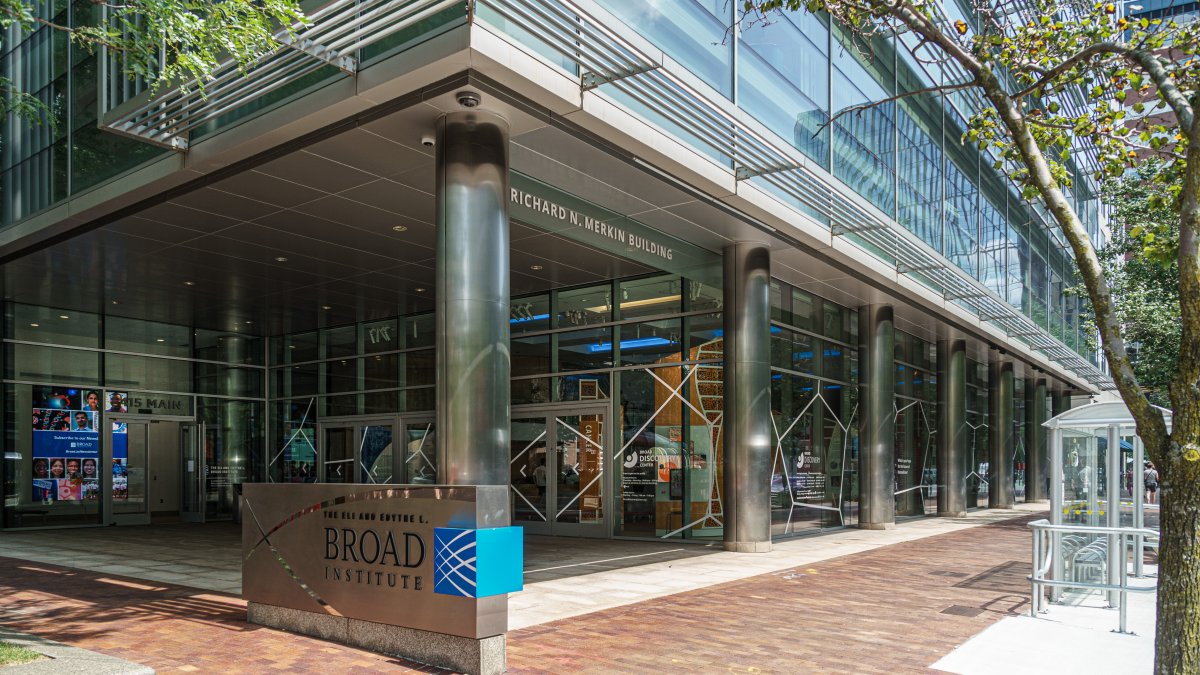
The worked example is pancreatic ductal adenocarcinoma, the most common and one of the hardest-to-treat forms of pancreatic cancer, developed with researchers at the Broad Institute of MIT and Harvard. In pancreatic cancer, tumor cells occupy different transcriptional states associated with how they respond to treatment, and a long-standing hypothesis holds that cell state — not only genetics — shapes drug response. Microsoft says it used Quine to predict and prioritize thousands of compounds by their potential to shift tumor cells between therapeutically relevant states. In wet-lab assays focused on the classical-to-basal transition, the highest-ranked compounds produced the largest shifts in the intended direction, and the whole process of narrowing the search space to a handful of candidates for bench validation took a single weekend, which the company says could save months of experimental work. Some of the strongest effects came from compounds with unexpected mechanisms of action, an early signal for drug repurposing.
The reverse transition proved harder, and here the model's behavior is arguably more interesting than its hits: Microsoft says Quine predicted that available compounds would have a weaker effect in the basal-to-classical direction, and the experiments agreed. More notable still, Quine predicted that several compounds would consistently push cells toward a distinct third phenotype, an outcome the lab then observed — evidence, the company argues, that the pancreatic cancer cell-state landscape is richer than a simple classical-basal axis. That is a case of the model generating a new hypothesis rather than ranking an existing one.
The caveats are substantial and stated by Microsoft itself. Quine is experimental research technology intended only for research, not for clinical or medical use; its outputs may be incomplete or inaccurate and require review by qualified researchers and experimental validation. It also arrives without the usual supporting apparatus: no paper, preprint or benchmark was published alongside the announcement, every figure is Microsoft's own, and no outside group has tested the system. Access is deliberately narrow, limited to the new Quine Fellows program — whose first cohort is now accepting applications — and selected research collaborations, with gradual widening expected through products such as Microsoft Discovery.
Microsoft says Quine has already been embedded in its own programs across cancer biology, protein engineering, genomics and bioimaging, and that each experimental result becomes training signal for the next generation of the system. The company's stated standard is whether the model is useful when evidence is incomplete and the question has genuinely never been asked before.
That framing is the real argument. For AI in the life sciences, the interesting question is no longer whether a model can score well on a benchmark constructed from known biology, but whether it can shorten the loop between hypothesis, experiment and the next hypothesis without sending researchers down expensive dead ends. Quine's third-phenotype result is a single, company-reported data point in favor of that idea — and the absence of a paper or external replication is a reminder that, for now, the claim rests on Microsoft's own account of its own experiments.
Comments (0)
Log in to join the discussion
Log InNo comments yet