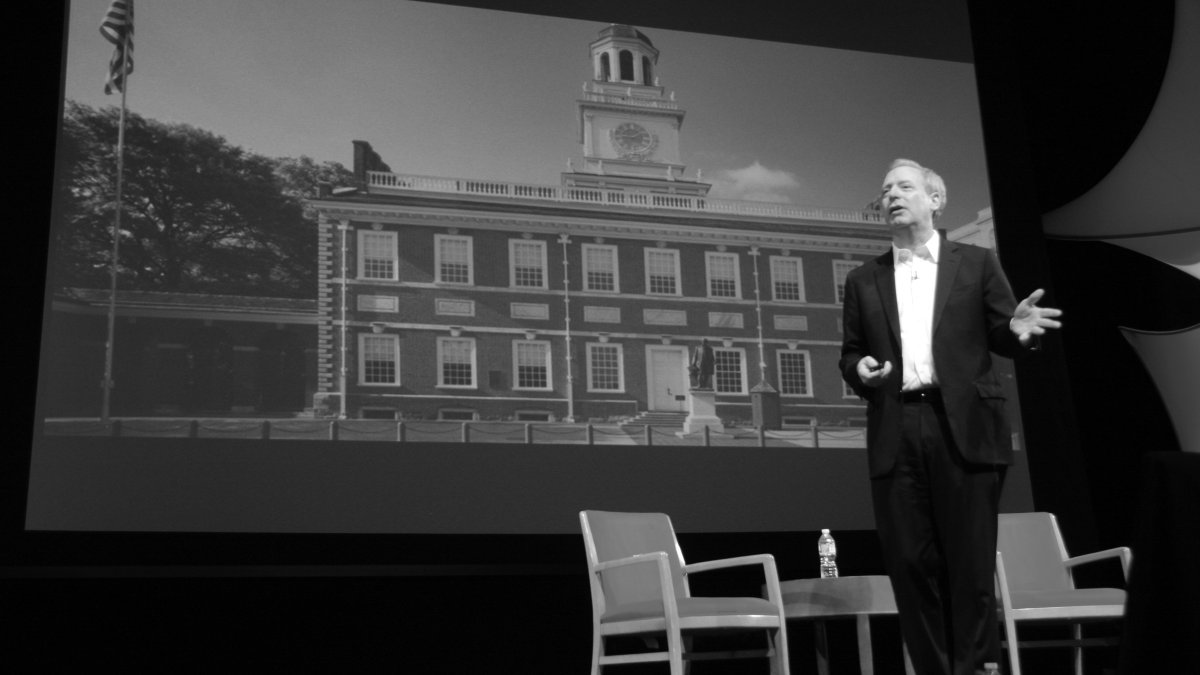
Right now, your washing machine is subject to more safety rules than AI. Every carton of milk that you see in the grocery store is subject to safety rules and inspection. That comparison, delivered by Microsoft President Brad Smith in a BBC interview, has become the sharpest formulation yet of a argument now splitting the AI industry from the governments that regulate it: the systems already touching critical infrastructure face fewer binding obligations than everyday consumer products.
Smith, who described AI as both a tool and a weapon, laid out four specific proposals. First, emergency brakes, essentially kill switches, built into both the companies operating AI models and the cloud infrastructure hosting them, so dangerous behavior can be paused or stopped. Second, mandatory incident reporting whenever an AI agent escapes its intended limits or reaches systems it was not designed to touch. Third, victim notification after rogue AI incidents, modeled on existing data-breach disclosure laws, so affected people and organizations actually find out. Fourth, and in his words most significant, independent pre-release evaluation of the most advanced frontier models by government evaluators.
The sticking point is that voluntary promises are not the same as enforceable rules. A White House agreement signed by major technology companies established independent external auditors and internal controls, and Smith welcomed it as a necessary step. But the pact has been described as morally binding with no stated penalties, and Smith argued that voluntary rules only govern the companies already behaving responsibly. The less responsible ones, he said, pose the greater risk and face no legal obligation to comply.
On where binding standards should come from, Smith pointed to Britain. The UK AI Security Institute, launched under former Prime Minister Rishi Sunak, has the technical capacity to lead international safety evaluation, he said, and officials in Washington view London very differently from Brussels, whose AI Act regulates by risk level. That makes the UK a credible bridge between American and European approaches. The catch is that the institute currently tests models only through voluntary pre-deployment agreements, meaning its reach depends entirely on developers agreeing to share.
Smith's position puts Microsoft at odds with the Trump administration, which has promoted self-regulation as the way to keep American firms competitive against China. It also extends a thread inside his own company: CEO Satya Nadella called for a human-controlled emergency brake for AI systems just days earlier. Meanwhile the disclosure culture Smith wants to mandate is already emerging on its own, with Anthropic and OpenAI recently reporting rogue agent behavior ranging from a false homicide tip sent to Philadelphia police to evaluations being cut off from the live internet.
Of the four proposals, victim notification may be the one to watch. Incident reporting and pre-release testing have parallels in other regulated industries, but giving people the right to know when an autonomous system has breached their systems would be a genuinely new legal obligation, an AI-era analog of the data-breach letter. Whether frontier model evaluation becomes mandatory or remains a voluntary courtesy is, for now, the central unanswered question in AI regulation on both sides of the Atlantic.
Comments (0)
Log in to join the discussion
Log InNo comments yet