Beijing-based AI chip startup Suanmiao Technology (算苗科技) said it has completed its Pre-A2 and Series A rounds, taking total funding over the past 12 months to nearly 2 billion yuan — roughly $280 million — at a valuation of about 12 billion yuan, or $1.7 billion. The latest two rounds together raised more than 1 billion yuan and were led by E-Town Capital and other Beijing municipal and district state-owned investment platforms.
The investor roster accumulated over the year spans state capital and market funds: CDB Capital, Zhongguancun Science City platforms and other state vehicles on one side; Source Code Capital, Xianghe Capital, Lenovo Capital and several industry funds on the other, some of which doubled down across rounds. The figures come from the company announcement as reported by Chinese financial media including China Fund News, Pedaily and Sina Finance, and have not been independently audited.
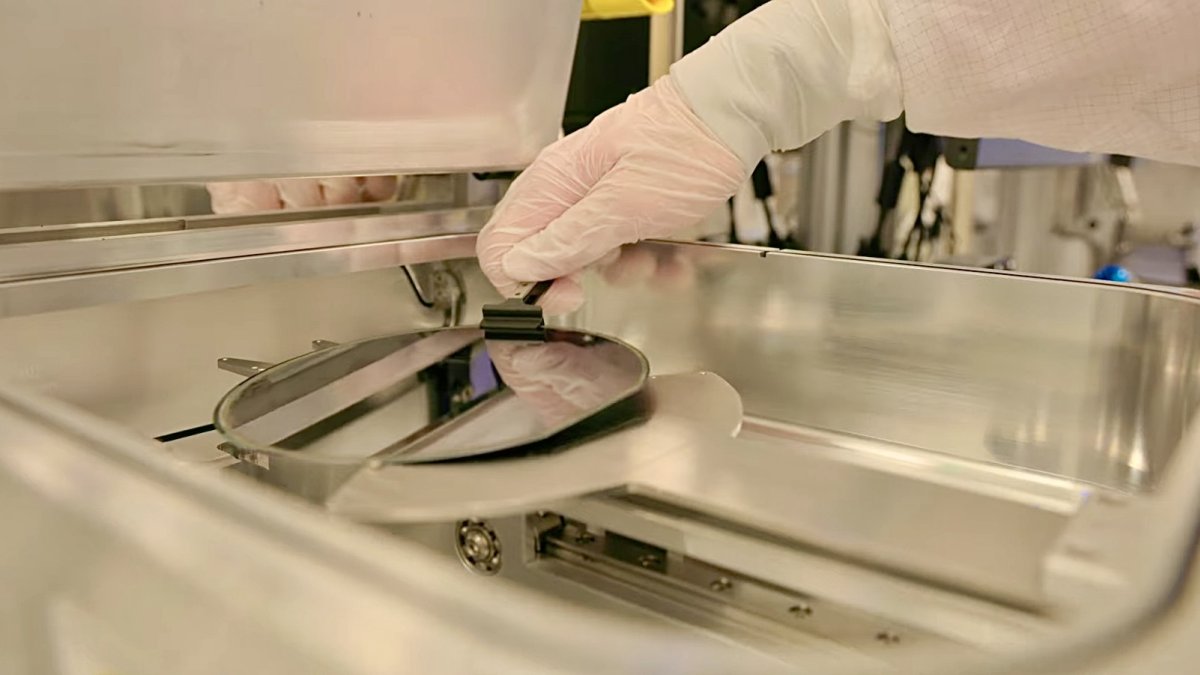
Suanmiao builds what it calls 3D TokenPU architecture chips aimed specifically at large-model inference, where the binding constraint is memory bandwidth rather than raw compute. The first-generation product, A4E, taped out on June 15, 2026 using a domestically available mature process and supply chain. Through 3D hybrid bonding, the design stacks eight layers of memory wafer directly on top of the logic wafer, which the company says delivers 16TB/s of memory bandwidth — an attempt to break through the memory wall that limits conventional GPU inference.
The architecture is built on an in-house RISC-V design rather than licensed cores. The team behind it has spent roughly seven years in 3D IC. Founder and CEO Wang Fuquan, who did his postdoc under Loongson chief scientist Hu Weiwu at the Chinese Academy of Sciences Institute of Computing Technology, previously founded high-throughput computing chip company Zhongke Shenglong. The core team says it helped establish the wafer-on-wafer hybrid bonding supply chain in mainland China, with experience shipping more than 10,000 3D IC wafers and cumulative revenue above 1.2 billion yuan from that earlier business.
The roadmap is aggressive. A second-generation chip, A4S, has completed definition and is slated for tapeout in the first quarter of next year, targeting at least a doubling of overall performance and potentially two to three times after optimization. If execution holds, A4E enters volume production around the same time next year, according to an interview Wang gave to 21CBR business review.
The funding lands in a crowded lane. Industry estimates cited by Chinese media put the number of companies pursuing 3D-stacked AI chips at around 50, with peers such as Dongfang Suanxin raising earlier this year at a 12.3 billion yuan post-money valuation. The difference is positioning: Suanmiao is not chasing training clusters but the inference market, where cost per token and bandwidth per watt decide the economics.
For the AI compute ecosystem, the pitch matters because it sidesteps the hardest constraint. Cutting-edge lithography remains out of reach for most Chinese chipmakers, but stacking memory on logic with mature nodes attacks the same performance problem from a different direction — the logic behind high-bandwidth memory everywhere. Whether A4E can convert its tapeout into design wins against established accelerator incumbents, rather than stay a well-funded experiment, is the question the next four quarters will answer.
Comments (0)
Log in to join the discussion
Log InNo comments yet