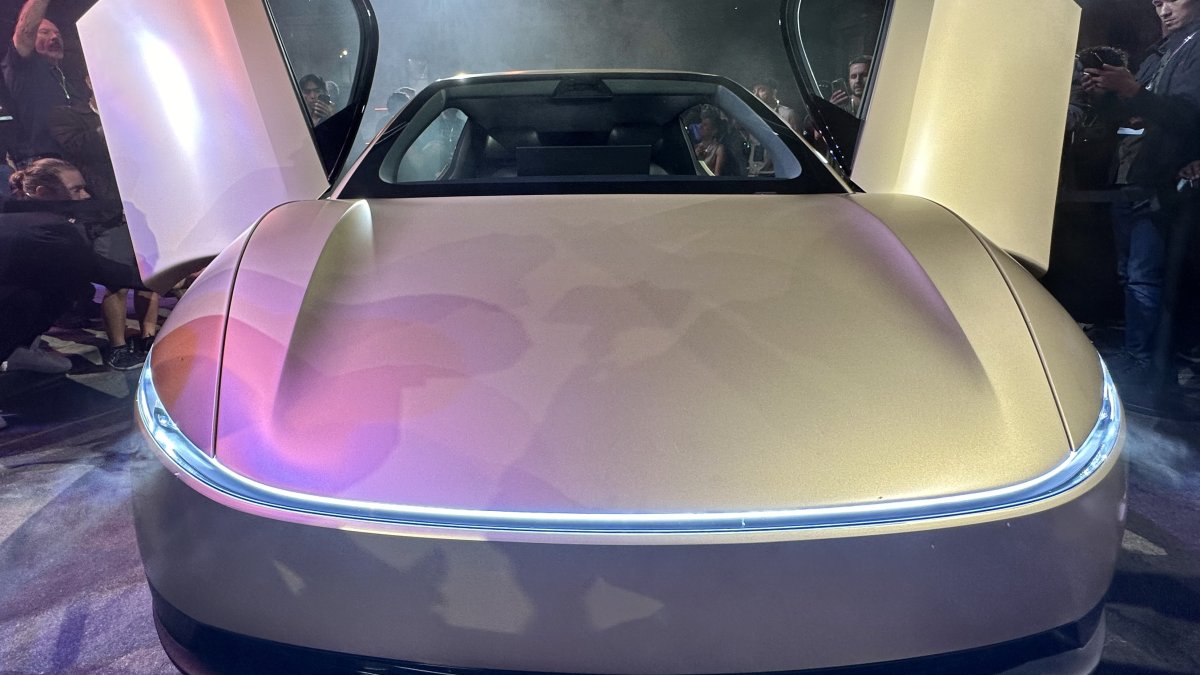
A month after Tesla's Cybercab went into commercial service in Austin on September 3, the scorecard is a study in contrasts: the driverless two-seater fleet has grown fast, but it remains a fraction of rival Waymo's footprint, and paying passengers are still complaining about the basics.
According to Texas Department of Motor Vehicles records cited by CNBC, Tesla had 169 Cybercabs authorized for commercial use in Texas as of Friday — up from 45 at the vehicle's Austin unveiling, nearly a quadrupling in a month. The state fleet also includes 420 Model Y vehicles running Tesla's automated driving system, and Austin remains the only city where the Cybercab operates in the ride-hail service.
The passenger experience has been mixed. Early riders reported wait times of 45 minutes or more, pickups and drop-offs in the wrong place, and technical glitches with the butterfly doors and trunk. Ethan McKanna, a 20-year-old Texas A&M sophomore who says he has taken about 30 Cybercab rides and runs the tracking site RobotaxiTracker.com, told CNBC that drive quality is "very smooth" and that waits have come down as demand has "equalized" — but that Waymo, operating commercially since 2024 in Austin, is simply more mature with 24/7 service and better support.
That maturity shows in the numbers. Waymo had 1,154 autonomous vehicles authorized for commercial use in Texas as of Friday, including 359 of its new Ojai models, and says it now completes more than 500,000 paid rides every week company-wide, with 270 million fully autonomous commercial miles driven in the US and more than 4,000 driverless vehicles in operation across 15 US markets — with 15 more planned plus international launches in London, Tokyo and Munich.
Regulators are watching. The National Highway Traffic Safety Administration opened an audit query into the Cybercab after launch to verify compliance with federal safety standards; it originally ordered Tesla to answer a long list of safety questions by September 30, but the company obtained an extension, according to an agency spokesperson. No significant safety incidents or collisions have been reported in Austin since the commercial debut, though first responders have raised concerns about the absence of manual driving controls. Austin Fire Captain Matt McElearney told CNBC he wants national or state rules requiring a way for "public safety representatives to take control — move, steer, or shut down an AV," and a "dynamic certification" process that re-tests vehicles across the product's life, not just at launch.
Public sentiment is the other headwind. In September 2026 surveys by Slingshot Strategies' Electric Vehicle Intelligence Report, 50% of US respondents said they would not feel comfortable riding in a robotaxi without a steering wheel or pedals, and upon learning of the NHTSA inquiry, 70% wanted Tesla to pause rides. Tesla did not respond to CNBC's request for comment.
The business stakes explain the urgency. Tesla's shares are down 18% this year — the only megacap tech stock in negative territory — and Q3 deliveries, while better than expected, still fell 2% year over year as Chinese rivals like BYD and Xiaomi push into its key markets. Musk said in Davos in January that robotaxis would be "very, very widespread" in the US by the end of 2026; so far the expansion roadmap runs through San Antonio, Dallas, Nevada and Florida, while California has not yet granted Tesla permits to operate without a human driver. Amazon's Zoox is also testing in Austin. Cantor analysts, meanwhile, noted that management has said Cybercab is ultimately expected to become the largest-volume vehicle in Tesla's lineup — which is why the next few months of scaling, not the launch, will decide whether that claim holds.
Comments (0)
Log in to join the discussion
Log InNo comments yet