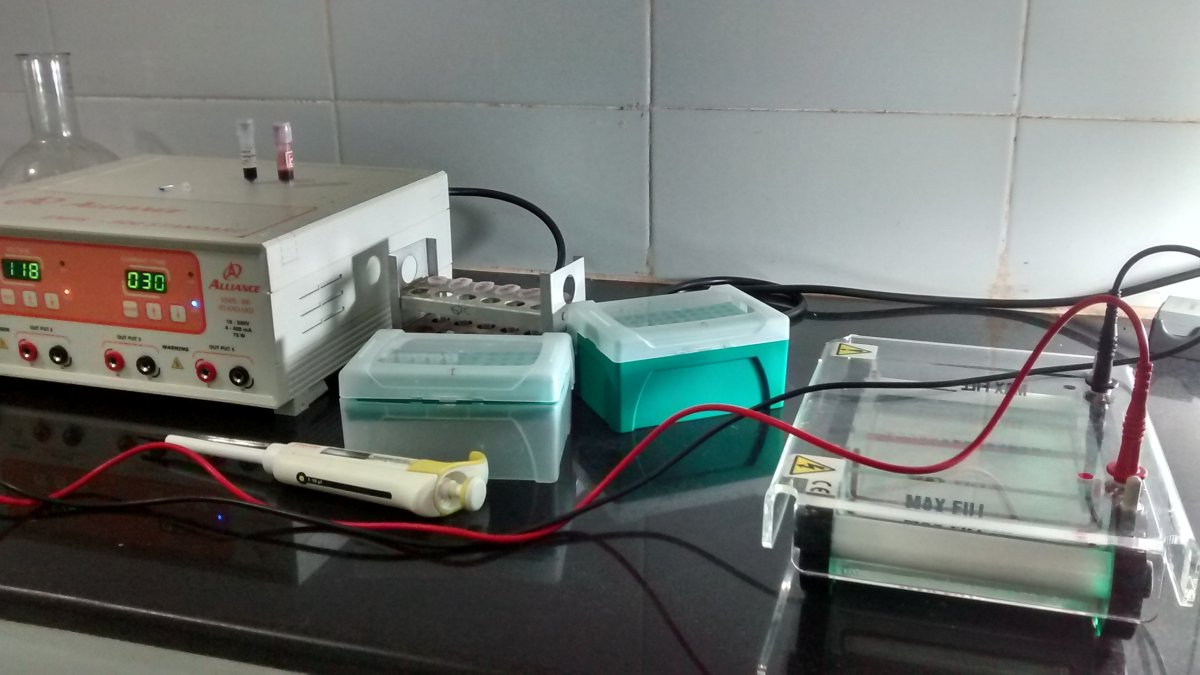
OpenAI has introduced BioBasicsBench, a benchmark built with Ligo, a biotech company focused on enzyme design, to measure something most AI evaluations skip: whether agents can correctly interpret the messy, raw experimental evidence that working biologists deal with every day. The benchmark consists of 100 tasks across five areas of routine wet-lab work — protein methods, imaging and cytometry, quantification and assays, nucleic acid methods, and molecular cloning.
The design premise is that existing benchmarks, built around charts and images selected for scientific papers, miss the ambiguity of real bench work: failed experiments, unclear images and conflicting observations. BioBasicsBench tasks instead use raw evidence in its native forms — 31 tasks include gels and blots, 27 protocols and lab notes, 20 tables and instrument exports, 18 bench and reagent photos, 14 microscopy datasets, 13 instrument screens and plots, 12 sequencing files, 7 protocol videos and 7 agar plates, with tasks often combining several kinds of data.
The tasks were written by Ligo scientists from their own experiments and paired with expert-written grading rubrics. Each task passed an internal review by a Ligo scientist who had not written it, an external review by a PhD-level wet-lab scientist, and a final internal review. Agents return structured answers — a conclusion, measurement or recommendation, with reasoning where required — and earn partial credit against individual rubric criteria. Crucially, the rubrics reward recognizing when the evidence cannot support a conclusion at all, not just producing the right answer.
OpenAI evaluated seven of its own models across 37 combinations of model and reasoning effort, running five attempts per task per setting for a total of 18,500 results. At the xhigh reasoning setting, GPT-6 Astra earned an average of 66.7% of available credit, ahead of GPT-6.1 Sol at 62.0% and GPT-5.6 Sol at 43.8% — and Astra reached its score while using roughly half the output tokens of GPT-5.6 Sol. These figures are OpenAI's own evaluations of its own models, with no third-party replication, and only OpenAI models were tested.
The company's own examples show where its best model still fails. In one task, Astra initially misread an experiment before identifying that a detector could register light from two different dyes — meaning brightness alone could not establish whether cells were dead. OpenAI says agents still have clear room to improve on interpreting images, checking controls and applying experimental context, and notes the benchmark will also feed its biosafety and biosecurity tracking.
Two caveats deserve weight. The tasks themselves are not public, which limits outside scrutiny of how representative or difficult they are, and partial rubric credit is not a task success rate — a 66.7% average does not mean Astra fully completes two-thirds of wet-lab analyses. Still, the benchmark marks a shift in how labs are thinking about AI in science: the gating skill is not answering exam questions about biology, but reading a smudged gel, spotting a mislabeled control, and knowing when to say the data do not support the conclusion.
Comments (0)
Log in to join the discussion
Log InNo comments yet