Never has so much cash flowed into a new technology as is now pouring into AI, and a Reuters analysis published Friday lays out the arithmetic that economists say does not yet add up. Cumulative global spending on data centers alone could top $30 trillion by 2050, according to a PwC projection — almost matching the value of outstanding US Treasuries — and "dwarfs" the railroad and dotcom booms even after adjusting for inflation.
The scale is not theoretical. Anthropic alone plans to spend $518 billion in coming years, according to its IPO prospectus reviewed by Reuters — more than 100 times its 2025 revenue. Its backers, like those of its rivals, argue AI will prove more transformative than the steam engine. The open question is whether the profits arrive on the schedule that the financing requires.
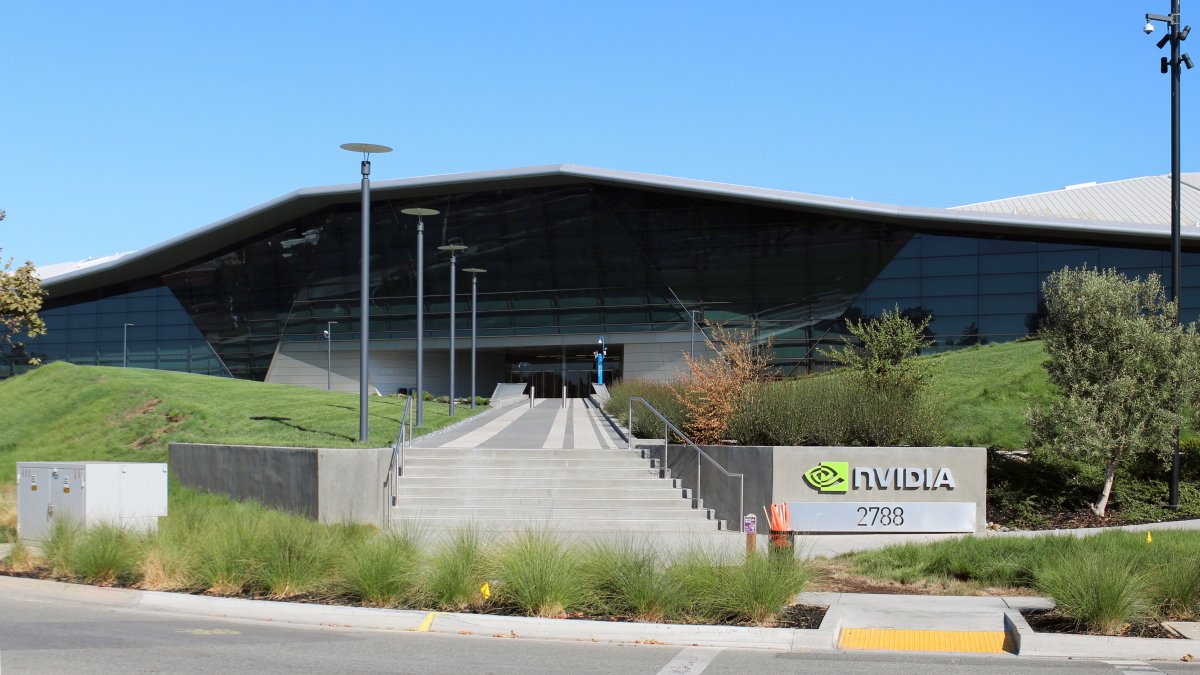
So far, the evidence is thin. JP Morgan wrote in August that broad-based productivity gains in the US, the leader of the AI race, "remain elusive," raising questions about the sustainability of AI valuations. Using Nvidia as the benchmark, the bank estimated that US productivity would need to grow 3% to 5% annually over the next decade to justify the chipmaker's valuation — a substantial jump from the Congressional Budget Office baseline expectation of 1.75% annual growth over the same period.
Bain & Company's study, published last month, reached a similar conclusion from the demand side: productivity gains from existing markets will not be enough to justify current outlays, and "entirely new markets must emerge to close the funding gap." The firm calculates that US hyperscalers — Google, Amazon, Microsoft and peers building infrastructure worldwide — plus others in the AI race would need to find more than $4.2 trillion of new revenue over the next five years to fund the buildout. "The question is whether the applications arrive in time to pay for it," the study notes.
Columbia Business School economist Stijn Van Nieuwerburgh puts the US total as high as about $9 trillion of investment from 2025 to 2032 — equivalent to spending 3.2% of US GDP every year — and estimates the US AI sector would need to generate roughly $3.55 trillion in annual revenue by 2032 to earn a 10% return. It currently earns a fraction of that. Because much of the funding is leveraged, he warns that "a relatively modest deterioration in demand, delays, or asset values can therefore produce much larger losses."
Lab leaders remain undeterred. Anthropic's Dario Amodei has described an AI future as "a thing of transcendent beauty," OpenAI's Sam Altman says "the rate of new wonders being achieved will be immense," and Google DeepMind chief strategy officer Jasjeet Sekhon has called recursive self-improvement a "key part of the investment thesis." Anthropic's own economics team modeled 2030 growth scenarios: against a 2% non-AI baseline, it projects 2.4% with modest AI impact, 5.4% with substantial impact and 15.4% in the extreme case — while noting that higher growth would mean more jobs displaced, and assigning no probabilities to any outcome.
The labor evidence so far is narrower than the rhetoric. Stanford researchers reported in August that employment of workers aged 22 to 25 in AI-exposed industries such as accounting and paralegal work was 19% lower than in jobs AI struggles to replicate, while overall employment remains strong. Cambridge economist Diane Coyle notes that past revolutionary technologies took roughly 10 to 50 years to show up in productivity statistics — and, as she put it, "history is our friend": trains kept running after the Panic of 1873 bankrupted railroad barons, and the internet outlived the dotcom crash. The infrastructure, in other words, may be worth keeping even if today's valuations are not.
Comments (0)
Log in to join the discussion
Log InNo comments yet