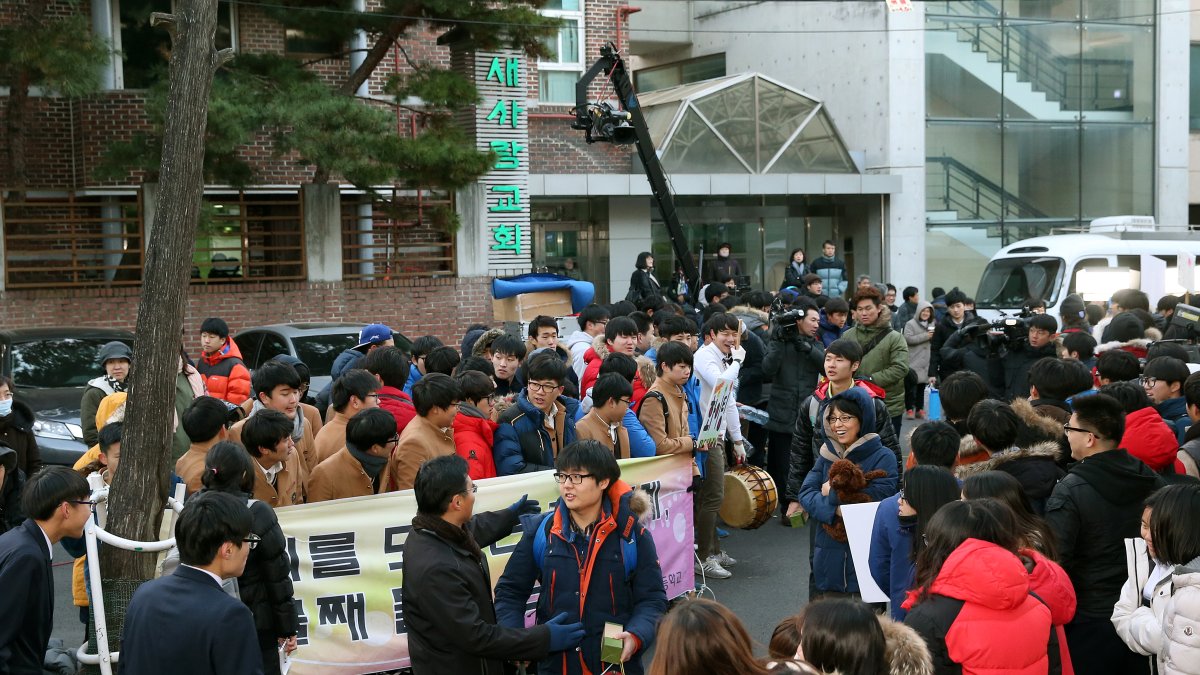
South Korea's Education Minister Choi Kyo-jin resigned on Sunday, November 22, taking responsibility for the confusion that surrounded this year's Suneung, the national college entrance exam, after an unprecedented anti-AI crackdown disrupted roughly 500,000 test takers. President Lee Jae Myung accepted the resignation the same day. In a statement released through the ministry, Choi said the exam had ended, that he bore responsibility for rules that kept changing right up until test day, and that he could not escape criticism that preparation was insufficient.
The sequence of events that produced a cabinet resignation started with an entirely different exam. On November 15, a candidate identified as Han Won-seok, the top scorer on South Korea's certified tax accountant examination with 397.5 points out of 400, admitted on a lawyer's YouTube channel that he had photographed questions with a microcamera, sent them to a generative AI tool on his phone, and checked the answers live in front of a proctor. He scored near-perfect marks on two separate sittings. His own words, carried by The Guardian: "I cheated using electronic devices and generative AI. My passing the exam with the top score was not the result of fair effort." His qualification is being revoked, and anyone caught using AI devices on national exams faces a five-year retest ban.
With the Suneung scheduled for November 19, the ministry scrambled. It first drew up plans aimed at smart glasses, then widened them after the confession. In the final days it announced roughly 8,400 additional staff, including more than 1,800 inspectors specialized in smart devices and over 6,600 corridor monitors; ordered stickers placed over every button on candidates' clothing to deny hiding spots for microcameras; required eyewear inspections; and, on November 18, the day before the exam, banned correction tape, erasers and mechanical pencil leads that had previously been allowed, leaving black pencils as the only permitted stationery. Many of the newly drafted monitors received their training by video conference the day before the exam.
The most contested measure came on exam day itself: three nationwide emergency alerts, the highest-grade disaster notification normally reserved for typhoons and missile warnings, blasted to every phone in the country between 8 a.m. and 3 p.m. to force any smuggled device still in a candidate's pocket to reveal itself. Phones rang even on silent mode, including tourists' roaming handsets. The ministry reported afterward that 111 candidates were caught with unauthorized devices during the exam, roughly half of them identified through the alerts.
The backlash was immediate and bipartisan. Teachers' unions said the government had dumped an improvised security operation onto schools, with the Korean Teachers and Education Workers' union federation arguing that staff trained the day before cannot competently detect high-tech cheating, and demanding Choi's resignation. Parents complained about rules that changed twice in 72 hours. After the exam, universities kept improvising: Kyung Hee University in Seoul handed out about 30,000 disposable white aprons for exams on November 21 and 22 so candidates could not conceal devices on their bodies, required long-haired students to keep their ears exposed, and turned away anyone who refused; other institutions deployed metal detectors and network jamming. On November 20, President Lee convened a meeting at the presidential office and called for a comprehensive reform of the exam system to address AI-era cheating.
The resignation is the first cabinet-level casualty of the AI cheating wave, and it captures an uncomfortable dynamic for every institution that runs high-stakes assessments. The threat is real: a hidden camera, a chatbot and forty seconds of latency were enough to top a professional licensing exam. But the response was operational theater, alerts, stickers and aprons, delivered so late that it damaged the credibility of the exam more than the cheating it intercepted. The lasting fix, as the ministry's new emergency response task force is now tasked to find, looks less like more surveillance and more like assessment formats that an AI tool cannot sit for in the first place.
Comments (0)
Log in to join the discussion
Log InNo comments yet