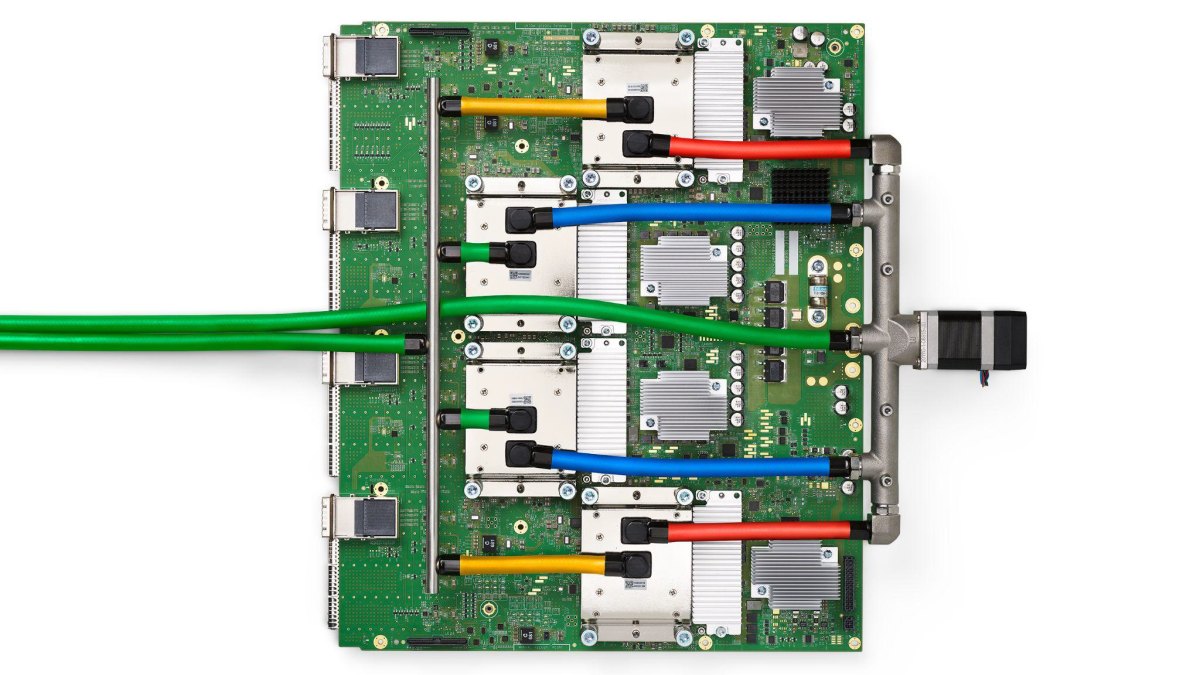
Google has cut roughly one million Broadcom-designed TPU 8i chips from its 2027 plans, about 20 percent of the projected volume for that series, according to a supply-chain survey published by TF International Securities analyst Ming-Chi Kuo on the evening of Nov 20. The reduction falls mainly on the higher-priced 8i Max variant, known internally by the codename Whalefish.
At the same time, Kuo said Google expects to take more of the MediaTek-designed TPU 8t series in 2027, though the size of that increase has not been fixed. MediaTek has supplied a share of Google's custom accelerator work since the 8t generation, and the shift would move volume toward the cheaper end of the lineup rather than replacing Broadcom outright.
The stated reason is arithmetic rather than a rupture in the relationship. Google has said repeatedly over recent months that frontier model development gets first call on available compute. With data-centre power constrained and advanced packaging capacity sold out well into next year, trimming the most expensive per-unit part of the roadmap is the fastest way to protect research capacity without cutting total deployed compute.
Korean outlet Chosun Biz reported a parallel structural change: Google is separating TPU design from memory procurement so that it no longer hands design, packaging and HBM sourcing to Broadcom as a single bundle. Under that arrangement Google would split part of the design work with MediaTek and buy high-bandwidth memory directly, a move aimed at pulling cost out of each accelerator.
Broadcom fell 8.9 percent on the day the survey circulated, according to Chinese market reports, a reminder of how concentrated its custom silicon business has become. Broadcom's AI revenue is now dominated by a small number of hyperscaler programmes, and a 20 percent trim on one of the largest of them reads to investors as a signal about 2027 rather than a one-quarter wobble.
Both figures should be treated as supply-chain estimates rather than confirmed orders. Kuo's surveys have a strong record on Apple's roadmap and a thinner one on hyperscaler silicon, and neither Google nor Broadcom has disclosed 2027 unit plans. The 8t volume increase in particular is described as undetermined.
The broader pattern is that custom accelerators are becoming a portfolio problem rather than a single-bet problem. Google now runs several TPU generations in parallel with different design partners, mixing high-end parts for training with cheaper parts for inference and serving, which makes each supplier's share volatile even when total capex keeps rising.
What this means: the story the market will take from this is not "Google dumps Broadcom" but "Google is optimising a stack it can no longer grow at will". When power and packaging, not demand, set the ceiling, the winning supplier is the one that can deliver acceptable performance per watt per dollar, and that competition is now openly running through MediaTek.
Comments (0)
Log in to join the discussion
Log InNo comments yet