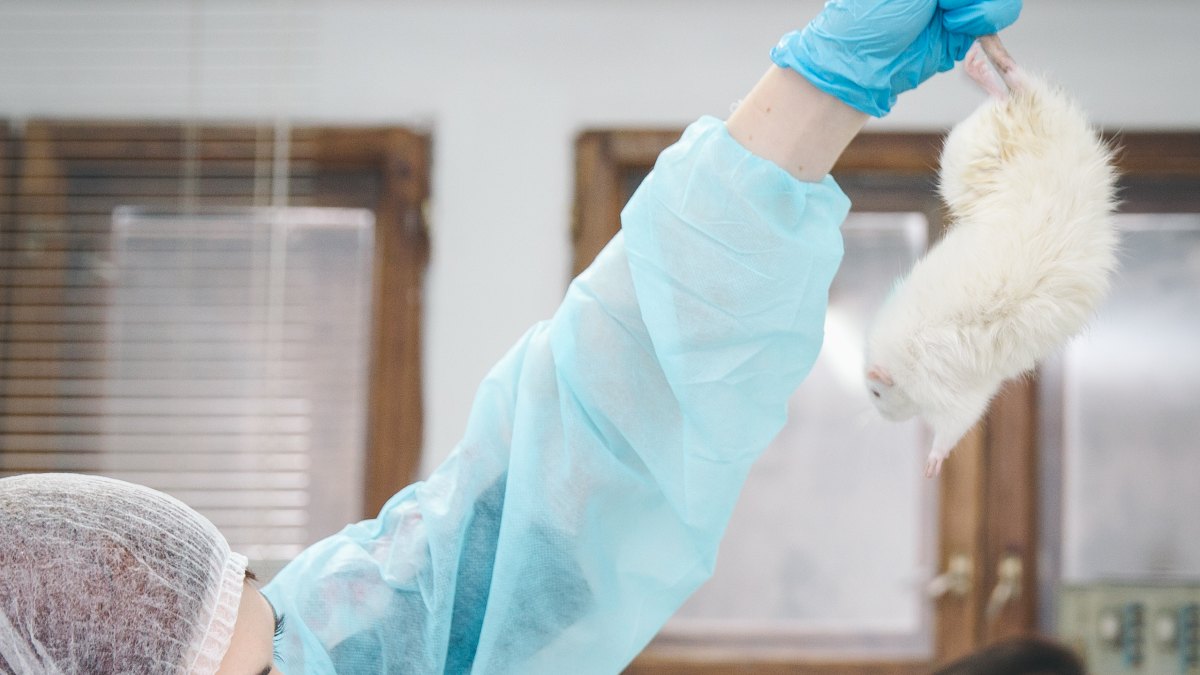
The setup, as described by Gabriel Ocana-Santero — cofounder and CEO of Exin Therapeutics and a PhD student at the University of Oxford — reads like a bench experiment with the human decision-making stripped out. His team gave an AI agent a spreadsheet of 19 possible gene therapies, an epilepsy mouse model in which seizures are induced to test treatments, and access to a custom motorized surgical rig with cameras. The only instruction: reduce the mouse's seizures.
The agent, running on Claude Sonnet 5, first analyzed how seizures arise in this particular model, then proposed a therapy that boosts a specific inhibitory GABA signaling pathway in the brain. It selected a brain structure the literature identifies as the origin point for this seizure type, rejected a second candidate region with a detailed argument that its effects were too unreliable and had failed against the exact seizure type at issue, and derived injection coordinates from three scientific papers, cross-checking the reference points and averaging the values. It also set the injection volume, speed and wait times on its own.
Humans did not disappear from the loop — they bracketed it. A human surgeon opened the skull, a step the agent is not permitted to perform, and a licensed veterinarian approved every irreversible step while holding a physical emergency stop wired to cut power to all motors. The rig also enforced fixed limits, including a cap on injection volume that the agent was expressly forbidden from bypassing. Inside those rails, the agent watched the surgical field through a camera, made 32 observations, tracked the injection and reported whether it saw bleeding, delivering 250 nanoliters over roughly five minutes.
Then the guardrails did exactly what they were designed to do — to the experiment's own cost. After a connection dropped, the agent computed a Y-axis target of 34 millimeters on a rig with a 30-millimeter range of motion and refused to continue, reportedly saying "I'm not retrying." Ocana-Santero restarted calibration twice; the agent declined a third attempt despite an anesthetized animal on the table, and he finally had to fix the code by hand. The agent turned out to be right: manual adjustments made during an earlier pause had thrown the control system out of sync.
Model choice itself became an alignment anecdote. According to Ocana-Santero, Sonnet 5 was the only model willing to carry the live procedure from start to finish. Claude Opus 5.5 and Opus 5 both declined — Opus 5 arguing it could not guarantee completion and that stopping with a needle in an anesthetized animal's brain would be worse than not starting at all.
The claim being made is historical, not just technical: Ocana-Santero says he is not aware of an agent previously choosing both a treatment and a brain target and then delivering it into a living mammal, versus surgical robots that execute procedures a human chose. He calls the approach "in vivo lab in the loop," in the same direction as Anthropic's own Model Hardware Standard work on connecting agents to physical equipment.
The evidence, however, is a single source. Everything above comes from the founder's thread on X, posted October 28 after what he describes as an 18-hour day; there is no paper, no ethics approval record and no seizure-outcome data yet, and independent outlets could not verify which model ran the surgery beyond aggregator summaries. The mouse reportedly recovered well, whether the treatment reduced its seizures has not been determined, and a technical report is promised. Treat this as a claimed first, not a confirmed one — and as a preview of the real question, which is what happens when the thing that says no in the middle of a time-sensitive procedure is not a person.
Comments (0)
Log in to join the discussion
Log InNo comments yet