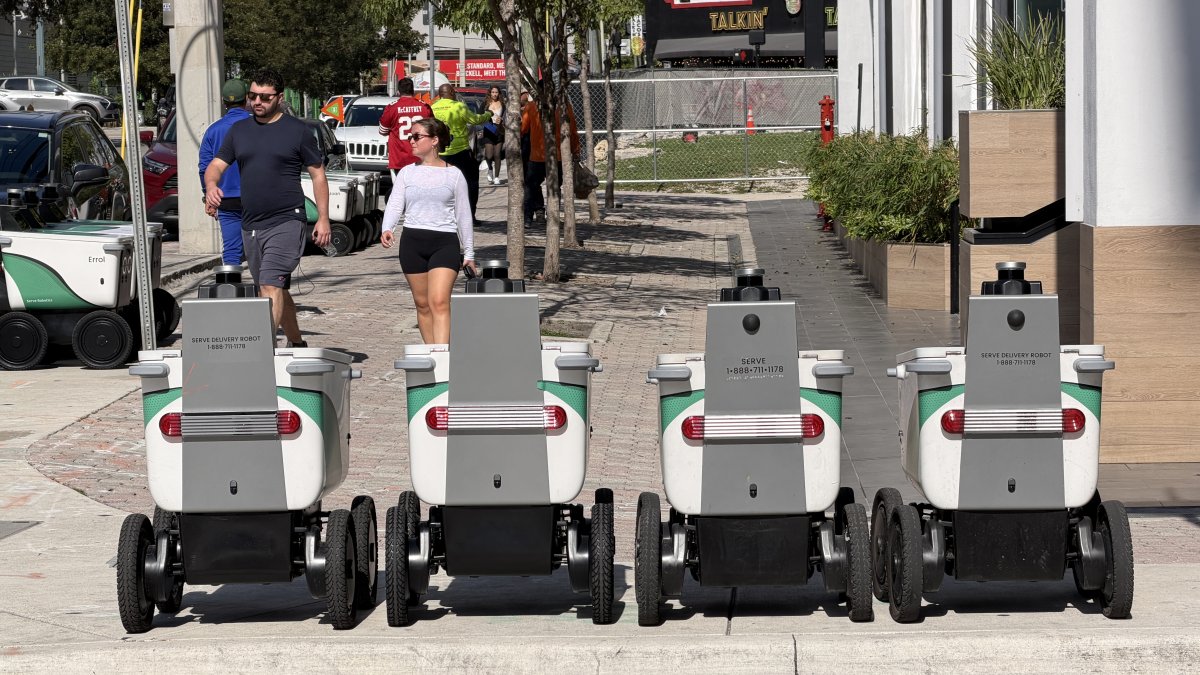
Neolix, the Beijing autonomous-delivery company that has quietly assembled the largest robovan fleet on the planet, announced on October 20 that it has closed a Series E of about 400 million dollars. Bloomberg reported the round at the same figure. Boyu Capital leads alongside a state-level fund that Chinese market reports identify as the National Artificial Intelligence Industry Investment Fund - a detail the company has not officially confirmed. Alibaba's AEF NextGen Hong Kong fund, Monolith, GGV Capital, Temasek's Vertex Growth, Huaying Capital and GAC Capital joined, with Gao Hu Capital acting as exclusive financial advisor.
The numbers that make the round notable are operational rather than financial. Neolix says it has more than 30,000 L4 robovans deployed across roughly 20 countries and more than 300 cities, with cumulative autonomous mileage above 260 million kilometers and more than one million new kilometers added every day. In Qingdao, Linyi and Hangzhou, single-city deployments have passed a thousand vehicles each. For comparison, most Western sidewalk-delivery pilots count their fleets in hundreds.
The customer base started with express logistics - SF Express, JD.com, China Post and the major Chinese parcel carriers - and has widened since 2025 into building materials, factory supply, fresh food, pharmaceuticals, group catering and auto parts. Night delivery is the newest frontier: Neolix says it operates 437 nighttime routes in Shenzhen alone, using roads that sit idle after midnight, and that the model cuts operating costs by about 30 percent. Those are company-reported figures, not audited ones, but the direction matches what its logistics customers have said publicly.
The funding history explains why investors keep writing checks. A year ago Neolix closed a Series D of more than 600 million dollars, then the largest single round in Chinese autonomous driving. With the Series E, cumulative funding has passed 10 billion yuan, tops in the robovan segment. Founder Yu Enyuan framed the business plainly in the announcement: autonomous driving has to create real net economic value inside everyday logistics, and the company intends to build the freight network that proves it.
Policy has moved in step. In July, China's Ministry of Transport said it would run regulated pilots for unmanned express vehicles during the current five-year plan. In August, the NDRC and the transport ministry jointly issued a logistics network implementation plan that explicitly promotes unmanned delivery in express and instant-delivery scenarios. In September, nine ministries under MIIT published a plan for intelligent connected vehicles that calls for multi-scenario trials of function-specific unmanned vehicles. If the market reports about the national AI fund are right, this round marks its first investment in the robovan track.
Neolix says the new capital goes two directions: building localized service hubs in major regions worldwide, and deepening the data-training loop for its vision-based end-to-end driving model, which pairs cloud and vehicle-side models in one architecture. The company claims the largest data flywheel in its category - more vehicles driving more kilometers means more edge cases, which means better models, which win more deployments.
The strategic read is that robovan economics have crossed a threshold investors accept. Capital is concentrating heavily in the segment leader - Chinese outlets noted few competitors can raise at comparable scale - while policy barriers that stalled street-legal delivery for years are being dismantled province by province. If the 30,000-vehicle fleet keeps compounding, the question shifts from whether unmanned delivery works to who owns the network layer of urban freight, and Neolix has just made its bid expensive to challenge.
Comments (0)
Log in to join the discussion
Log InNo comments yet