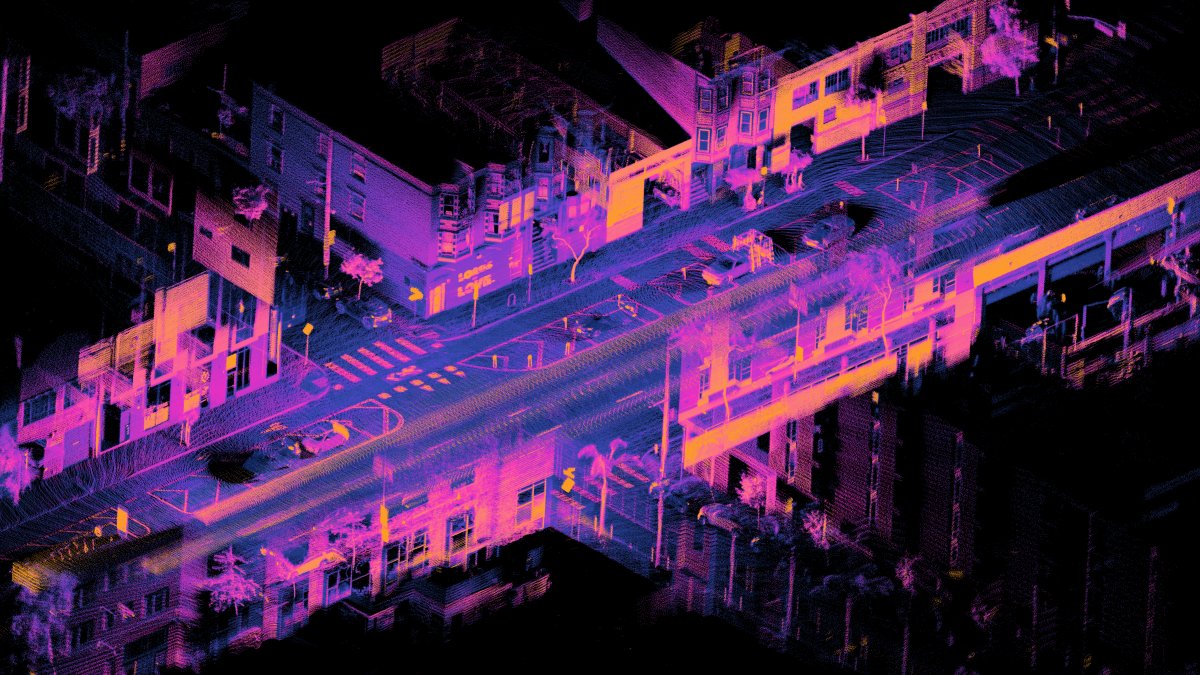
Viggle, the Toronto-born startup best known for the meme app that puts your face on a dancing body, released JST-2 on October 19 and called it a physics-native world foundation model. The launch is the first time the company has opened its four-year-old research line to the public beyond its consumer app, and the headline number is deliberately blunt: a 3D scene generates in about one second, at an inference cost below one cent, measured on an Nvidia B200.
The architectural bet is that most world models learn physics indirectly. Systems trained in pixel space see a room, learn what rooms look like, and have to infer that the chair behind you still exists when the camera turns. JST, short for Joint Space-and-Time, does the opposite: it represents the world as persistent atoms in 3D space, each carrying an explicit xyz position plus learned vectors for its attributes and how it changes over time. Viggle calls these Physics-Native Tokens and says it built the entire stack itself, from the encoder and generator to the decoder and the synthetic data engine used for training.
The pipeline runs in three stages. An encoder maps one or more input images into atom tokens. A generator produces the same tokens directly from a multimodal prompt. A decoder then takes the tokens, a chosen viewpoint, and optional motion or force inputs, and emits either a rendered image or 3D Gaussian splats. Because the representation is spatial rather than a video clip, a finished scene can be re-rendered from new angles in the browser without running the model again.
The speed claim needs its caveats, and Viggle supplies them. The one-second figure covers model inference on a B200 and excludes network latency. The comparison with World Labs' Marble, which the launch article puts at five to six minutes per scene, is flagged in Viggle's own product notes as not an equal-fidelity claim, with Marble's hardware and timing scope unspecified. JST-2's feed-forward design does avoid per-scene optimization, which is where most text-to-3D systems spend their minutes, so the order-of-magnitude gap is plausible even before independent benchmarks exist.
What the representation buys in practice is a spatial context window of up to 64 input views. Instead of generating disconnected images, a user feeds views of an environment and JST-2 extends the same world, keeping what was already generated consistent. Viggle says the model can also reconstruct 3D environments from sparse real-world views, and it names robot simulation, autonomous driving, mapping and construction as the target applications - the same customer set every world-model startup is circling.
Characters and motion ride on the same representation. JST-2 produces animation-ready characters without a separate rigging step and generates full-body motion from text or video, which is the capability that powered the original JST-1 meme app to more than 50 million users. Access is unusually open for a foundation model release: the tool is free in the browser through the PINOC playground, with API and MCP endpoints for developers who want to wire scene generation into their own pipelines. A JST-3 is already teased on the launch page.
The competitive framing matters as much as the specs. Runway's GWM Worlds 2 generates continuous steerable video with audio, and VAST's EdenLive repaints a game engine's rough render in real time - both are video-first world models. JST-2 is making a different wager: that the useful artifact is not a stream of pixels but the underlying spatial state, and that whoever holds the state can serve games, simulators and robots from the same model. That wager is still unproven in production, and every number in the launch is vendor-reported. But the direction of travel is clear - world models are moving from generating pictures of worlds toward generating the worlds themselves.
Comments (0)
Log in to join the discussion
Log InNo comments yet