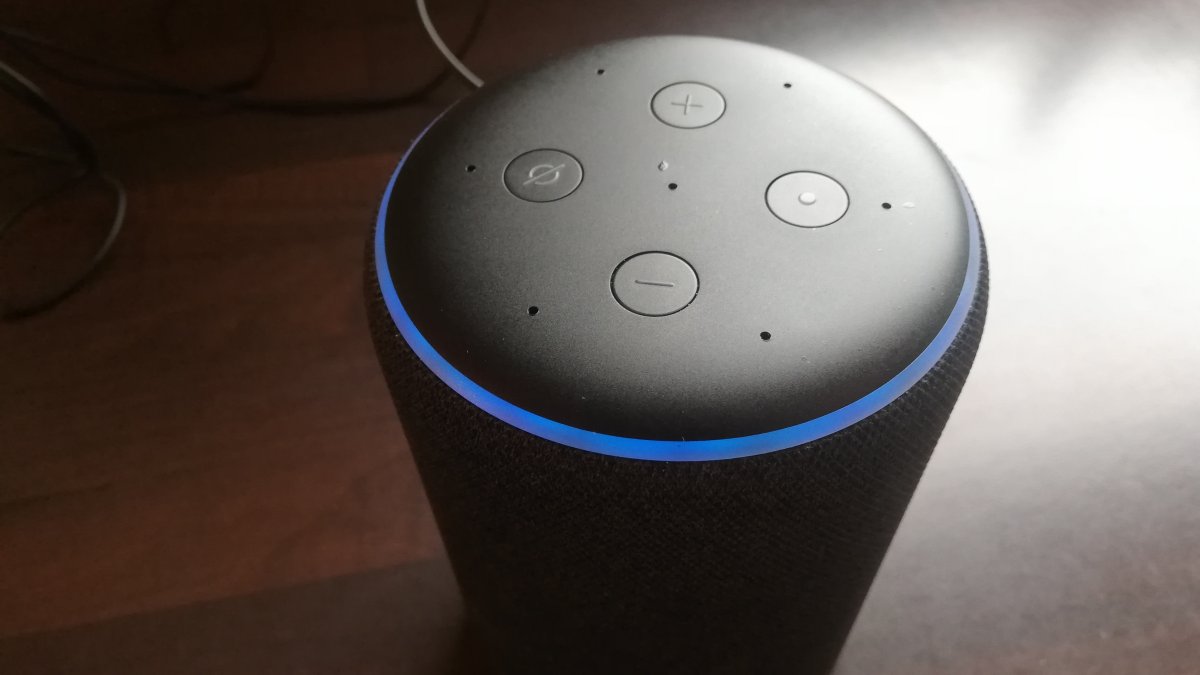
Some Amazon Echo speakers have developed an unsettling habit: in the middle of an ordinary conversation, Alexa Plus starts saying — and sometimes singing — nothing but "lalala," on repeat, for minutes at a time. The Verge reported on October 6 that the behavior has shown up across multiple Echo speaker models, often interrupting users mid-sentence, and that Amazon says it is aware of the problem.
The reports have been accumulating on Reddit for several weeks, which makes this less a one-off glitch than a persistent failure mode. What users describe is consistent: the assistant locks into a loop of nonsense syllables, sometimes melodic, and shows no awareness that anything has gone wrong. There is no error message, no recovery prompt — just a smart speaker performing what looks like the audio equivalent of a crash dump, then carrying on as if nothing happened.
Amazon has not disclosed a root cause or a fix timeline. That silence is itself notable, because Alexa Plus is not a toy feature: it is the centerpiece of Amazon's effort to rebuild its voice assistant around a large language model that can plan multi-step tasks, negotiate with other services, and act as an agent in the home. The company has staked the next decade of its smart-home business on users trusting this system enough to let it book appointments, order groceries, and control their houses.
The "lalala" loop is a different category of failure from the familiar wrong-answer problem. A chatbot that hallucinates a fact is annoying; a voice agent that produces minutes of uncontrolled vocalization in the middle of someone's living room feels broken in a way that erodes trust far faster. Behavioral glitches like this land differently for always-on devices that are, by design, listening for their wake word at all hours — and they are exactly the kind of failure that doesn't show up on a benchmark leaderboard.
There is a broader lesson for the industry here. As assistants from Amazon, Google, Apple and Meta move from answering questions to acting autonomously in physical spaces, their failure modes are migrating from "incorrect text on a screen" to "strange behavior in your home," often with no explanation and no obvious way to intervene. Amazon has shipped a fix for worse Alexa incidents before, and the company's acknowledgment suggests one is coming here too. But until the root cause is explained, the episode stands as a small, eerie preview of what agentic AI looks like when it glitches: not an error dialog, but a speaker quietly singing to itself.
Comments (0)
Log in to join the discussion
Log InNo comments yet