Money is moving deeper into biology. INFevo, a Beijing-based AI for science startup focused on virtual cell models, announced on November 16 that it has closed a pre-A round of more than RMB 100 million, which the company says is the largest single financing ever for a Chinese virtual cell startup. The round was co-invested by Xinglian Capital, Prosperity7 Ventures, Huagai Capital, Huakong Fund and Detong Capital, with existing backers Shunwei Capital, Sequoia China and Songhe Capital increasing their positions.
This is INFevo's second raise in five months, following a tens-of-millions-of-yuan angel round completed in June 2026. Proceeds are earmarked for foundation model research, expanding its high-throughput automated dry-wet experimentation loop, and building out its industrial ecosystem. The "record" characterization is the company's own and has not been independently tallied, though investors returning within months is itself a signal in a cautious funding climate.
The startup's pitch targets a bottleneck that has slowed AI drug discovery for years: computational hypothesis generation now runs far faster than wet-lab validation can confirm it. INFevo builds virtual cell models that predict how cells respond to drugs, genes and other interventions before experiments run, letting researchers kill weak candidates early. Its "recursive scientific discovery" framework structures hypotheses, analysis methods and experimental results so that evidence accumulates and feeds the next round of predictions rather than staying trapped in project silos.
On the model side, the company has released OCOO-T, a virtual cell foundation model built on transcriptomic data that models gene expression changes under perturbation. INFevo reports state-of-the-art results on the Tahoe100M, Replogle and PBMC single-cell perturbation benchmarks, and says its Karl Workbench research platform took the top combined score in single-cell and spatial omics re-evaluations on SciAgentArena, outperforming comparable systems running Claude Code and Codex on Opus 5 and GPT-5.6 class models. All of these benchmark claims are company-reported and have not been independently reproduced.
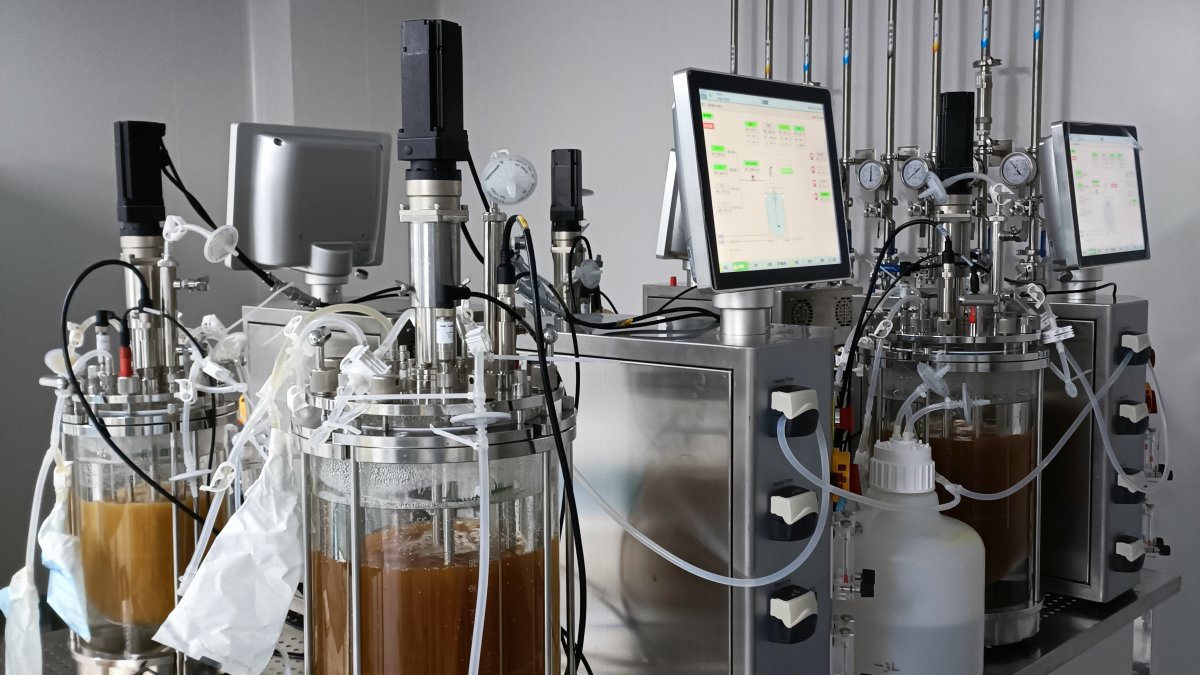
The company's origin shapes its strategy. INFevo was incubated by XtalPi, the Hong Kong-listed AI drug discovery firm, whose molecular design and automated synthesis capabilities are meant to interlock with cell-level prediction into a cross-scale loop of molecular generation, cellular response forecasting and wet-lab validation. INFevo also participates in a Beijing municipal key laboratory led by Peking University First Hospital on hepatobiliary and pancreatic tumor organoids, plugging its virtual cell models into patient-derived clinical samples for bidirectional iteration between prediction and experiment.
The round reflects a wider rotation of AI-for-science capital from single-molecule design toward cell and systems biology, where the data problem is harder and the payoff potentially larger. Virtual cell models are still early, and every number in this space rests on benchmark definitions chosen by the companies themselves. But the funding pattern, two rounds in five months with strategic and financial investors overlapping, suggests Chinese healthcare AI investors now treat the cell, not the molecule, as the next scaling frontier.
Comments (0)
Log in to join the discussion
Log InNo comments yet