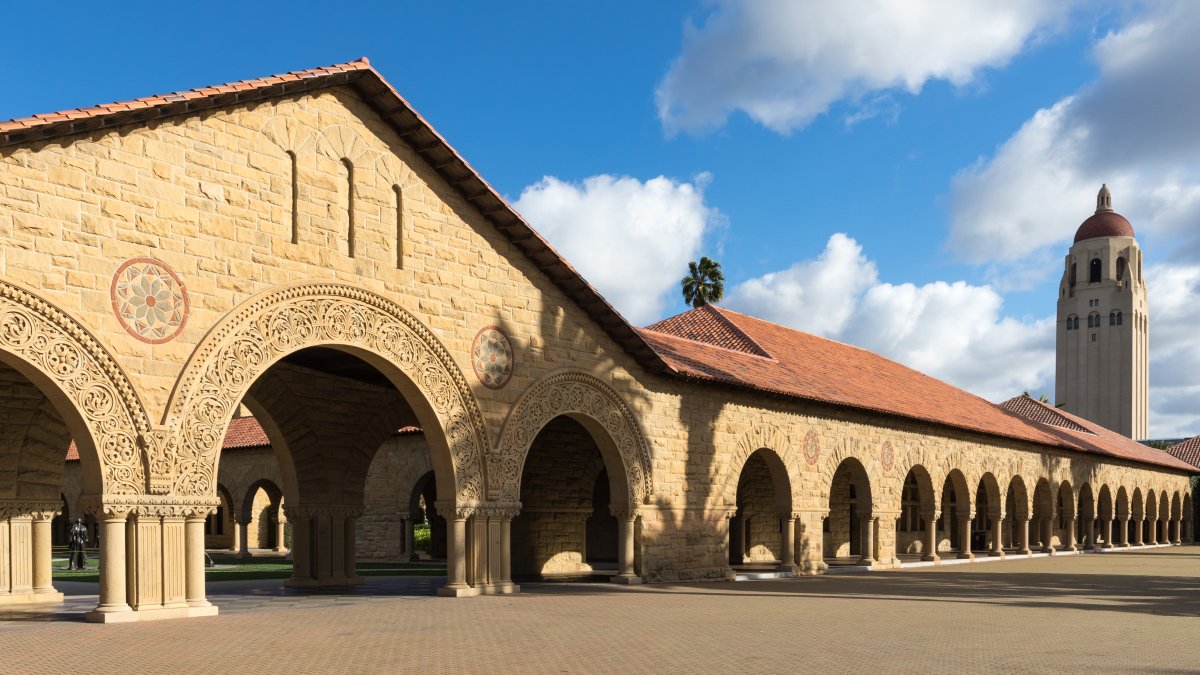
Noeri, a new AI lab founded by Stanford computer science professors Yejin Choi and Carlos Guestrin, launched on Monday with 110 million dollars in funding led by Menlo Ventures. Madrona Venture Group, Kindred Ventures, Wing Venture Capital and NEA participated, alongside strategic investments from Cisco, NVIDIA and Snowflake. Both founders serve as co-CEOs; Choi is a MacArthur Fellowship recipient and Guestrin is a leading figure at the Stanford AI Lab.
The company's pitch targets a trade-off it says every large customer faces: pay a premium for the most capable frontier model, or accept weaker results from a cheaper one. Noeri builds what it calls AI as a living system, a model that keeps learning on the job after deployment instead of being frozen at the end of training. The system studies an enterprise's own data and workflows, then improves the whole apparatus around a task: the harness, the skills, the instructions, the tools, which model handles each step and, where it pays off, the underlying model parameters.
Every proposed change is explained and routed to a human for approval, in something close to a code-review workflow, and customers keep ownership of the data, workflows and models they build. The system is designed to work with both closed and open-weight models and to adapt as new ones arrive, so a customer's improvements do not expire when a vendor ships the next generation.
The technology draws directly on the founders' published research: test-time training, which lets a model learn new capabilities after deployment; SDPO, a self-distillation method in which a model becomes its own teacher; and agentic orchestration, where a small model directing a team of larger ones can match frontier performance at a fraction of the cost, a capability the company cites as a core claim rather than a benchmarked result. Choi's work on pluralistic alignment underpins the company's bet that useful AI should reflect many human values rather than one.
The same machinery is aimed at scientific discovery. The company says its systems can form hypotheses, run experiments and learn from the results, working alongside researchers on problems from molecules and proteins to complex technical systems, where sustained open-ended search would be prohibitively expensive on frontier models alone.
"Most new AI labs ask the market to wait years for a breakthrough," said Venky Ganesan, the Menlo Ventures partner who led the round. "Carlos and Ye are doing world-class research and putting it to work inside companies at the same time." The launch adds to a crowded field of applied agent startups, but with an unusual profile: two academics with frontier-lab credibility, a nine-figure check, and a thesis that the next gains come from systems that improve themselves under human sign-off rather than from one more frontier model.
Comments (0)
Log in to join the discussion
Log InNo comments yet