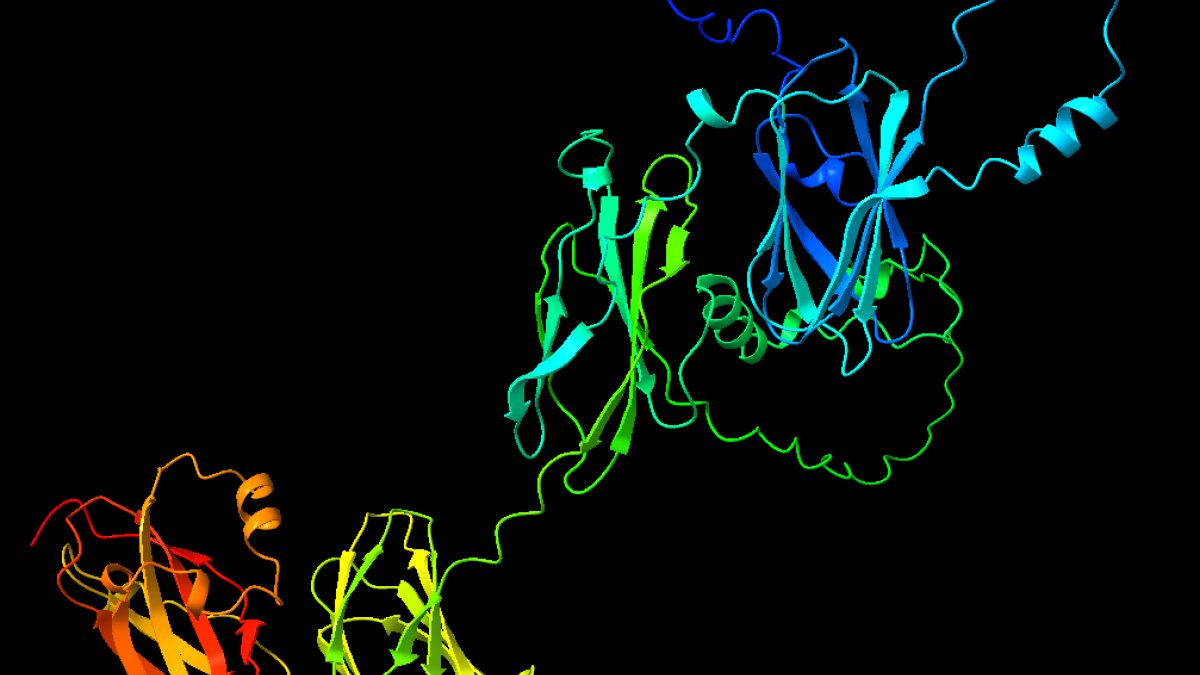
Anthropic's internal biology lab has published what it calls the first three-dimensional structure of a vault particle originating from a prokaryote, in a research note titled "Investigating vault particles with Claude." Vault particles are among the largest ribonucleoprotein assemblies inside cells: discovered in 1986, present at roughly 10,000 copies per human cell, barrel-shaped at about 67 by 40 nanometers, and still functionally unexplained after four decades of study. The company said the full project took less than four months.
The discovery route was a needle-in-a-haystack search. The team used Claude to comb through a library of roughly 15 billion predicted protein sequences for homologs of the major vault protein, surfacing candidates across 29 bacterial phyla and 4 archaeal phyla. Of 44 proteins selected for laboratory testing, 7 assembled into vault-like particles when expressed in E. coli, and cryo-electron microscopy confirmed complete, closed structures for 4 of them, two bacterial and two from bacteriophages.
The centerpiece is L05, a phage-derived protein resolved at 3.2 angstroms. The L05 vault is built from 96 identical protein chains, each carrying 7 wall repeat sequences where the human vault protein has 9. The particle measures 54.5 by 47.5 nanometers, is noticeably more spherical than its human counterpart, and encloses an interior volume about 25 percent larger.
The team then treated the wall repeat count as an engineering dial. Inserting extra repeats produced L05+2 and L05+4 variants, and the cryo-EM structure of L05+2 showed the particle growing in both length and width, adding roughly 20 percent more interior volume, about 50 percent larger than the human vault in total. Structure analysis also revealed an unassigned density on the inner wall that computational searches suggest may be coenzyme A or a derivative, echoing how human vaults bind nucleotide molecules like NAD+.
Claude's assigned roles spanned the whole pipeline: protein search, DNA sequence design, purification protocol optimization and cryo-EM data processing. Anthropic says a new size-exclusion chromatography scheme cut vault purification from about 3 days to roughly 90 minutes, and the first complete structure model arrived within 34 hours, where conventional analysis would typically take weeks. Those figures are the company's own account and have not been independently verified.
The write-up is unusually candid about where the model failed. One Claude-drafted protocol included an additive that interfered with DNA delivery, costing the project two weeks. During early cryo-EM processing, Claude skipped standard steps and produced flawed structural maps that human researchers caught and corrected under closer supervision. Anthropic stresses that Claude worked under scientist direction throughout, not autonomously.
Important caveats remain. The particles were assembled only in laboratory E. coli, not shown to form in natural bacteria or phages, and the biological function of vaults in living cells is still an open question. The results have been posted as a preprint on bioRxiv, with structure models and experimental data slated for release. The paper is a notable marker for AI labs bringing wet-lab science in-house, and the tunable, size-adjustable protein scaffold could eventually matter for cargo encapsulation and enzyme delivery, applications Anthropic itself flags as unproven.
Comments (0)
Log in to join the discussion
Log InNo comments yet